The finished formula matters more than a pore score
Can jojoba oil clog pores on mature skin?
The short answer: Jojoba oil is generally considered a light, skin-conditioning wax ester and is often used in moisturisers and facial oils for dry or mature skin. It does not automatically clog pores, but no ingredient or product is guaranteed to be non-comedogenic for every person. Your amount, skin type, climate, other layers and the complete formula all matter. Patch test first, begin with one or two drops, and stop if new congestion repeatedly appears where you apply it.
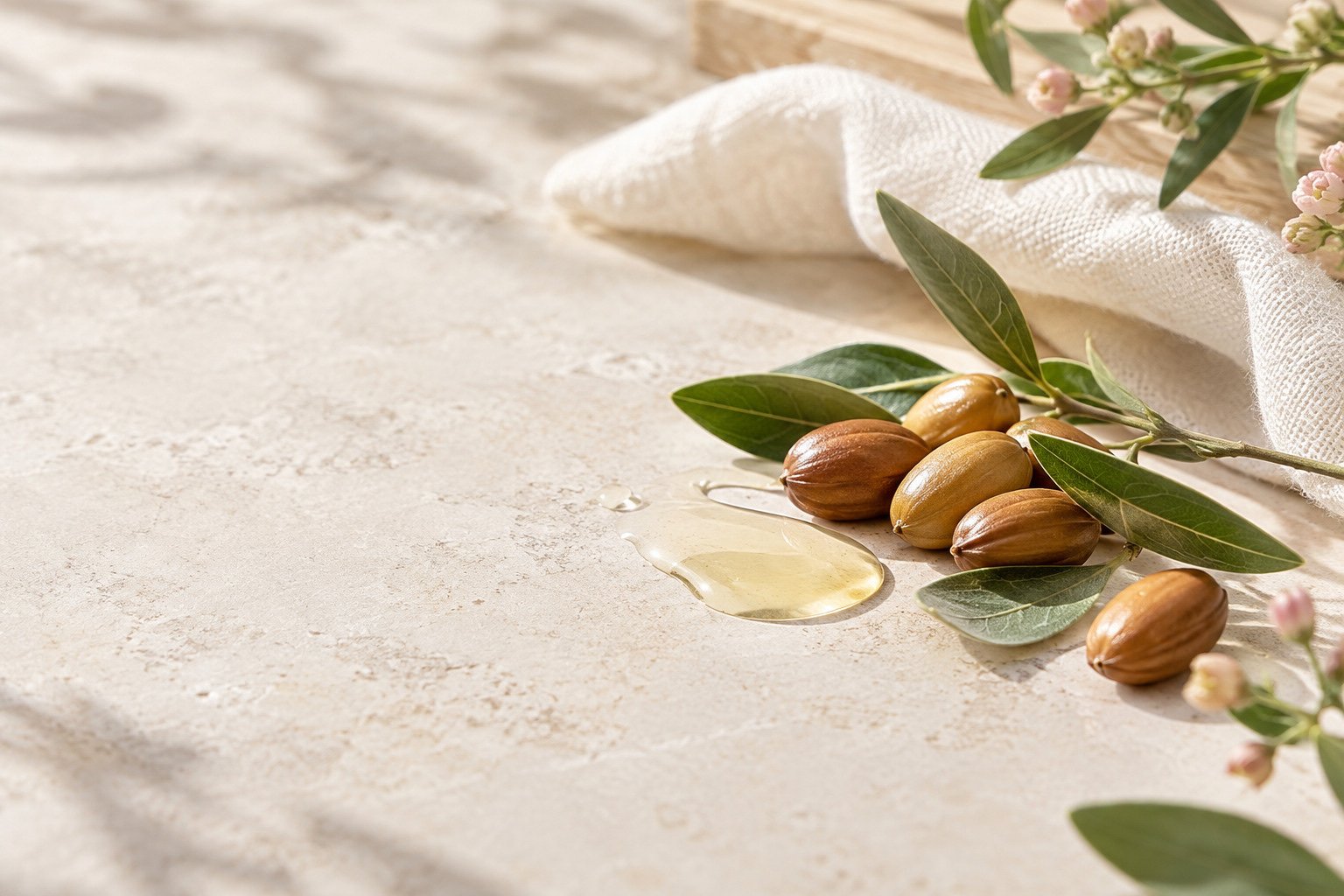
Jojoba is commonly called an oil, but chemically it is rich in liquid wax esters. That gives it a stable, silky feel that cosmetic formulators use in cleansers, creams, lip products and facial oils. Mature skin that produces less surface oil may enjoy the softness it brings, particularly on dry cheeks and around the jaw.
The internet often reduces oils to a comedogenic rating from zero to five. Those charts look precise but cannot predict how a complete product behaves on an individual face. Concentration, formulation, oxidation, cleansing, climate and personal acne tendency all change the result. A useful answer therefore sits between “jojoba never clogs pores” and “all oils cause breakouts”.
What does jojoba do in skincare?
Jojoba functions mainly as an emollient: it fills spaces between dry surface cells and makes the skin feel softer and smoother. In a moisturiser, it works alongside water, humectants and richer lipids. In a facial oil, it contributes slip and helps reduce the dry, tight feeling after water-based layers.
It does not add water to dehydrated skin by itself. If the face feels both tight and oily, begin with a hydrating serum or moisturiser, then add a very small oil layer only where extra richness is useful.
Why one person can love it and another break out
Congestion is influenced by follicle biology, sebum, dead-cell shedding, hormones and the total routine. A facial oil applied over heavy night cream may be comfortable on dry cheeks but too occlusive around an oilier nose or chin. The same product can behave differently in a Perth winter and a humid coastal summer.
Fragrance materials and botanical extracts can also irritate an individual even when jojoba itself is not the problem. Itching, burning and a red rash point more toward irritation or allergy than a classic clogged pore. Stop the complete product and seek advice if symptoms persist.
A careful jojoba patch test
- Choose calm skin: Do not test over sunburn, a rash or freshly exfoliated skin.
- Use the finished product: Testing pure jojoba does not predict a multi-ingredient formula.
- Apply to a small area: Try the side of the jaw or behind the ear for several nights.
- Change nothing else: Keep the rest of the routine stable so a reaction is easier to identify.
- Expand gradually: Move to one cheek before applying across the full face.
How much facial oil should mature skin use?
Begin with one or two drops for the face and neck, warmed between fingertips and pressed over moisturiser. More is not more nourishing once the surface already feels coated. Excess can transfer to hair, pillowcases and eyewear, and it can make it harder to tell whether the moisturiser underneath was sufficient.
Use less on the nose, chin and areas with recurring closed bumps. It is reasonable to use facial oil only on dry cheeks. A targeted routine is still a complete routine.
Should jojoba go before or after moisturiser?
In a separate facial oil, jojoba usually belongs after water-based serum and moisturiser because oil is the richer finishing layer. When jojoba is already emulsified inside a moisturiser, apply that product in the normal moisturising position. Do not mix several products in your palm unless their directions say to do so.
During the day, test how the finish sits beneath sunscreen. If oil makes sunscreen slide or pill, move it to evening. Never reduce sunscreen to accommodate an oil layer.
An evening jojoba routine for dry mature skin
- Cleanse fully: Remove sunscreen and makeup with a gentle cream cleanser.
- Add water-based hydration: Apply a thin serum to slightly damp skin if dehydration is present.
- Moisturise: Use a balanced cream across the face and neck.
- Finish selectively: Press one or two drops of facial oil over dry areas.
- Review in the morning: Reduce the amount if the skin feels coated or new bumps appear.
What if bumps appear?
Stop the newest product for a couple of weeks and return to a simple cleanser, moisturiser and daytime sunscreen. Do not scrub or squeeze. If the bumps settle and you choose to retry, use a smaller amount on a limited area.
Persistent acne, itchy uniform bumps or deep painful lesions need proper assessment. Skincare labels cannot diagnose the cause. A dermatologist or GP can distinguish acne, folliculitis, contact dermatitis and other conditions.
Pure jojoba versus a formulated product
Pure jojoba contains one main botanical material, while a moisturiser or facial oil blends it with other oils, emulsifiers, preservatives and sometimes aromatic botanicals. A reaction to one blend does not prove jojoba itself is responsible, and tolerating pure jojoba does not guarantee that every jojoba-containing cream will suit you.
For mature skin, a formulated moisturiser often gives a more complete balance because it combines water, humectants and emollients for reliable daily comfort. Pure oil can be a useful finishing layer, but it should not become a reason to skip hydration or to keep applying more when the skin is already coated.
Ritual first: Ultimate Hydration Ritual
The Ultimate Hydration Ritual layers cleansing, water-based hydration, moisturiser and an optional oil finish. That order is more useful for dry mature skin than relying on facial oil alone. Because several products contain jojoba or other botanical oils, introduce the ritual gradually if congestion is a concern.
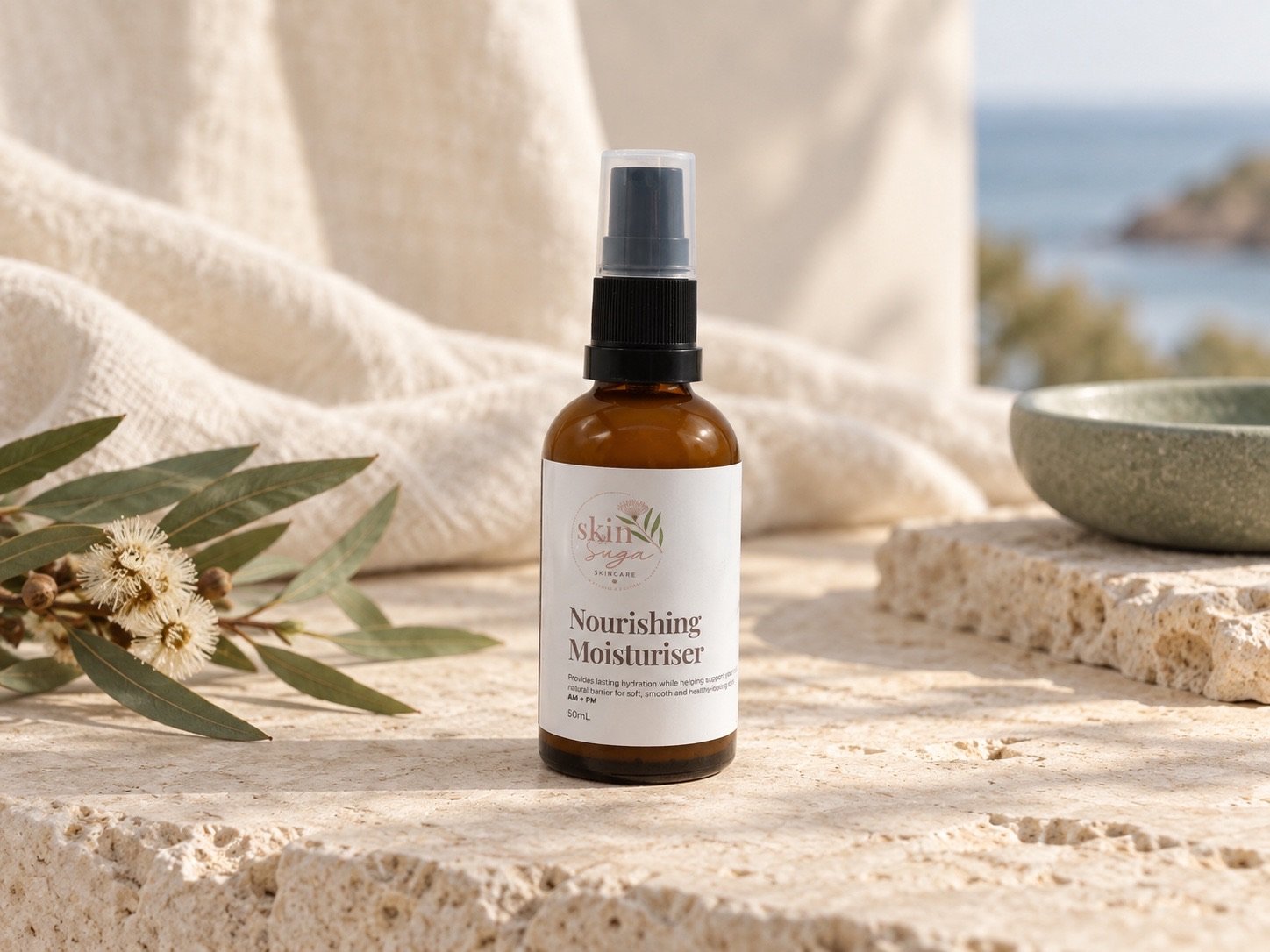
Nourishing Moisturiser
Jojoba oil, shea butter, green tea, mangosteen, acai and avocado oil provide a balanced cream finish.
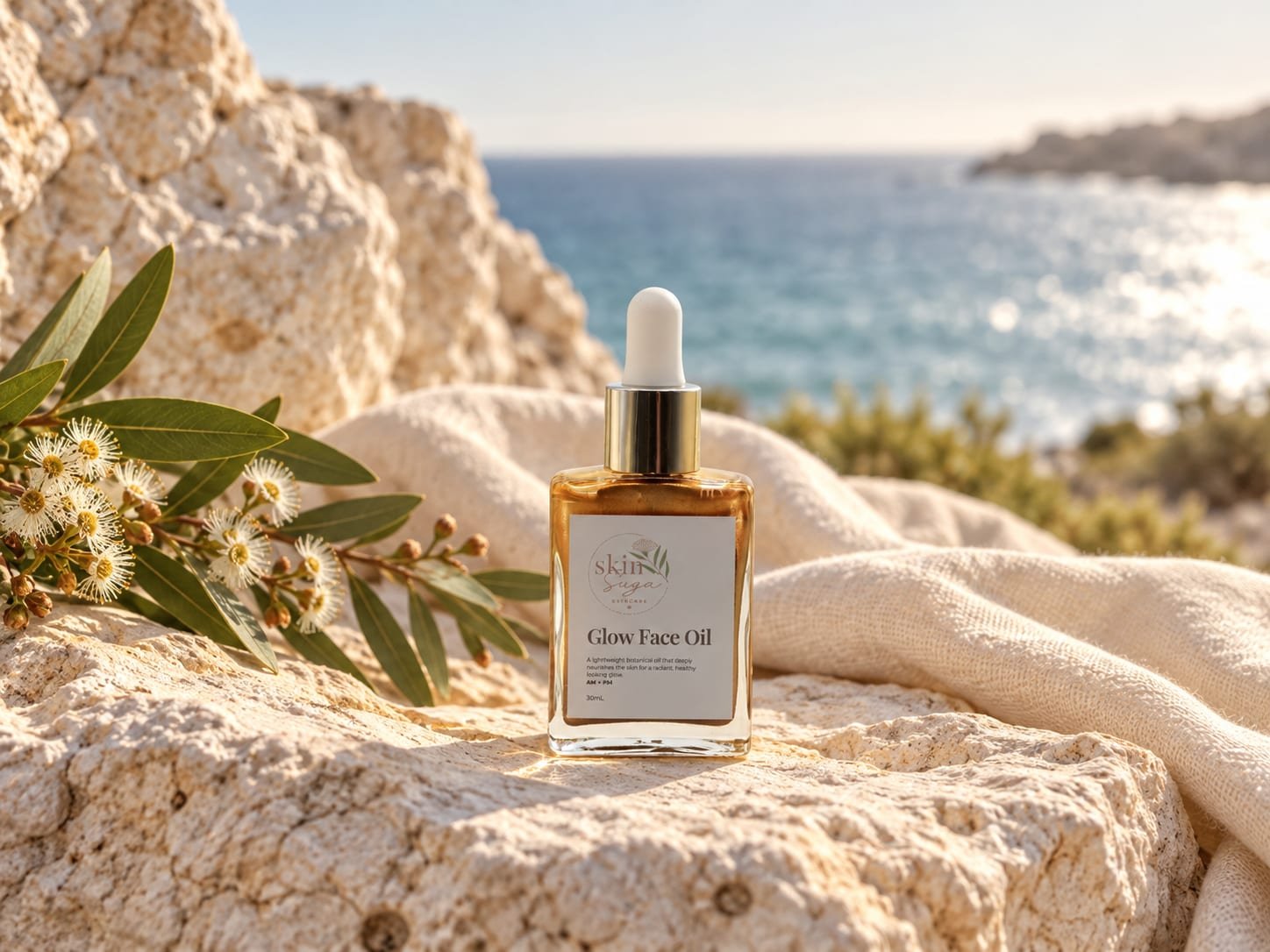
Glow Face Oil
Jojoba sits with rosehip, sea buckthorn, sweet almond, avocado, chia and vitamin E in a rich finishing blend.
Add oil only where it earns its place
Build hydration first, then use a measured botanical oil finish when dry areas still need comfort.
Common questions
Is jojoba non-comedogenic?
It is commonly regarded as low risk, but no single ingredient or finished product is guaranteed not to clog pores for every user.
Can jojoba replace moisturiser?
Not usually. Oil provides emollience but no water phase. Most dehydrated mature skin benefits from serum or moisturiser first.
Can I use jojoba every night?
Yes if the finished formula suits you. Begin less often and increase only when the skin remains comfortable and clear.
Does jojoba balance sebum?
Claims that it teaches skin to produce less oil are not well established. Treat it as a cosmetic emollient, not a regulator or acne treatment.
Sources
- Peer-reviewed review: Jojoba in dermatology
- Peer-reviewed review: Jojoba chemistry, uses and safety
- Cleveland Clinic: Are facial oils good for skin?
- DermNet: Emollients and moisturisers
General cosmetic skincare information only. A finished product and an individual skin response cannot be predicted from one ingredient rating.