
Hydration can plump the surface, not rebuild a face
Do collagen creams work after 40?
The short answer: Collagen creams can moisturise and temporarily make dry lines look softer, but topical collagen does not simply pass through the skin and replace the collagen lost with age. A useful cream should be judged by its complete formula: humectants, emollients, antioxidants and suitable active ingredients can support hydrated, smoother-looking skin. Daily sun protection, a consistent routine and realistic expectations matter more than the word collagen on the jar.
Collagen is one of the most persuasive words in skincare. It is a real structural protein within the dermis, so it sounds logical that applying more on top should restore what time and sunlight have changed. Skin biology is not that direct. Intact collagen is a large molecule and does not travel through the outer barrier to become new dermal scaffolding.
This does not make every collagen-labelled cream useless. A cream can still be an excellent moisturiser. Water, humectants and emollients can plump the outer layers temporarily, reduce flaking and make dehydration lines look softer. The honest question is whether the formula earns its place as skincare, not whether its front label promises to refill collagen.
What happens to collagen with age?
Collagen production and organisation change over time. Ultraviolet exposure accelerates visible ageing by contributing to the breakdown of supportive structures and uneven pigmentation. Menopause-related hormonal change may also be associated with thinner, drier-feeling skin for many women.
A cosmetic cannot reverse all of those processes or lift loose tissue like a procedure. It can support the outer barrier, improve hydration and make the surface look smoother. Those are worthwhile results when they are described accurately.
Why topical collagen mostly acts at the surface
The outermost skin layer is designed to keep large substances out. Collagen applied in a cream therefore behaves mainly as a film-forming or moisturising ingredient. Hydrolysed collagen is broken into smaller fragments, but that does not mean it automatically enters the dermis and assembles into your own collagen.
Immediate plumpness after applying a collagen cream usually comes from hydration and occlusion. The effect can be visible and pleasant, especially on dry mature skin, but it is temporary. A well-formulated moisturiser without collagen may deliver a similar surface benefit.
How to assess a collagen-labelled cream
- Read past the front label: Look for humectants, emollients and the active ingredients you actually want.
- Check the texture: It should suit your dryness level and sit cleanly beneath sunscreen.
- Patch test: Fragrance and botanical ingredients can still cause individual reactions.
- Judge comfort first: Hydration, softness and reduced flaking are realistic early measures.
- Ignore instant-lift promises: A cream cannot reproduce the structural effect of a medical procedure.
Which cosmetic ingredients have a clearer role?
Retinoids have evidence for improving visible photoageing, but strength, regulation and irritation potential vary. Skin Suga Vitamin A Oil uses retinyl palmitate, a cosmetic vitamin A derivative, and should not be equated with prescription tretinoin. Gradual use, label directions and daily sunscreen are important.
Vitamin C is used for antioxidant support and a brighter, more even-looking complexion. Form, concentration, packaging and stability affect performance. Peptides are a broad family of signalling or conditioning ingredients with varying evidence. None should be sold as a facelift in a bottle.
Hyaluronic acid, glycerin, jojoba, shea butter and other moisturising ingredients do a different job. They support water balance and softness. Better hydration can make mature skin look more supple even though it has not replaced dermal collagen.
Why sunscreen belongs in the collagen conversation
Buying an expensive collagen cream while leaving the skin unprotected from Australian UV is the wrong order of priorities. Broad-spectrum sunscreen, shade, clothing and other SunSmart measures help reduce further UV damage. Cosmetics with antioxidants can complement sun protection but do not replace regulated sunscreen.
Use SPF50 or SPF50+ sunscreen every morning when the UV index and exposure call for it, following Australian directions. Reapply as directed, especially outdoors. A moisturiser containing no regulated SPF provides no sunscreen protection.
A realistic age-supporting routine
- Cleanse without stripping: Remove sunscreen and makeup with lukewarm water and a gentle formula.
- Use one targeted serum: Choose peptides, vitamin C or another established step according to your goal.
- Moisturise: Apply a cream that leaves the skin comfortable, not merely one labelled collagen.
- Introduce vitamin A gradually: Use only on scheduled evenings and follow the exact product directions.
- Protect every morning: Finish with broad-spectrum SPF50 or SPF50+ sunscreen.
How long should you test a product?
Hydration and softness may be noticeable quickly. Changes in tone or fine texture from an active ingredient are slower and vary between people. Use the formula consistently for several weeks unless irritation develops, and compare your skin in similar unfiltered light.
Stop if you develop persistent burning, swelling, rash or a sudden acne pattern. A dermatologist can discuss prescription options or procedures when the concern is deeper wrinkling, laxity or a changing skin lesion. Cosmetic skincare should not be asked to do a medical treatment’s job.
What a good result actually looks like
A sensible moisturising formula may leave skin less tight, reduce the visibility of dry flakes and create a softer surface under makeup. A targeted active may gradually improve the appearance of fine texture or uneven tone. Healthy mature skin will still move, crease and show pores.
Photographing the face every day often exaggerates small changes in light and expression. If you want to compare, use the same window, time and camera distance once a month. Look for comfort and consistency as well as appearance over time and changing weather. A routine that feels pleasant enough to repeat is more valuable than an impressive ingredient list that sits unused.
Ritual first: Age Defy Ritual
The Age Defy Ritual focuses on a coordinated sequence rather than a topical-collagen promise. It combines gentle cleansing with targeted ingredients, hydration and moisturising for smoother, healthier-looking mature skin.

Anti-Ageing Elixir
Bakuchiol and peptides sit alongside hydrating and antioxidant ingredients in one measured treatment step.
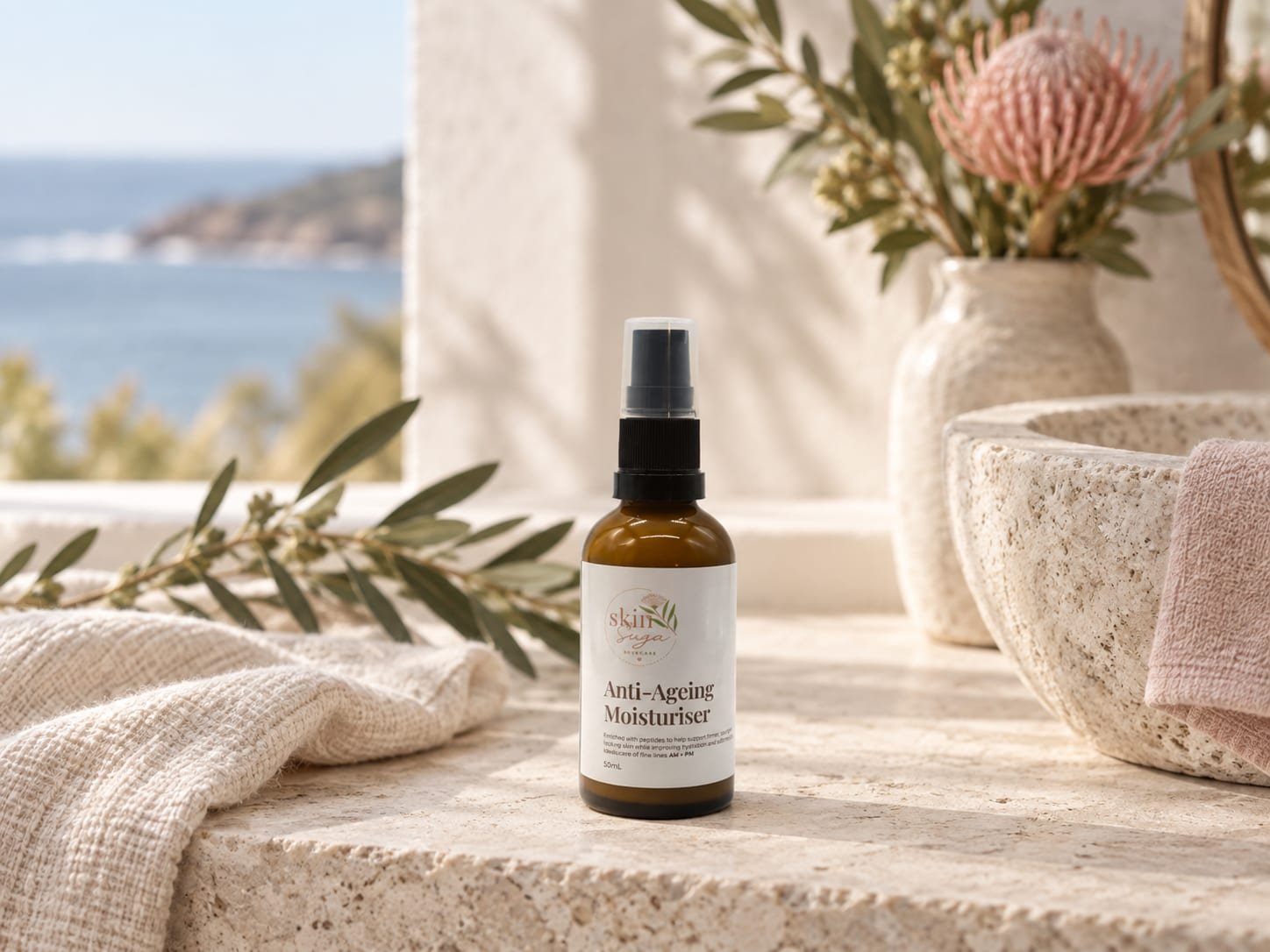
Anti-Ageing Moisturiser
Hyaluronic acid, Co-Enzyme Q10, rice protein peptides, jojoba and shea butter support hydration and softness.
Choose formula over front-label promises
Build around ingredients with clear cosmetic roles and a routine you can use consistently.
Common questions
Can collagen cream make skin feel plumper?
Yes, a moisturising formula can temporarily plump the outer layers and soften the look of dehydration lines. That is different from rebuilding dermal collagen.
Are peptides the same as collagen?
No. Peptides are short chains of amino acids. Their cosmetic role depends on the specific peptide and finished formula.
Does more expensive mean more effective?
No. Price does not prove ingredient concentration, stability, suitability or results.
Can skincare lift sagging skin?
A moisturiser may create a small visual improvement through hydration, but a topical cream cannot create the structural lift of a procedure.
Sources
- Cleveland Clinic: Collagen, skincare and sun protection
- American Academy of Dermatology: Firming sagging skin
- American Academy of Dermatology: Getting more from age-supporting skincare
- Cancer Council Australia: Be SunSmart
General cosmetic skincare information only. Topical moisturising effects should not be described as replacing structural collagen or lifting tissue.