
The formula decides the order
Does facial oil go before or after night cream?
The short answer: It depends on the oil. A treatment oil with its own directions may belong before night cream, while a simple nourishing facial oil usually works best after cream as the final comfort layer. Use the thinnest treatment textures first, then cream, then a finishing oil where needed.
“Oil always goes last” is useful shorthand, but it is not a complete rule. A simple nourishing oil usually sits after night cream because it slows water loss and adds a softer finish. A treatment oil may be designed to contact clean skin before cream. The correct order comes from the finished formula, its directions and the role it plays in the ritual.
Why facial oils do not all belong in the same category
A facial oil can be a blend of plant oils chosen mainly for nourishment, or it can carry an active ingredient. Those products may look similar in the bottle but behave differently in a routine. A finishing oil is usually about comfort, slip and softness. A treatment oil needs to be used at the step and frequency recommended for that active.
Night cream is an emulsion: it combines water-based hydration with oils and emulsifiers. A pure or oil-dominant facial oil contains little or no water. Because water-based layers generally sit more comfortably underneath richer oil layers, a nourishing facial oil commonly follows cream. Pressing a few drops over the top can help the cream feel more cushioned without replacing its water phase.
However, an active oil placed over a very occlusive cream may not be used as its maker intended. Follow the directions for that specific product rather than using one universal “thin to thick” slogan.
When facial oil should go after night cream
Place oil last when its purpose is to finish the routine, reduce the tight feeling that can appear overnight and add softness to dry areas. This is especially useful for mature skin in winter, after air travel, during low humidity or when the cheeks and jaw need more comfort than the centre of the face.
Use a small amount. Warm one to three drops between the fingertips, then press it over the cream instead of rubbing vigorously. The face does not need to look wet. If the pillow absorbs the product or the skin feels greasy in the morning, reduce the amount before deciding the oil is unsuitable.
You can also zone the product. Apply it to dry cheeks and the neck while leaving a balanced or breakout-prone T-zone alone. Mature skin is often mixed rather than uniformly dry.
When a treatment oil may go before night cream
A treatment oil containing a vitamin A derivative or another active may be directed onto clean, dry skin before cream. This allows the treatment step to be used consistently, while night cream follows to support comfort. Use it only at the advised frequency and avoid assuming that more drops or nightly use will produce faster results.
Vitamin A products can be irritating for some people. Introduce one new treatment at a time, start slowly, and use broad-spectrum sunscreen during the day. If your skin is highly sensitive, pregnant, breastfeeding or under medical treatment, ask an appropriate health professional before introducing a vitamin A product.
Some people prefer a “buffered” approach, placing moisturiser before an active to reduce intensity. That can be sensible for prescribed treatments when a clinician recommends it, but it changes how an over-the-counter cosmetic product is used. Product instructions and professional advice take priority over internet layering rules.
What if the oil and cream pill or separate?
Oil rarely forms dry eraser-like flakes by itself, but rolling can happen when it is massaged over gelled serums or a heavy cream. Let the cream settle for a minute, reduce the amount of each layer and press rather than rub. If the combination remains unstable, separate the products: use cream most nights and oil only on dry areas, or use the oil in a simpler routine.
Mixing oil directly into cream in the palm can create a pleasant texture, but it also makes the dose less consistent and may not suit an active treatment oil. Keep a vitamin A oil as its own measured step. A simple nourishing oil can sometimes be mixed with moisturiser if both product directions allow it, although applying them separately makes it easier to identify which layer is causing discomfort.
How mature skin changes the decision
After 40, skin can feel drier and recover more slowly from an overcomplicated routine. The temptation is to stack hydrating toner, several serums, rich cream and a large amount of oil. More layers are not always more nourishing. They can create heat, movement, congestion or irritation without adding meaningful comfort.
Build the night around three jobs: cleanse without stripping, deliver one focused treatment or hydration step, and seal with an appropriate moisturising finish. Facial oil is optional. It earns its place when it solves a clear problem such as dry-feeling cheeks or when it is the chosen treatment step.
Two correct evening orders
With a nourishing finishing oil
- Cleanse gently.
- Use hydrating toner or serum if needed.
- Apply night cream in a thin, even layer.
- Press one to three drops of nourishing oil over dry areas.
With a directed treatment oil
- Cleanse and let skin dry if the directions require dry skin.
- Apply the measured treatment oil exactly as directed.
- Follow with night cream when the treatment has settled.
- Do not add another oil unless there is a clear need.
How Skin Suga fits the order
The Night Recovery Ritual is the clearest Skin Suga answer because it pairs Vitamin A Oil with Night Cream and Eye Cream. Skin Suga Vitamin A Oil contains 1% retinyl palmitate with rosehip, jojoba, avocado, sea buckthorn, vitamin E and frankincense. Use it as the directed treatment step, then follow with Night Cream for comfort.
Skin Suga Glow Face Oil has a different role. Its blend includes rosehip, sea buckthorn, sweet almond, jojoba, avocado, chia seed and vitamin E. When used for nourishment rather than as an active treatment, it generally belongs after moisturiser as a final evening layer. The Ultimate Hydration Ritual is suited to this hydration-first, oil-last approach.
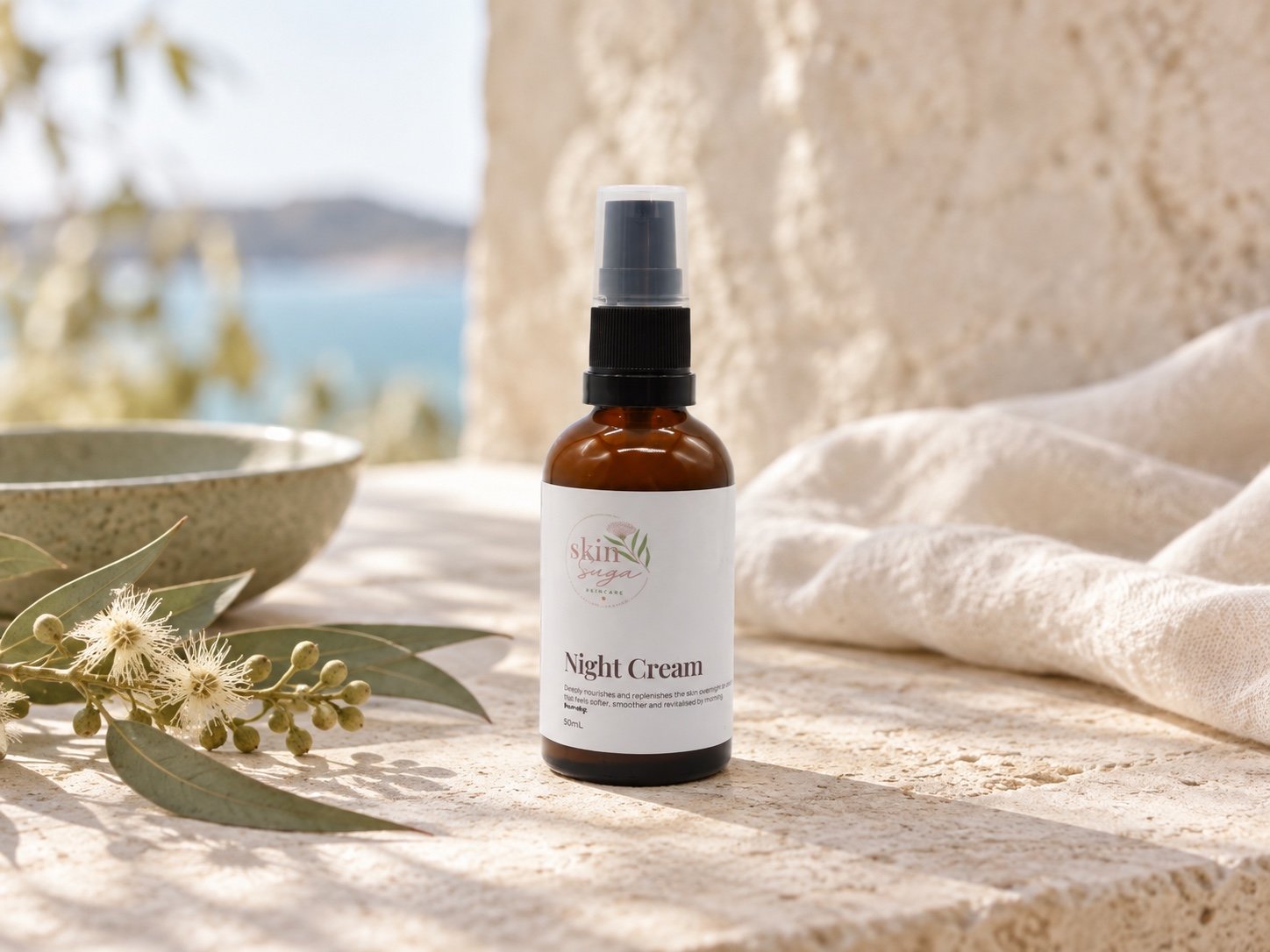
Night Cream
A richer moisturising finish for evenings when mature skin needs comfort after hydration or a directed treatment step.
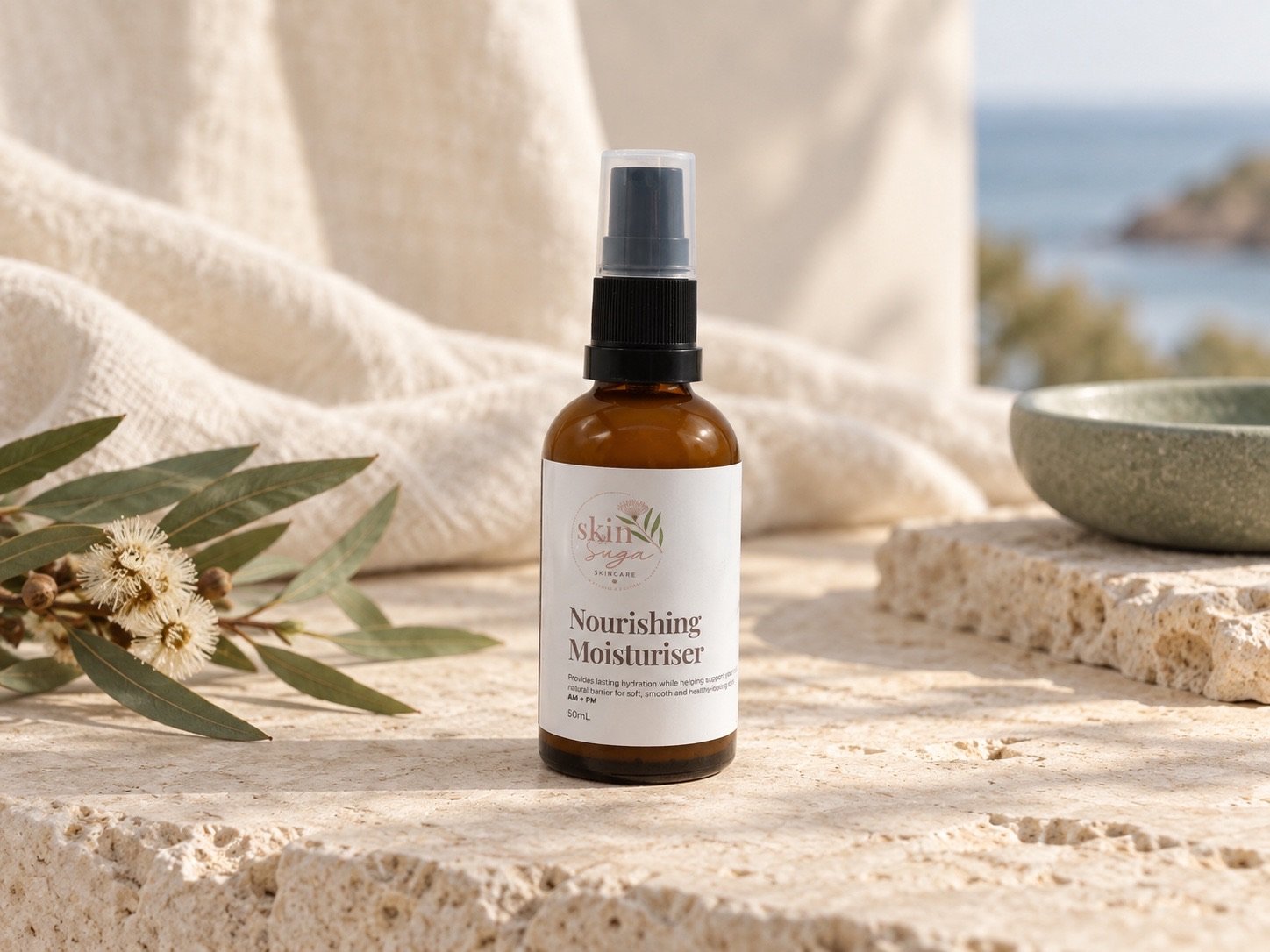
Nourishing Moisturiser
A lighter moisturising option that can be followed with a small amount of finishing oil on dry areas.
How to tell whether the order is working
The skin should feel comfortable, not coated. In the morning, it may feel soft and flexible without a heavy residue. If it feels tight, use slightly more cream before increasing the oil. If it feels greasy, decrease the oil first. If it stings, becomes persistently red or develops irritation, stop the newest treatment and seek professional advice if symptoms continue.
Visible results should be judged over time. Oil can create immediate shine and softness, but that instant glow is a surface effect. Long-term improvement comes from a consistent, tolerable routine, daily sun protection and avoiding repeated irritation.
Frequently asked questions
Can facial oil replace night cream?
Usually not for dry mature skin. Oil supplies emollient lipids but little water. Night cream provides a water-and-oil emulsion, so the two have different roles.
How long should I wait between night cream and oil?
Only until the cream has spread evenly and stopped sliding, often about a minute. A rigid timed pause is unnecessary.
Can I use vitamin A oil every night?
Follow the product directions and your skin’s tolerance. Start slowly rather than assuming nightly use is appropriate from the first application.
Should I put oil around my eyes?
Use products specifically directed for the eye area and avoid the lash line. A dedicated eye cream is easier to dose and position.
Choose the role before the layer
Use the Night Recovery Ritual when vitamin A is the treatment step, or the Ultimate Hydration Ritual when a nourishing oil is the final comfort layer.
Explore Night Recovery RitualExplore Ultimate Hydration Ritual
Sources and further reading
- Cleveland Clinic: Proper skincare product order
- American Academy of Dermatology: Skin care in your 40s and 50s
- American Academy of Dermatology: Retinoid and retinol guidance
This is general cosmetic guidance. Follow product directions and individual professional advice where applicable.