

Keep sun protection complete and comfort personal
Can sunscreen replace moisturiser for mature skin?
The short answer: Sometimes. A moisturising sunscreen may be enough on its own when mature skin stays comfortable and the full labelled sunscreen amount spreads evenly. If skin feels tight, rough or dry, use a separate moisturiser first, let it settle, then apply broad-spectrum sunscreen exactly as directed.
Sunscreen and moisturiser can overlap in texture, but they do not have the same primary job. Moisturiser is chosen for comfort, softness and support for the skin surface. Sunscreen is a regulated protective product that must be applied in the tested amount and reapplied according to its label. A sunscreen can replace moisturiser only when it keeps your skin comfortable without tempting you to apply less than the directed sunscreen amount.
Why the answer changes from one person to another
Two women of the same age can need different morning layers. One may have combination skin and use a creamy sunscreen that already feels rich. Another may have dry cheeks, a tight jawline or seasonal flaking and find the same sunscreen uncomfortable without moisturiser underneath. Mature skin is not one fixed skin type, and a product labelled for hydration will not feel identical in Perth heat, coastal wind, winter heating or strong office air conditioning.
The finished sunscreen formula matters more than a marketing word such as “hydrating”. Some sunscreens contain emollient ingredients and leave a cushioned finish. Others dry down quickly or are designed for oily skin. The only practical test is whether you can apply the full labelled amount evenly and your skin remains comfortable for the day.
Do not reduce sunscreen because the combination feels heavy. That solves a texture problem by creating a protection problem. Instead, use a lighter moisturiser, apply less moisturiser only where it is not needed, allow the layer to settle, or choose a sunscreen texture that suits your skin better.
When sunscreen may be enough on its own
A separate moisturiser may be unnecessary when your sunscreen spreads smoothly, sits evenly and leaves no tightness after it has settled. This is more common in warm or humid weather, on an oilier T-zone, or with a creamy sunscreen. It can also be useful when makeup tends to separate under too many layers.
Try the sunscreen-only approach on an ordinary day rather than immediately before a long event. Cleanse gently, apply any lightweight serum you already tolerate, allow it to settle, then apply sunscreen exactly as directed. Check how the skin feels after an hour and again in the afternoon. Comfort should not depend on using a tiny sunscreen amount.
If your cheeks feel comfortable but the centre of the face becomes shiny, use moisturiser only on the dry zones. This targeted method respects the fact that mature skin can be dry in one area and balanced in another.
When mature skin benefits from both layers
Use moisturiser underneath when skin feels tight after cleansing, looks flaky, catches makeup in dry patches or becomes uncomfortable before lunchtime. A separate moisturiser is also useful during winter, after travel, in low humidity or when a treatment routine has temporarily made the surface feel drier.
Moisturiser can help create a smoother-feeling base, but it must not be used as a substitute for sunscreen unless the product itself is labelled and regulated as sunscreen. Likewise, an SPF number in makeup is not a reliable reason to skip a dedicated sunscreen when the makeup is applied more thinly than its tested amount.
The order is simple: hydrating serum if wanted, moisturiser, then sunscreen. Let moisturiser settle enough that sunscreen can form a continuous film rather than mixing the two products together in your palm. Follow the sunscreen label for amount, application time and reapplication. Cancer Council Australia advises applying sunscreen to clean, dry skin 20 minutes before going outdoors and reapplying regularly, especially after swimming, sweating or towel drying.
What changes after 40
With age, skin can produce less surface oil and may lose water more easily. Perimenopause and menopause can also change comfort, sensitivity and dryness. These changes do not mean everyone needs a heavy cream every morning, but they make it more important to judge a routine by the way the skin behaves over the whole day.
Fine lines can look more obvious when the surface is dehydrated. Moisturiser may soften that dry appearance quickly, but it does not replace sun protection. Daily broad-spectrum sunscreen helps reduce additional ultraviolet exposure, which is one of the most important preventable contributors to visible photoageing.
Think of the morning as two separate decisions. First: what does my skin need to feel comfortable? Second: what sun protection does today require? Sometimes one product satisfies both decisions; often two light, compatible layers are easier to control.
How much moisturiser should sit under sunscreen?
Use enough to remove tightness without leaving a moving film. A pea-sized amount may suit the face for many formulas, but texture and dryness matter more than a rigid measure. Spread it gently, then add a little more only to dry zones. If sunscreen rolls or pills, wait briefly and try less moisturiser before abandoning it altogether.
Pilling is not proof that either product is poor quality. It can happen when several gelled serums, rich creams and sunscreen film-formers are rubbed together. Reduce the number of layers, press rather than over-massage, and test one change at a time.
A calm morning routine for dry mature skin
- Cleanse gently or rinse, according to how your skin feels on waking.
- Apply a thin hydrating serum while the skin is comfortable, not dripping wet.
- Use a light layer of moisturiser, concentrating on cheeks and dry areas.
- Let the surface settle so it is soft but not sliding.
- Apply broad-spectrum sunscreen in the labelled amount to all exposed skin.
- Allow the sunscreen film to form before makeup, then reapply as directed.
Where Skin Suga fits
The Daily Essentials Ritual is the best starting point when you want a reliable cleanse-hydrate-moisturise base before your chosen sunscreen. The Cream Cleanser uses apricot kernel oil, oat extract and cucumber extract in a gentle cleansing formula. Hyaluronic Acid Serum provides a lightweight humectant step, while Nourishing Moisturiser combines jojoba oil, shea butter, green tea, mangosteen, acai oil and avocado oil for a comfortable surface finish.
For consistently dry skin, the Ultimate Hydration Ritual provides a fuller hydration routine. Keep the richer facial oil for evening, or use it very selectively, rather than placing a generous oil layer underneath morning sunscreen.
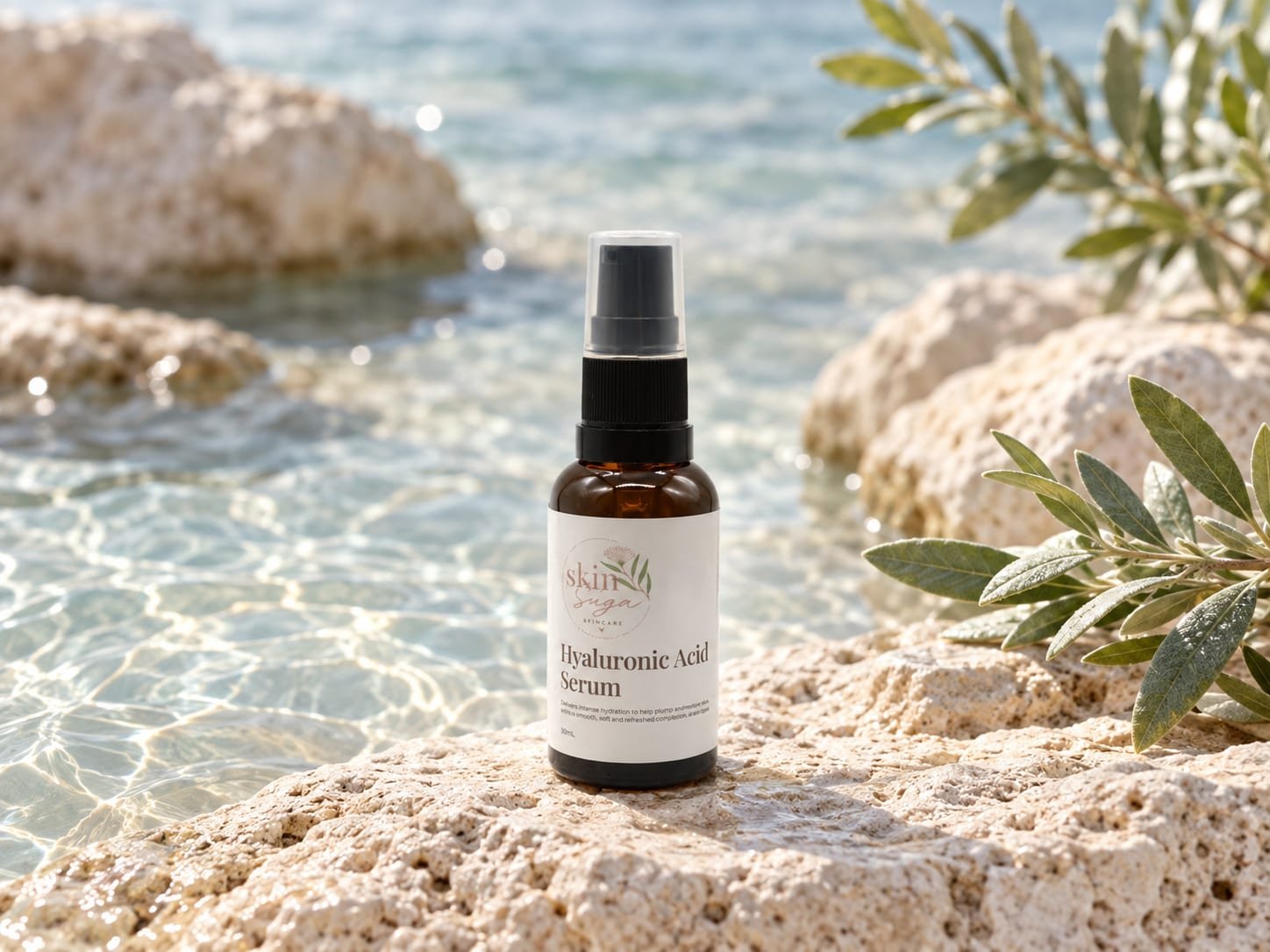
Hyaluronic Acid Serum
A lightweight hydration step containing vegan hyaluronic acid and radish root ferment. Use before moisturiser when mature skin feels dehydrated.
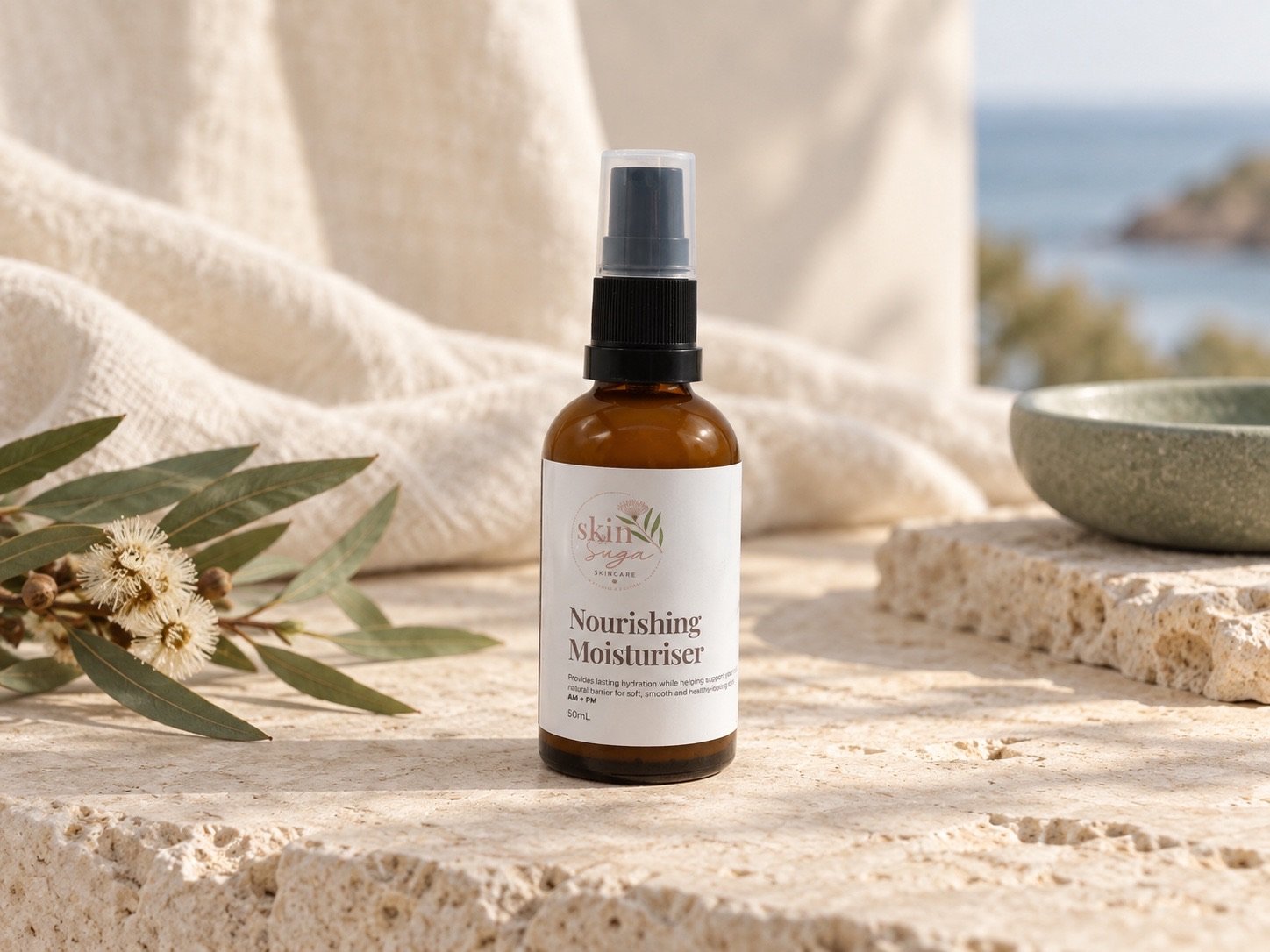
Nourishing Moisturiser
A moisturising layer with jojoba, shea butter and botanical oils. Apply a thin, even layer before sunscreen when the skin needs extra comfort.
Common mistakes to avoid
- Using only a trace of sunscreen because the morning routine feels heavy.
- Mixing moisturiser and sunscreen together, which can disturb the sunscreen film.
- Assuming every product with SPF replaces a dedicated broad-spectrum sunscreen.
- Adding facial oil underneath sunscreen without checking whether it causes movement.
- Judging the routine immediately, before the sunscreen has settled.
- Changing several products at once, making the cause of pilling impossible to identify.
Frequently asked questions
Can I skip moisturiser if my sunscreen says hydrating?
Yes, if the full sunscreen amount keeps your skin comfortable. “Hydrating” is a useful clue, but your skin’s response is the deciding factor.
Should moisturiser or sunscreen go first?
Moisturiser goes first. Sunscreen is the final skincare layer before makeup. Follow the sunscreen label if it gives specific directions.
Can I use facial oil under sunscreen?
A rich oil can make some sunscreens move or pill. For most mature-skin routines, reserve the facial oil for evening or test a very small amount only on dry zones.
What if sunscreen makes my skin feel dry?
Use a compatible moisturiser first or try a more moisturising sunscreen formula. Do not compensate by applying less sunscreen than directed.
Build comfort before protection
Use a simple Skin Suga ritual to hydrate and moisturise, then finish every exposed morning routine with your chosen broad-spectrum sunscreen.
Explore Daily Essentials RitualExplore Ultimate Hydration Ritual
Sources and further reading
- Cancer Council Australia: How to choose, apply and store sunscreen
- American Academy of Dermatology: Skin care in your 40s and 50s
- Australasian College of Dermatologists: Perimenopausal skin
This guide provides general cosmetic skincare education. Sunscreen directions on the product label take priority.