There is something quietly reassuring about an evening skincare ritual. The day softens, the light fades, and your routine becomes a few peaceful minutes devoted to caring for your skin.
For mature skin, vitamin A can be a beautiful part of that ritual. It is one of the most researched skincare ingredients for improving the appearance of fine lines, uneven texture and dullness. Yet it is also an ingredient that deserves patience, especially when your skin is dry, sensitive or changing through menopause.
The good news, darling, is that you do not need to rush. With a gentle introduction, plenty of hydration and thoughtful layering, vitamin A can support skin that looks smoother, firmer and more radiant over time.
A gentle reminder: This article is general skincare guidance, not medical advice. If you have eczema, rosacea, very sensitive skin or a compromised skin barrier, it is wise to speak with a healthcare professional before introducing vitamin A.
What does vitamin A do for mature skin?
Vitamin A is a family of ingredients used in skincare. You may see names such as retinol, retinaldehyde, retinyl palmitate and prescription retinoids. They are related, but they are not identical in strength or activity.
Topical vitamin A derivatives can encourage skin renewal and support collagen production. Over time, this may help improve the appearance of:
- Fine lines and wrinkles
- Uneven skin texture
- Dullness and lack of radiance
- Uneven-looking skin tone
- Dehydration lines
- Loss of smoothness and firmness
Research summarised by Harvard Health notes that visible improvements can take several months, with the best results developing gradually. This is an ingredient for consistency rather than instant transformation.
Skin Suga’s Vitamin A Oil contains 1% retinyl palmitate, a cosmetic vitamin A derivative, blended with nourishing oils including rosehip, jojoba, avocado and sea buckthorn. These botanical oils help create a rich, comforting finish that is especially appealing for mature skin that prefers nourishment alongside active skincare.
Why start slowly after 50?
As we age, skin can become drier and more easily irritated. Hormonal changes, including menopause, may also affect the skin barrier and reduce its ability to hold onto moisture. That means a strong or overly frequent vitamin A routine may leave your complexion feeling tight, flaky or uncomfortable.
Starting slowly gives your skin time to settle into the ingredient.
Before applying vitamin A across your face, a small patch test is a thoughtful first step. Apply a little to a discreet area, such as along the jawline, and observe your skin over the next couple of days. Noticeable itching, burning or swelling is a sign to stop and seek advice.
If your skin feels comfortable, begin with one evening a week. After a few weeks, you might move to twice weekly. Only increase further if your skin remains calm and well hydrated.
There is no prize for using vitamin A every night. A gentle routine that you can enjoy consistently is far more supportive than an ambitious routine that leaves your skin distressed.
A comforting evening routine with vitamin A
Vitamin A is best suited to your evening routine. A simple order might look like this:
1. Cleanse gently
Begin with a cleanser that removes makeup, sunscreen and daily impurities without leaving your skin feeling stripped.
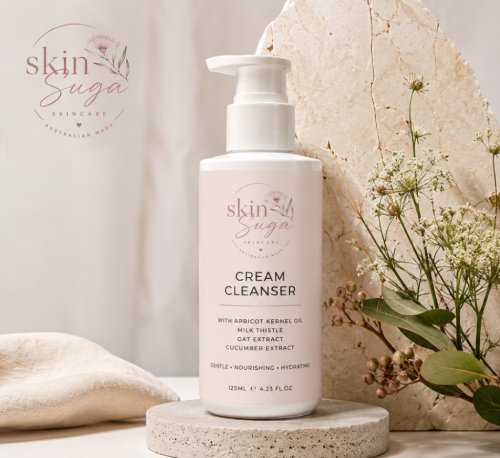
The Skin Suga Cream Cleanser is enriched with apricot kernel oil, milk thistle, oat extract, elderflower and cucumber extract. These ingredients help cleanse while supporting a soft, comfortable feel, an important foundation before using an active ingredient.
After cleansing, pat your skin dry rather than rubbing. Vitamin A is generally better tolerated on completely dry skin.
2. Add hydration if your skin needs it
If your complexion is dry or sensitive, you may like to apply a moisturiser before vitamin A as a gentle buffer. This is sometimes called the sandwich method:
- Moisturiser
- Vitamin A
- Another light layer of moisturiser
It can soften the intensity of the first few applications while still allowing vitamin A to become part of your routine.
3. Apply your vitamin A product sparingly
Use the amount recommended on the product label. More product does not mean faster results; it can simply mean more irritation.
With Skin Suga’s Vitamin A Oil, warm the recommended amount between your fingertips and press it gently over the face, avoiding the eyelids and the delicate corners around the nose and mouth. These areas can be particularly prone to dryness.
The goal is a light, comfortable veil rather than a heavy coating.
4. Finish with nourishment
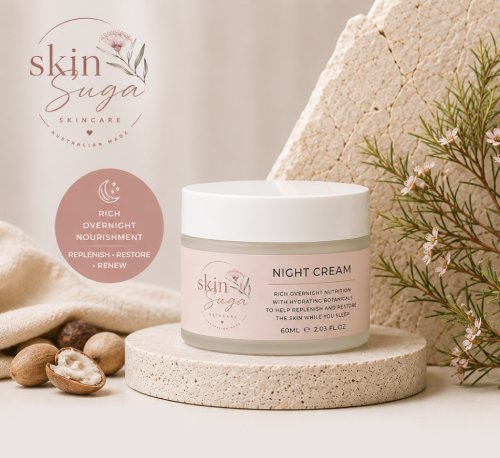
Follow with a comforting moisturiser, particularly if your skin is dry or mature. Skin Suga’s Night Cream combines hyaluronic acid, shea butter, jojoba oil and Australian botanical extracts to replenish moisture while you sleep.
If you prefer a ready-made routine, the Night Recovery Ritual brings together Cream Cleanser, Vitamin A Oil, Night Cream and Eye Cream for a comforting evening ritual. The Age-Defying Ritual also includes Vitamin A Oil alongside its cleanser, toner, moisturiser and eye care.
How to pair vitamin A with hydration
Hydration is not an optional extra when using vitamin A, it is part of the ritual.
Vitamin A can initially cause dryness, tightness, flaking or mild redness. Supporting your moisture barrier may help your skin feel calmer and more comfortable as it adjusts.
Hyaluronic acid is a particularly useful companion. Skin Suga’s Hyaluronic Acid Serum attracts and helps retain moisture, leaving mature skin feeling softer, smoother and more plump-looking.
On vitamin A evenings, you could use it after cleansing and before moisturiser, provided your skin tolerates the combination. If applying products to damp skin tends to make you sensitive, allow your face to dry fully before applying vitamin A, and use your hydrating serum at another point in your routine.
For very dry skin, the Ultimate Hydration Ritual offers a beautiful non-vitamin-A routine for alternate evenings. It includes Cream Cleanser, Anti-Ageing Toner, Hyaluronic Acid Serum, Nourishing Moisturiser and Nourishing Facial Oil.
What should you avoid on vitamin A nights?
When your skin is adapting, simplicity is soothing. It is best to avoid combining vitamin A with several other potentially irritating actives in the same evening, including:
- Glycolic, lactic or salicylic acid
- Strong exfoliating toners
- Physical scrubs or cleansing brushes
- Peels or at-home resurfacing treatments
- Other retinoid products
You can still enjoy brightening ingredients such as vitamin C, but morning is often the more comfortable time to use them. Skin Suga’s Vitamin C Serum combines vitamin C technology with Kakadu Plum, an Australian native botanical naturally rich in vitamin C. Used in the morning, it supports a brighter-looking complexion while vitamin A works as part of your evening ritual.
Our wider Australian botanical approach also includes ingredients such as Desert Lime and Native Snowflower, chosen to complement mature skin with antioxidant care, nourishment and a healthy-looking glow.
What side effects are normal?
During the first few weeks, you may notice:
- Mild dryness or tightness
- Light flaking
- Slight redness
- A gentle tingling sensation
These reactions should be mild and manageable. Applying vitamin A less often and using a richer moisturiser can help.
Stop using it and seek professional advice if you experience intense burning, swelling, severe redness, cracking, oozing, worsening eczema or persistent discomfort. As Cleveland Clinic explains, retinol products can cause dryness, itching, burning, redness and peeling, particularly when first introduced.
Vitamin A is also not recommended during pregnancy or breastfeeding. If this applies to you, please speak with your healthcare professional.
Morning care matters just as much
Even though vitamin A belongs in the evening, your morning ritual helps protect the progress your skin is making.
Each morning, cleanse gently if needed, replenish hydration and apply a broad-spectrum sunscreen of SPF 30 or higher to your face, neck and other exposed areas. A hat and shade are especially helpful in Australia, where UV exposure remains important through spring and summer.
In Western Australia, September can bring bright spring sunshine and dry breezes. In Queensland, warmth, humidity and strong UV may leave mature skin feeling both dehydrated and more reactive. A light hydrating layer, nourishing moisturiser and daily sunscreen can help your skin feel comfortable in either climate.
Patience is part of the glow
Vitamin A is not a quick fix, and mature skin does not need to be hurried. Give your routine several weeks before judging how it feels, and several months before expecting meaningful changes in texture or fine lines.
Think of it as a quiet promise to your skin: gentle care, repeated often, with hydration surrounding every step.
You deserve a ritual that feels nurturing rather than demanding, darling. With Skin Suga’s Australian-made botanical formulas, vitamin A can sit beautifully alongside Kakadu Plum, Desert Lime, sea buckthorn, jojoba and rich nourishing oils: helping your skin look softer, smoother and naturally radiant as the seasons change.