There is something wonderfully reassuring about a skincare ritual that quietly cares for your future skin. A warm cleanse, a nourishing moisturiser, a moment to breathe, and, every morning, a generous layer of sunscreen.
For mature skin, daily SPF is not just a summer essential or something reserved for beach days. It is one of the most comforting and effective ways to help protect your skin from further sun-related changes, particularly here in Australia where the sunlight can be wonderfully bright and the UV can be surprisingly strong.
Whether you are enjoying a Queensland winter morning, walking along the Western Australian coast in spring, or simply sitting near a sunny window, your skin deserves daily protection.
Why SPF matters even more after 40
Our skin changes as we move through our 40s, 50s and beyond. It may become drier, more delicate and slower to recover from everyday environmental stress. Natural collagen and elastin also gradually reduce, which can affect the appearance of firmness, smoothness and bounce.
Years of sun exposure can become more visible at this stage. You may notice:
- Fine lines and wrinkles, particularly around the eyes and mouth
- Uneven skin tone or areas of pigmentation
- A less even, rougher-looking texture
- Dryness and a feeling of tightness
- Loss of firmness around the cheeks, jawline and neck
- Sun spots on the face, décolletage and backs of the hands
These changes are not a reflection of anything you have done wrong, darling. Your skin has carried you through sunny holidays, morning walks, busy days and beautiful memories. But because much of sun-related skin change is cumulative, prevention becomes increasingly important after 40.
Broad-spectrum sunscreen helps protect against both UVA and UVB radiation. UVB is strongly associated with sunburn, while UVA penetrates more deeply and contributes significantly to visible photo-ageing, including wrinkles, pigmentation and loss of elasticity.
That is why sunscreen is not simply another step in an anti-ageing routine. It is the protective foundation beneath every nourishing product that follows.
Australia’s sun is beautiful, but powerful
In Queensland and Western Australia, the climate can make sun protection especially important. Even during cooler months, clear skies and outdoor lifestyles can expose your skin to UV. In Perth, bright winter afternoons can feel gentle while the sunlight still reaches exposed skin. In Queensland, humidity, heat and reflective surfaces around water can make everyday exposure easy to underestimate.
Australian guidance generally recommends using sunscreen when the UV Index is 3 or above. It is also wise to combine sunscreen with other sun-smart habits:
- A broad-brimmed hat
- Sunglasses that offer UV protection
- Shade during the strongest part of the day
- Clothing that covers the shoulders and décolletage
- Extra care when driving, gardening, walking or sitting outdoors
You can read more about Australian sun protection through Cancer Council’s sunscreen guidance and ARPANSA’s sunscreen advice.

What type of sunscreen should mature skin use?
The best sunscreen is the one you enjoy wearing generously and consistently. For everyday Australian protection, look for:
- SPF50 or SPF50+
- Broad-spectrum protection
- Water resistance if you are swimming, sweating or spending time outdoors
- A texture that feels comfortable on your skin
- A formula that does not sting or leave your skin feeling tight
The choice between mineral and chemical sunscreen often comes down to personal preference, comfort and skin sensitivity. Both can provide effective broad-spectrum protection when properly formulated and applied.
Mineral sunscreen
Mineral sunscreens usually use zinc oxide or titanium dioxide. These filters sit on the skin’s surface and help absorb, scatter and reflect UV radiation.
They may be a lovely choice if your skin is sensitive, reactive or easily irritated. Some mature-skin formulas are also enriched with emollient ingredients to make them feel softer and more comfortable.
The possible drawback is texture. Some mineral sunscreens can feel thicker or leave a white cast, particularly on deeper skin tones. A tinted mineral formula may offer a more natural finish.
Chemical sunscreen
Chemical sunscreens use organic filters that absorb UV radiation and convert it into a small amount of heat. They are often lightweight, easy to spread and comfortable beneath makeup.
This can make them appealing if you prefer an invisible finish. However, some formulas may sting around the eyes or feel uncomfortable if your skin barrier is sensitive.
There is no universally perfect choice, darling. If one type feels dry, heavy or irritating, another may suit you more beautifully. Comfort matters because consistent use is what truly makes the difference.
How to layer SPF over your moisturiser
Your morning routine does not need to become complicated. SPF simply comes at the end of your skincare steps, before makeup.
A gentle order could look like this:
- Cleanse or refresh your skin
- Apply a hydrating mist or toner
- Use your serum
- Apply your moisturiser
- Finish with broad-spectrum SPF50 or SPF50+
- Apply makeup once your sunscreen has settled
A moisturiser with antioxidant botanicals can support your skin’s comfort and hydration, but it does not replace sunscreen. Likewise, a foundation or tinted moisturiser with an SPF rating is usually not enough on its own because most people do not apply enough makeup to reach the labelled protection.
Give your moisturiser a little time to settle before applying sunscreen. Then smooth the sunscreen generously across your face, neck, ears and décolletage. The backs of your hands deserve attention too, these are often exposed every day and can show sun-related changes over time.
Australian sun protection guidance commonly recommends approximately one teaspoon of sunscreen for the face, neck and ears. If that feels like a lot for your particular facial product, follow the product label and apply enough to create an even, comfortable layer across every exposed area.
If you are outdoors, reapply approximately every two hours, and again after swimming, sweating or towel-drying. Reapplication is especially important during long lunches outside, coastal walks, gardening and days spent near the water.

Where Skin Suga fits into your sun-care ritual
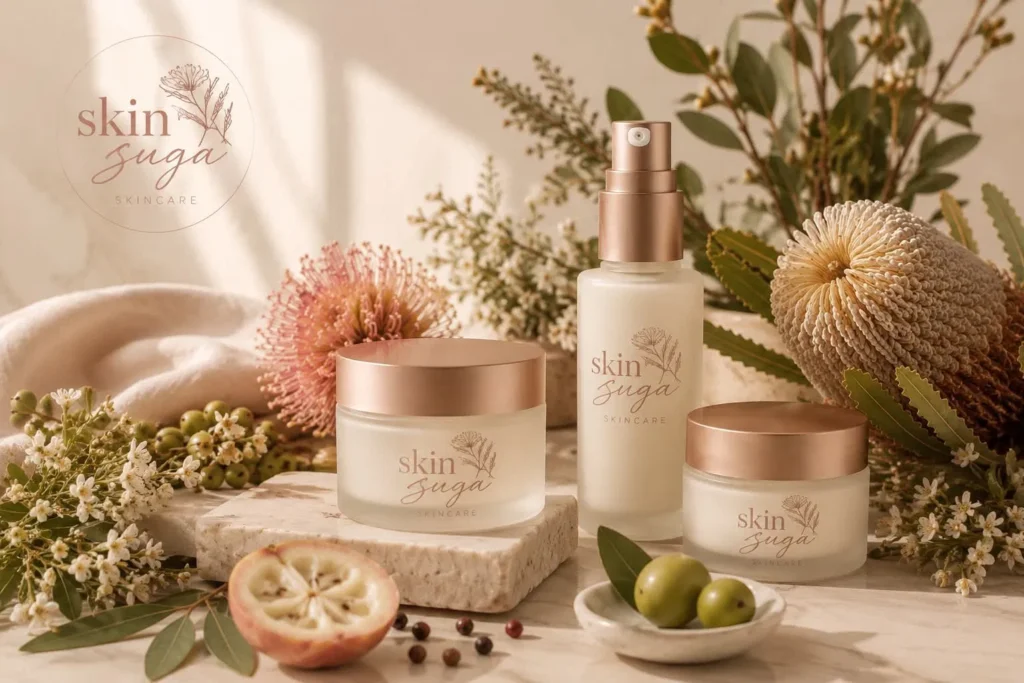
At Skin Suga, we believe the most beautiful routine is one you can follow with ease. Our Australian-made formulas are created to hydrate, nourish and support mature skin, helping it feel soft, comfortable and cared for.
The morning can begin with our Cream Cleanser, followed by the Hydrating Toning Mist. From there, the Vitamin C Serum brings together Triple Vitamin C Technology, Kakadu Plum, Rosehip Extract, Mountain Pepper Berry and Aloe Vera to help brighten dull-looking skin and restore a naturally radiant appearance.
Follow with our Anti-Ageing Moisturiser, formulated with Hyaluronic Acid, Native Snowflower, Co-Enzyme Q10, Rice Protein Peptides, Jojoba Oil and Shea Butter. It provides a nourishing layer of hydration before your sunscreen.
For a routine that takes the guesswork out of layering, the Age-Defying Ritual brings together cleansing, toning, brightening, moisturising and evening nourishment for mature skin. If dryness is your main concern, the Ultimate Hydration Ritual helps replenish moisture through every step, leaving skin softer, calmer and deeply hydrated.
Our Australian native botanicals are here to nurture your skin, not to replace sun protection. Kakadu Plum, Desert Lime, Mountain Pepper Berry and Native Snowflower can help support a brighter, healthier-looking complexion, but SPF remains your essential daily shield against further UV exposure.
A simple daily SPF ritual to keep
Suncare does not need to feel clinical or inconvenient. It can be a quiet act of kindness you offer yourself each morning.
As the light comes through your curtains, take a moment to massage in your serum and moisturiser. Feel the softness return to your skin. Then apply your broad-spectrum SPF with care across your face, neck, ears, décolletage and hands.
Your skin deserves this consistency, darling, not because you need to change how you look, but because you deserve to protect the skin that has carried you so beautifully.
Daily SPF will not erase every line or mark, nor should it. Your skin tells the story of your life. But with nourishing Australian botanicals, generous hydration and dependable sun protection, you can help preserve its comfort, softness and natural glow for many years to come.

Skincare and sun-care guidance is general information only and is not medical advice. For persistent pigmentation, changing spots or concerns about sun damage, please speak with your GP or a qualified skin professional.