Choose the format that solves the whole routine
Peptide serum or peptide moisturiser: which is better for mature skin?
The short answer: Neither format is automatically better. A peptide serum suits women who want a lightweight treatment layer beneath an existing moisturiser. A peptide moisturiser suits women who want hydration, emollience and peptides in one simpler step. Dry mature skin may enjoy both, but only when the formulas layer comfortably. The peptide type, complete formula, packaging and consistent use matter more than whether the word serum or moisturiser appears on the front.
Peptide skincare is now sold as watery drops, milky serums, gel creams and rich moisturisers. That range creates a false impression that the thinnest or most concentrated-looking bottle must be the serious option. In practice, the best format is the one that delivers the formula evenly, supports your skin type and fits beside sunscreen or night cream without irritation.
Peptides are short chains of amino acids used in cosmetics to condition skin and support a smoother, firmer-looking appearance. Different peptides have different functions and evidence. They are not interchangeable with injectable treatments, and the label “peptide complex” does not reveal how much active material reaches the skin. A finished formula needs to be stable, well preserved and pleasant enough to use consistently.
What a peptide serum does well
Serums are usually lighter and designed to sit before moisturiser. This makes them useful when you already own a cream you love or when you want peptides alongside humectants and antioxidants without changing the final moisturising step. A serum can also be moved between morning and evening as weather or sunscreen texture changes.
The limitation is routine crowding. A peptide serum added to vitamin C, hyaluronic acid, niacinamide, facial oil and two creams may contribute more stickiness than benefit. More serums do not guarantee a better result. If the formula already combines useful hydrating and age-support ingredients, treat it as the treatment step rather than one of several.
What a peptide moisturiser does well
A moisturiser combines water-binding ingredients with emollients and sometimes occlusive ingredients that reduce moisture loss. Adding peptides to that base can make the routine efficient, particularly for normal-to-dry mature skin. One well-balanced cream may replace the separate serum-and-cream pair on busy mornings.
The trade-off is texture. A rich peptide moisturiser may feel excellent at night but heavy under sunscreen in humid weather. A lighter cream may suit daytime and need an oil or richer product on dry winter evenings. The word moisturiser tells you about format, not whether the product is universally suitable.
Choose a format in five questions
- Is your current moisturiser working? If yes, add a serum only when you want a distinct peptide step.
- Does your skin feel dry by midday? A peptide moisturiser may offer a more complete final layer.
- Does sunscreen pill? Remove an extra morning serum before reducing sunscreen.
- Do you dislike long routines? Choose one peptide moisturiser or one combined treatment.
- Are you reactive? Patch test the complete formula and introduce it without another new active.
Can you use a peptide serum and moisturiser together?
Yes, provided the formulas suit you. Apply the lighter serum first, then moisturiser. There is no need to wait a fixed number of minutes; allow the first layer to stop feeling very wet or slippery. If the combination pills, feels sticky or makes sunscreen uneven, use the serum at night or choose one peptide format.
Using two peptide products is not automatically twice as effective. They may contain overlapping ingredients, and the skin cannot tell how many labels were used. Select products for complementary jobs: a treatment serum for the lightweight active layer and a moisturiser for lasting comfort.
Morning or evening?
Most cosmetic peptides can be used in either routine according to the product directions. Morning suits a light serum that layers cleanly beneath moisturiser and sunscreen. Evening gives more freedom to use a richer moisturiser and avoids competition with makeup.
If vitamin C already occupies the morning and Vitamin A Oil sits on selected nights, a peptide serum can be used at the time that keeps the whole routine calm. Peptides are not a reason to skip daily sunscreen, which remains the most important step for preventing further UV-related visible ageing.
A simple peptide routine after 40
- Cleanse gently: Begin with clean, comfortable skin.
- Apply one treatment: Use a thin peptide serum, or skip this step if peptides are in your moisturiser.
- Moisturise: Follow with a suitable cream, concentrating richer texture on dry areas.
- Use sunscreen in the morning: Apply broad-spectrum SPF50 or SPF50+ as the final skincare layer.
- Review after six to eight weeks: Judge comfort, consistency and visible smoothness in similar light.
What should you look for on the label?
Look beyond “multi-peptide”. The ingredient list may name hydrolysed rice protein, palmitoyl peptides, copper peptides or other peptide materials. Each has different data, and cosmetic evidence is not equal across the category. Hydrating partners such as hyaluronic acid can improve the immediate surface feel while emollients such as jojoba and shea butter support softness.
Packaging matters because water-based formulas need reliable preservation and protection from contamination. Close lids promptly and store products away from heat and direct sun. Discard a formula that changes smell, colour or texture unexpectedly.
How season and skin type change the choice
A serum may be the easiest peptide format during a warm Australian spring or summer, especially when sunscreen already provides a substantial final layer. In cooler weather, dry mature skin may prefer the cushion of a peptide moisturiser. Combination skin can use a light serum across the face and place richer cream only on the cheeks and neck.
Reassess when the weather, sunscreen or makeup changes. A product that pills in January may sit beautifully in July. That does not mean the peptide stopped working; it means the textures around it changed. Keep the treatment goal steady while adjusting the number and weight of supporting layers.
Ritual first: Age Defy Ritual
The Age Defy Ritual provides a coordinated route through cleansing, treatment and moisturising. Within it, the Anti-Ageing Elixir offers a serum-style multi-active step, while the Anti-Ageing Moisturiser carries rice protein peptides in a richer hydrating base.

Anti-Ageing Elixir
A treatment serum combining bakuchiol and peptides with hydrating and antioxidant ingredients.
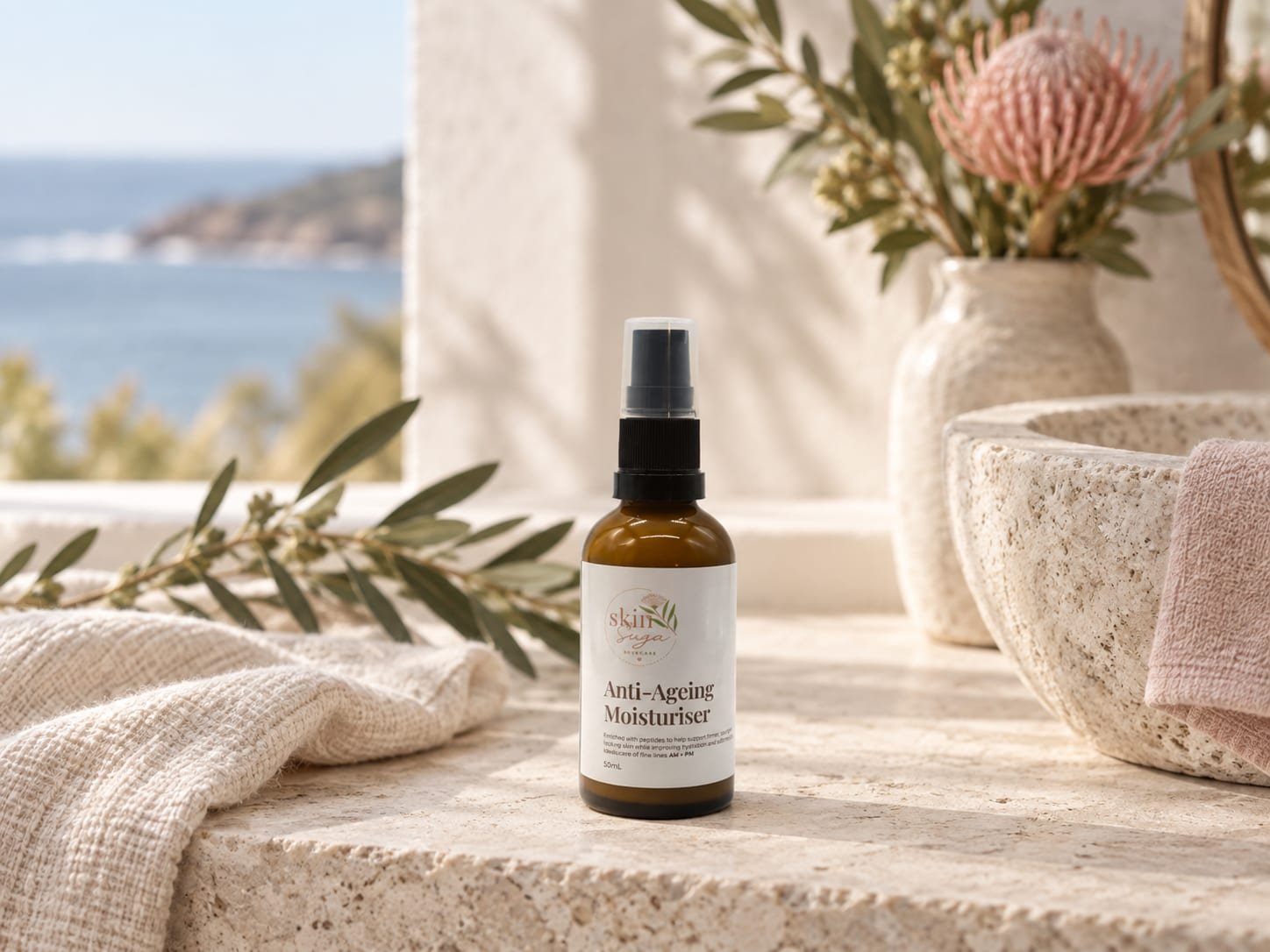
Anti-Ageing Moisturiser
Rice protein peptides, hyaluronic acid, Co-Enzyme Q10, Native Snowflower, jojoba and shea butter in the moisturising step.
Use one format well
Choose the serum, moisturiser or coordinated ritual that makes the whole routine easier to repeat.
Common questions
Is a serum more concentrated than a moisturiser?
Not necessarily. Texture and product category do not disclose peptide concentration or effectiveness. Assess the complete formula and evidence.
Can I use peptides every day?
Many cosmetic peptide products are designed for daily use. Follow the label and reduce frequency if the complete formula feels irritating.
Do peptides exfoliate?
Peptides are not generally exfoliating acids. A peptide product may still contain other active ingredients, so read the complete ingredient list.
Are peptides essential after 40?
No. Gentle cleansing, moisturiser and daily sunscreen remain the foundation. Peptides are an optional age-supporting addition.
Sources
- Peer-reviewed review: Bioactive peptides in cosmetics
- American Academy of Dermatology: How to select a moisturiser
- CeraVe Australia: Peptides in skincare
General cosmetic skincare information only. Peptide performance depends on the exact ingredient, concentration, delivery system and complete formula.