
The best time is the time you can repeat
Should mature skin use peptides in the morning or at night?
The short answer: Most cosmetic peptide products can be used in the morning or at night. Choose the time that fits the formula, your other actives and the way the product sits under sunscreen or moisturiser. Morning is convenient for antioxidant and hydration-focused routines; night is useful when daytime layers already feel crowded. Start once daily, follow the label, and prioritise consistency over using peptides twice a day.
Peptides are not generally tied to daylight or darkness. Unlike ingredients that are deliberately reserved for evening use, many peptide serums and creams fit comfortably into either routine. The real decision is practical: where can the product perform without making your routine irritating, sticky or difficult to repeat?
Women over 40 often already use vitamin C, hyaluronic acid, vitamin A, moisturiser and sunscreen. Adding peptides to both morning and night can turn one useful step into unnecessary duplication. One consistent application is a sensible place to begin.
Why the peptide type matters
Peptide is an umbrella term for many short amino-acid chains. Signal peptides, carrier peptides and other cosmetic peptide families have different properties. A label that says multi-peptide or rice protein peptides does not tell you everything about concentration, stability or delivery.
Use the directions for the finished product. Broad online rules about copper peptides, acids or vitamin C may not apply to every peptide and every formulation. If a brand has combined ingredients in one product, it has designed them to share that formula.
When morning use makes sense
Morning works well when your peptide product is lightweight, comfortable beneath moisturiser and compatible with sunscreen. It can sit after cleansing or toning and before cream. This timing also leaves the evening free for a vitamin A product or a richer oil.
The drawback is layer count. If serum, moisturiser and sunscreen start pilling, do not use more waiting time as the only solution. Reduce quantities or move the peptide step to night. Sunscreen coverage should not be compromised to accommodate a treatment serum.
A peptide-focused morning routine
- Cleanse or rinse: Use the least cleansing needed for comfortable skin.
- Tone if useful: Apply one light mist only when it has a clear hydrating role.
- Use peptides: Spread a thin, even layer without combining it in your palm with other products.
- Moisturise: Choose a texture that supports dry areas but still sits well under sunscreen.
- Protect: Finish with broad-spectrum SPF50 or SPF50+ sunscreen, following the labelled amount and reapplication directions.
When evening use makes sense
Night can be easier if you dislike multiple layers under sunscreen or makeup. A peptide serum can follow cleansing and sit beneath moisturiser. The calmer pace also makes it easier to notice whether the product feels comfortable.
If you already use vitamin A at night, check the exact product directions. Some routines tolerate both; others feel better when peptide and vitamin A products alternate. Mature skin does not benefit from a schedule that repeatedly causes peeling or tightness.
Can peptides be used twice daily?
Many formulas allow it, but twice daily is not a requirement. Begin once a day for several weeks. Increase only when the label permits it, your skin remains comfortable and the second application has a purpose.
Using more often may increase cost and the chance of pilling without changing the visible outcome. The basics still deserve space: cleansing, moisturising and sunscreen are not optional just because a serum contains sophisticated ingredients.
A calm peptide evening routine
- Remove the day: Cleanse away makeup, sunscreen, sweat and pollution gently.
- Apply one treatment: Use the peptide product according to its label.
- Add hydration only if needed: Use a separate humectant serum when it solves genuine tightness, not from habit.
- Moisturise: Seal the routine with a comfortable cream.
- Alternate stronger actives: If vitamin A or exfoliation causes dryness alongside peptides, schedule them on different nights.
How should peptides be layered?
Apply thinner water-based products before richer creams and oils. There is no need to wait a fixed 20 or 30 minutes between ordinary cosmetic layers. Give each product enough time to stop feeling wet, then continue.
Use clean hands and modest amounts. Rubbing repeatedly can roll polymers and sunscreen filters into visible flakes. Patting is not mandatory, but gentle spreading is better than vigorous massage.
What results are realistic?
A hydrating peptide formula may make the surface look smoother quickly because of its moisturising base. Changes attributed to the peptide itself are gradual and vary by formula. Natural lines, movement and pores remain part of healthy skin.
Judge a product in consistent lighting and over a reasonable period. Stop if persistent irritation develops. A formula that feels unpleasant every day is unlikely to become a sustainable ritual.
How to choose your permanent time slot
Run a simple two-week test. Use the peptide product in the morning for one week and note comfort, pilling and whether you remember the step. Use it at night for the next week with the rest of the routine unchanged. Choose the slot that causes fewer problems and is easier to maintain. This is more useful than copying an influencer’s timetable.
Keep expectations tied to the formula. If the serum also contains vitamin C, niacinamide, bakuchiol or hyaluronic acid, its morning-versus-night decision may reflect those ingredients and its texture as much as the peptides. A combination product is one treatment step, not a reason to add separate versions of every ingredient it contains.
Season can change the answer, too. A light peptide serum may layer easily on a cool Perth morning but feel excessive beneath sunscreen during a humid summer day. Moving it to evening is a practical adjustment, not a loss of effectiveness. Reassess the slot when weather, sunscreen or the rest of your routine changes.
Ritual first: Age Defy Ritual
The Age Defy Ritual gives peptide-focused care a complete structure. Its Anti-Ageing Elixir combines peptides with bakuchiol, hyaluronic acid, niacinamide, vitamin C, squalane and green tea, while the Anti-Ageing Moisturiser uses rice protein peptides with hydration and nourishing lipids.

Anti-Ageing Elixir
A multi-active serum that brings peptides into one coordinated formula for morning or evening use as directed.
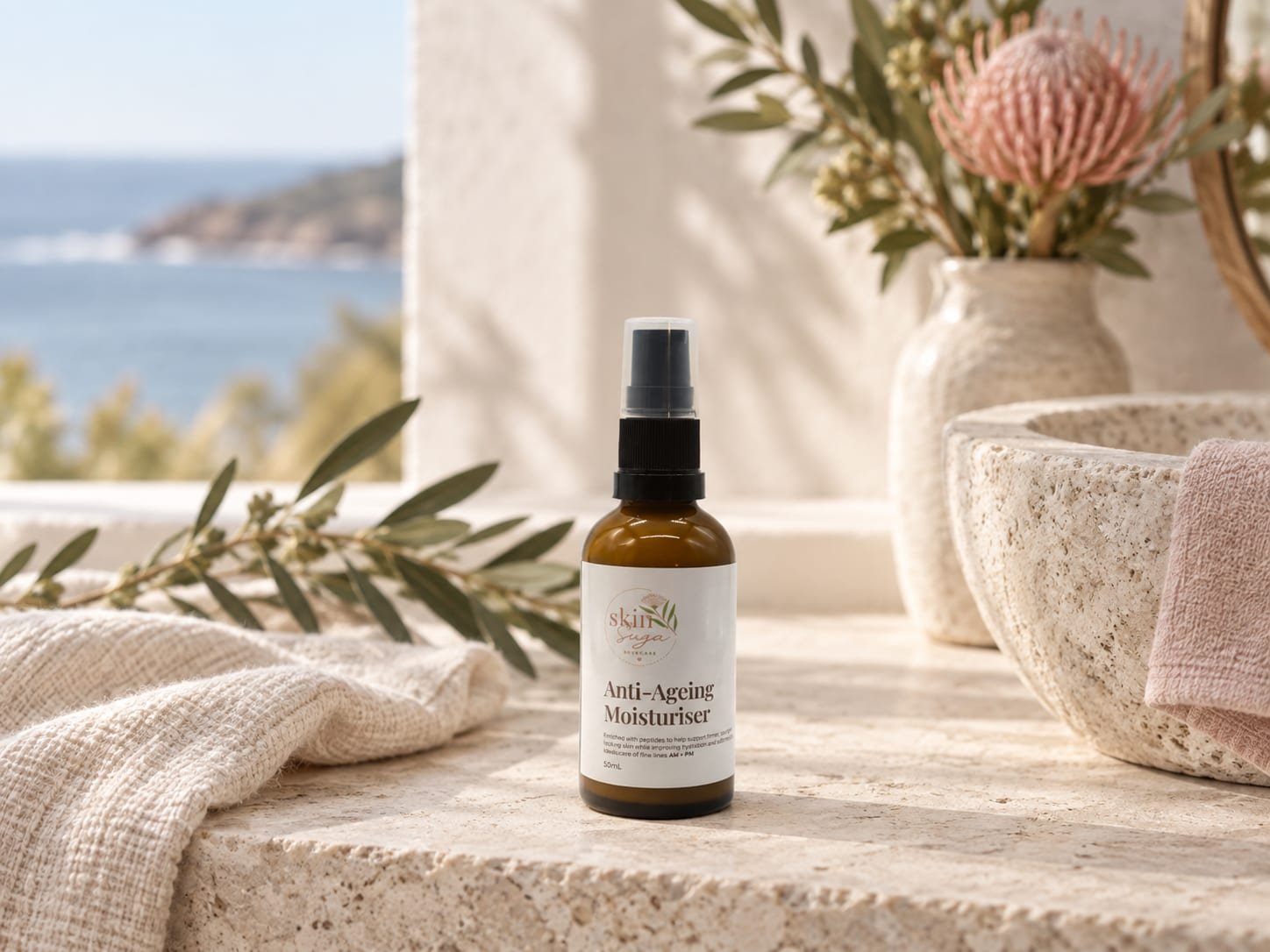
Anti-Ageing Moisturiser
Rice protein peptides, hyaluronic acid, Co-Enzyme Q10, Native Snowflower, jojoba and shea butter support the moisturising step.
Put peptides where they fit
Choose one reliable time, keep the layer thin and protect the routine with daily sunscreen.
Common questions
Do peptides make skin sensitive to sunlight?
Peptides are not generally treated as photosensitising, but daily sun protection remains essential for visible ageing concerns.
Should peptides go before hyaluronic acid?
Follow product directions and apply lighter textures first. If both are water-based serums, one combined formula or the thinnest-first rule keeps layering simple.
Can I use peptides with Vitamin A Oil?
Often yes, but introduce products gradually and alternate nights if the combined routine feels dry or irritating.
Are peptides essential after 40?
No single treatment ingredient is essential. A gentle cleanser, suitable moisturiser and daily sunscreen form the foundation.
Sources
- American Academy of Dermatology: Getting more from age-supporting products
- Peer-reviewed review: Bakuchiol in cosmetic and dermatological research
- CeraVe Australia: Peptides in skincare
General cosmetic skincare information only. Follow the directions for your exact formula and the advice attached to any prescription treatment.