
Healthy hydration matters, but a glass of water is not a moisturiser
Does drinking more water hydrate mature skin?
The short answer: Adequate fluid intake supports normal health, and people who previously drank very little may notice a small improvement in skin hydration. Evidence does not show that drinking extra water beyond your needs erases wrinkles or replaces topical skincare. For dry mature skin, gentle cleansing, humectants, moisturiser and sun protection remain the practical surface-care tools.
Water is essential for health, but the popular instruction to drink extra litres for glowing skin overstates the evidence. If your usual intake is low, improving it may slightly support skin hydration. Once your body is adequately hydrated, more water is not proven to erase wrinkles. Topical skincare remains important because the outer skin barrier manages water loss directly.
What research actually tells us
A systematic review of dietary water and skin outcomes found that the evidence was weak and based on limited-quality studies. Some measures of skin hydration improved slightly, especially in people with lower baseline water intake, but the researchers could not conclude that extra water provides a clear anti-ageing effect.
This distinction matters. Drinking enough to avoid dehydration supports normal body function. Drinking beyond thirst and health needs is not a cosmetic treatment. It cannot replace moisturiser, sunscreen, sleep or assessment of persistent dry skin.
Why mature skin can feel dry even when you drink water
The outermost layer of skin loses water to the environment through transepidermal water loss. Age, hormones, low humidity, air conditioning, hot showers, harsh cleansers and active products can all influence this surface. A glass of water travels through the body; it does not form a protective layer on the face.
Mature skin may also produce less surface oil, making it harder to slow water loss. That is why topical humectants, emollients and occlusives can make a visible and sensory difference even when a person already drinks adequately.
How much water should you drink?
There is no single skincare target. Fluid needs vary with body size, health, medication, weather, exercise, pregnancy and diet. Water comes from drinks and foods. Follow Australian health advice and any guidance from your doctor, especially if you have kidney, heart or endocrine conditions that affect fluid balance.
Use thirst and normal health guidance rather than forcing large amounts for cosmetic reasons. Very excessive water intake can be dangerous. Skincare marketing should never override medical fluid restrictions.
Signs that deserve more than moisturiser
Dry lips and tight skin can occur for many reasons and do not diagnose dehydration. Seek medical advice for unusual thirst, reduced urination, dizziness, confusion, persistent vomiting or other systemic symptoms. A moisturiser cannot correct a medical fluid imbalance.
Likewise, persistent itchy, cracked or inflamed skin may be eczema, dermatitis or another condition. Topical cosmetic care can support comfort but should not delay assessment.
A practical inside-and-out hydration routine
- Drink fluids according to thirst, health guidance and activity.
- Cleanse the face gently with lukewarm water.
- Apply a humectant serum when the skin feels tight or flat.
- Follow with moisturiser to soften and slow water loss.
- Use a richer layer only on areas that remain dry.
- Finish morning care with broad-spectrum sunscreen.
- Adjust topical texture for heat, humidity and air conditioning.
What hyaluronic acid can and cannot do
Hyaluronic acid is a humectant that helps bind water at the skin surface. It can temporarily improve the look of plumpness and help tight skin feel more comfortable. It does not hydrate the entire body or permanently fill wrinkles.
Use it as one step, not the whole routine. In dry air, follow with a moisturiser so the hydration layer is supported by emollient and occlusive ingredients. If several serums leave skin sticky, use less or select only the one that serves the clearest purpose.
Why moisturiser does more than add water
A moisturiser combines different ingredient roles. Humectants support water, emollients smooth roughness and occlusives reduce evaporation. That is why a cream can improve comfort more directly than another glass of water when the problem is at the surface barrier.
Apply moisturiser after cleansing and use enough for a thin even layer. If the face is shiny but tight, choose a lighter texture rather than skipping moisturiser. If cheeks are very dry, add extra product only there.
Where Skin Suga fits
The Ultimate Hydration Ritual is the most relevant coordinated option for mature skin that feels persistently tight or under-cushioned. It combines cleansing, water-binding hydration and moisturising instead of treating hydration as a single serum or a daily water challenge.
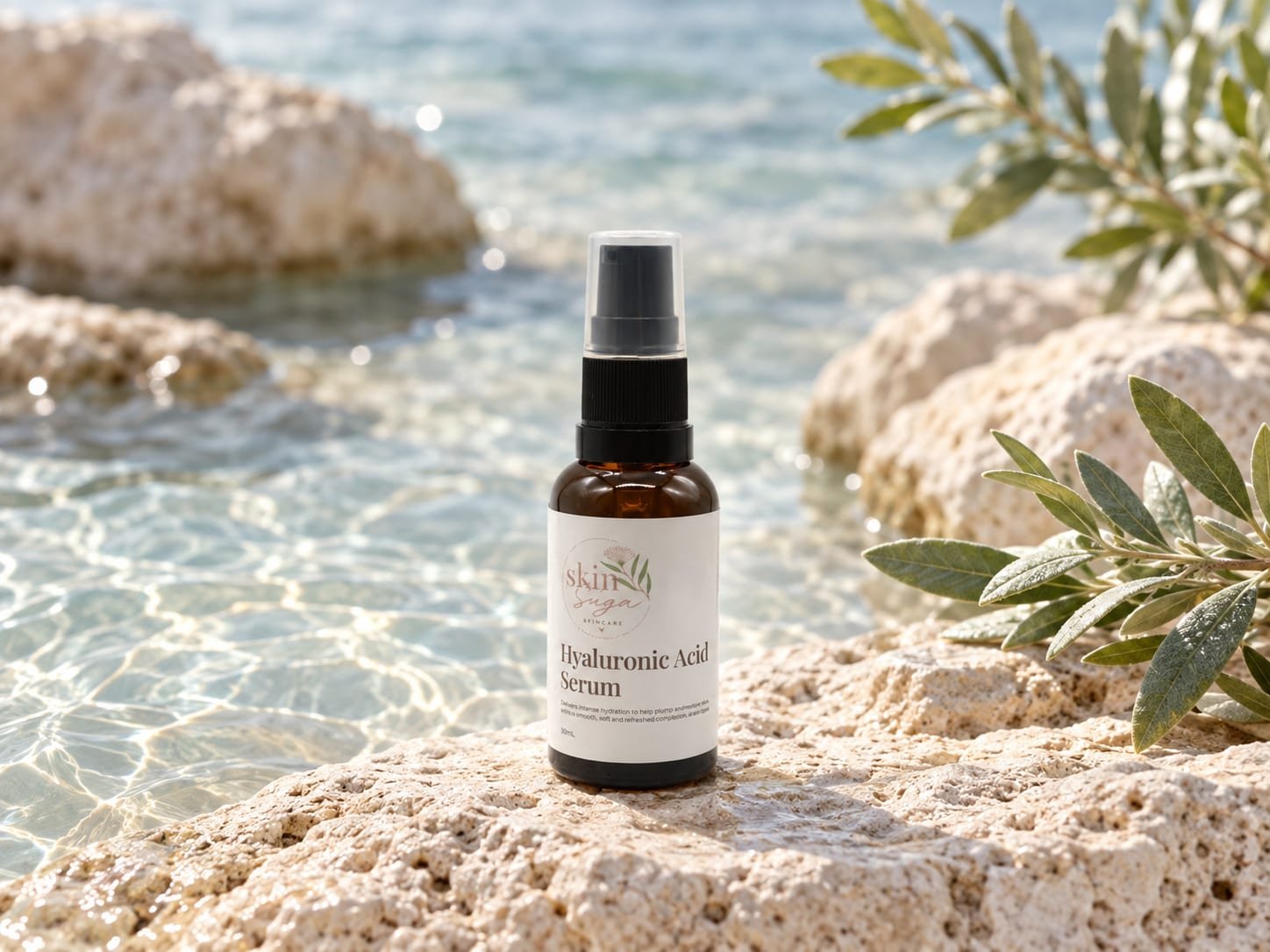
Hyaluronic Acid Serum
A vegan hyaluronic acid hydration layer designed to support a more cushioned, comfortable surface feel.
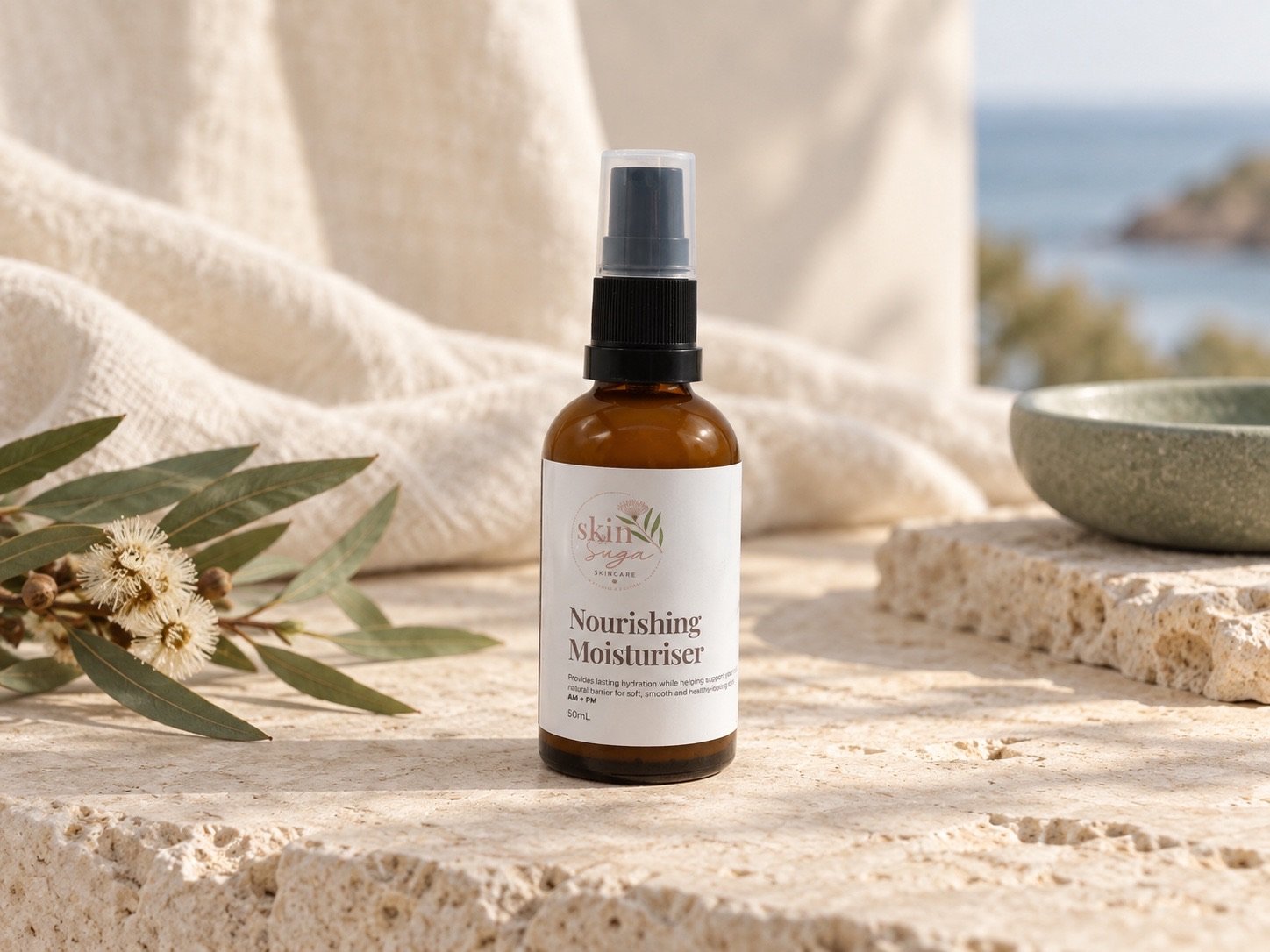
Nourishing Moisturiser
Shea butter, jojoba and botanical oils provide a richer follow-up for mature skin that needs more than a serum alone.
Can drinking water make skin glow?
If someone is mildly underhydrated, normalising fluid intake may improve general wellbeing and can produce subtle skin changes. The immediate glow seen after a large glass of water is more likely to reflect lighting, temperature, circulation or expectation than a rapid structural change in the skin.
A dependable radiance plan is less dramatic: daily sunscreen, gentle cleansing, comfortable moisturising and targeted ingredients used consistently. Healthy sleep, movement and nutrition matter too, but none should be sold as a guaranteed wrinkle cure.
Australian climate changes the topical plan
Hot weather, wind, swimming, air conditioning and low humidity can all change how skin feels. You may prefer a lighter moisturiser in humid summer weather and a more occlusive cream during cold dry periods. Fluid needs may rise with heat and exercise, but follow health advice rather than a cosmetic quota.
After swimming, rinse salt or chlorine and moisturise if the skin feels tight. Reapply sunscreen according to the label. Water inside the body and water around the body are separate parts of the skin-comfort picture.
Use skin feel as a clue, not a diagnosis
Observe when tightness appears. Skin that feels comfortable before cleansing but tight afterwards may need a gentler cleanser or cooler water. Skin that becomes dry only in an air-conditioned office may need a better daytime moisturiser. Skin that is persistently itchy, inflamed or cracked needs more than a hydration slogan.
A short routine diary can help: note weather, cleanser, active products and comfort for two weeks. That record is more informative than changing both water intake and four skincare products at once.
Frequently asked questions
Will eight glasses of water remove wrinkles?
No fixed number of glasses has been proven to remove wrinkles. Adequate hydration supports health, while wrinkles reflect ageing, sun exposure, expression and other factors.
Can coffee dehydrate my skin?
Moderate caffeinated drinks can contribute to daily fluid intake for many adults. Individual health advice, total intake and symptoms matter more than labelling one drink as a skin dehydrator.
Why is my skin dry if my urine is pale?
Surface dryness can result from low skin oils, barrier disruption, cleanser, weather or a skin condition even when body hydration is adequate.
Should hyaluronic acid be applied to damp skin?
Follow the product directions. Many people like applying it to slightly damp skin, then sealing with moisturiser. More water on the face is not always better if the formula becomes diluted or pills.
Hydrate sensibly, moisturise directly
Meet normal fluid needs, then use topical layers to address the surface where dryness is felt.
Sources and further reading
- Systematic review: Dietary water and human skin hydration
- Review: Water, hydration and health
- DermNet: Emollients and moisturisers
This is general cosmetic education and not fluid-intake advice. Follow your healthcare professional’s guidance if you have a condition or medicine affecting fluids.