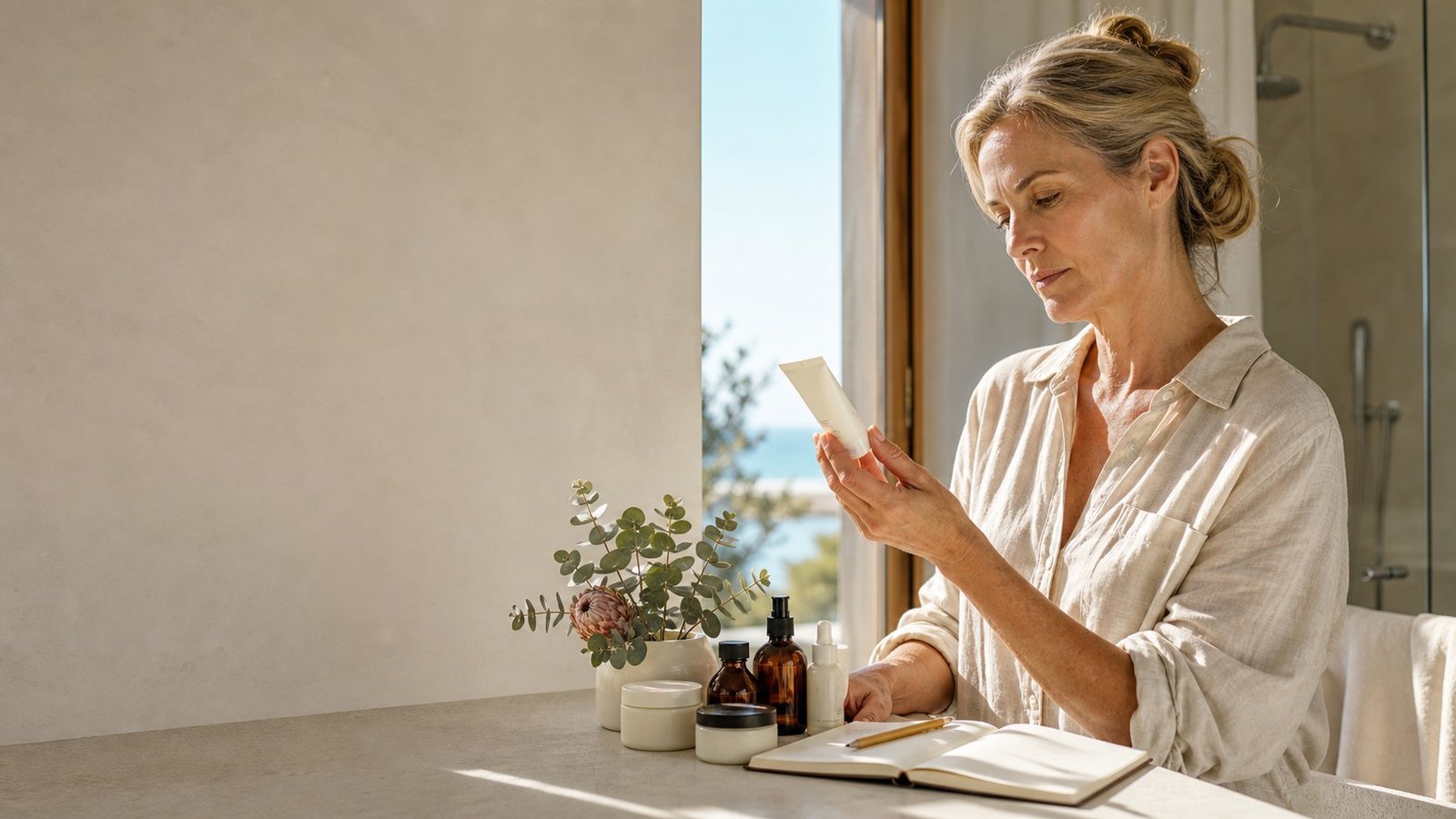
Labels first, senses second, safety always
How can you tell when skincare has expired in Australian heat?
The short answer: Check the printed expiry date and any period-after-opening symbol first. Then discard a product if its smell, colour, texture or packaging has changed, or if it has been stored outside the directions. Heat can shorten product quality, and sunscreen needs particular care because poor storage can affect reliable protection.
The safest expiry check begins with the product label. Look for a printed expiry date, batch information and any period-after-opening symbol, often shown as an open jar with a number such as 6M or 12M. Then check for changes in smell, colour, texture, separation or packaging. Australian heat can accelerate deterioration, and sunscreen deserves extra care because unreliable storage may compromise protection.
Expiry date and period after opening are different
A printed expiry date tells you the manufacturer’s stated shelf life under the required storage conditions. A period-after-opening symbol tells you how long the product should be used after it is first opened. If a jar symbol says 12M, note the opening month and plan to finish or discard it within twelve months, even if the bottle still looks full.
Not every Australian cosmetic is required to carry the same style of expiry marking. Cosmetics with a shelf life longer than thirty months may use a period-after-opening indication rather than a fixed date. Therapeutic sunscreens are regulated differently and their label directions must be followed exactly.
When no date is obvious, do not invent one. Check the carton, bottle base, crimp or manufacturer’s website, and contact the brand with the batch code when necessary.
Make opening dates visible
The simplest system is a small removable label on the base of the bottle with the month and year opened. A note in your phone or skincare diary also works. Record only products whose freshness you need to track; the system should take seconds, not turn the bathroom into an inventory project.
Opening-date records are especially useful for products used intermittently. A serum can remain half full long after memory of its first use has faded. The note also helps distinguish a formula that has deteriorated unusually early from one that has simply passed its labelled period.
What heat can do to skincare
Heat can speed oxidation, alter fragrance, thin or thicken emulsions and damage preservatives or packaging. Repeated heating and cooling in a car or sunny bathroom window can be more stressful than stable room-temperature storage.
A product does not need to look dramatic to have changed. Vitamin C formulas may darken as they oxidise, oils may smell rancid, creams may separate and pumps may swell or leak. These signs justify caution, especially when the change is outside the maker’s normal description.
Do not try to remix a separated product with water, essential oil or another cosmetic. Adding ingredients can disrupt preservation and contamination control.
Heat damage is not always reversible once the bottle cools. A sunscreen or emulsion returning to its usual thickness does not prove that every ingredient and protective system remained stable. When exposure has been extreme and the product is important for protection, replacement is the prudent choice.
Sunscreen needs its own rule
Sunscreen protection depends on a stable regulated formula. The Therapeutic Goods Administration and Australian sun-safety organisations advise following storage directions and avoiding excessive heat. Leaving sunscreen in a hot car, beside a pool in direct sun or in an uninsulated beach bag for long periods can undermine confidence in the product.
Check the expiry date, packaging integrity and storage history. If sunscreen has separated, changed texture or smell, leaked, passed its date or spent significant time in extreme heat, replace it. The cost of a fresh bottle is small compared with relying on protection you cannot verify.
Use your senses, but do not rely on them alone
Smell, colour and texture are useful warning signs. A sour, rancid or unusually sharp smell can indicate deterioration. Unexpected darkening, yellowing, graininess, watery separation or clumps also deserve attention.
However, a product can be past its labelled period without obvious sensory change. Preservative performance and active stability are not always visible. That is why label information and opening dates come first.
Packaging gives clues
Airless pumps and opaque bottles can protect light- or air-sensitive formulas better than wide jars, but no package makes a product immortal. Wipe dispensers clean, replace caps and avoid touching droppers directly to the skin.
Discard packaging that is cracked, swollen, rusted or no longer closes properly. Water entering a jar in the shower can contaminate a formula even when the cream still smells normal.
Where to store skincare in an Australian home
Choose a cool, dry cupboard away from direct sunlight, heaters and steamy showers. A bedroom drawer or closed bathroom cabinet away from heat can be more stable than a windowsill. Refrigeration is unnecessary unless the manufacturer specifically recommends it; ordinary household fridges can introduce condensation or temperatures outside the formula’s design.
For travel, use a small insulated bag, keep products out of parked cars and place sunscreen in the shade. Replace caps promptly at the beach and do not bury a leaking tube in sand.
A ten-minute skincare freshness audit
- Gather the products you currently use.
- Check every printed expiry date and open-jar symbol.
- Write the opening month on a small label or routine note.
- Inspect colour, smell, texture and packaging against the original condition.
- Discard products that are expired, changed or contaminated.
- Move the remaining products away from heat, sun and steam.
- Check sunscreen separately and replace any bottle with uncertain heat exposure.
- Repeat the audit at the start of each Australian season.
Where Skin Suga fits
The Daily Essentials Ritual keeps the routine coordinated and easier to monitor. Fewer purposeful products are simpler to finish within their labelled period than a crowded shelf of half-used serums.
Store Skin Suga products according to their labels, close each container after use and record the opening month. For ingredient-rich formulas such as Vitamin C Serum, consistency of colour, smell and texture matters. Contact Skin Suga with the batch information if you are unsure rather than guessing.
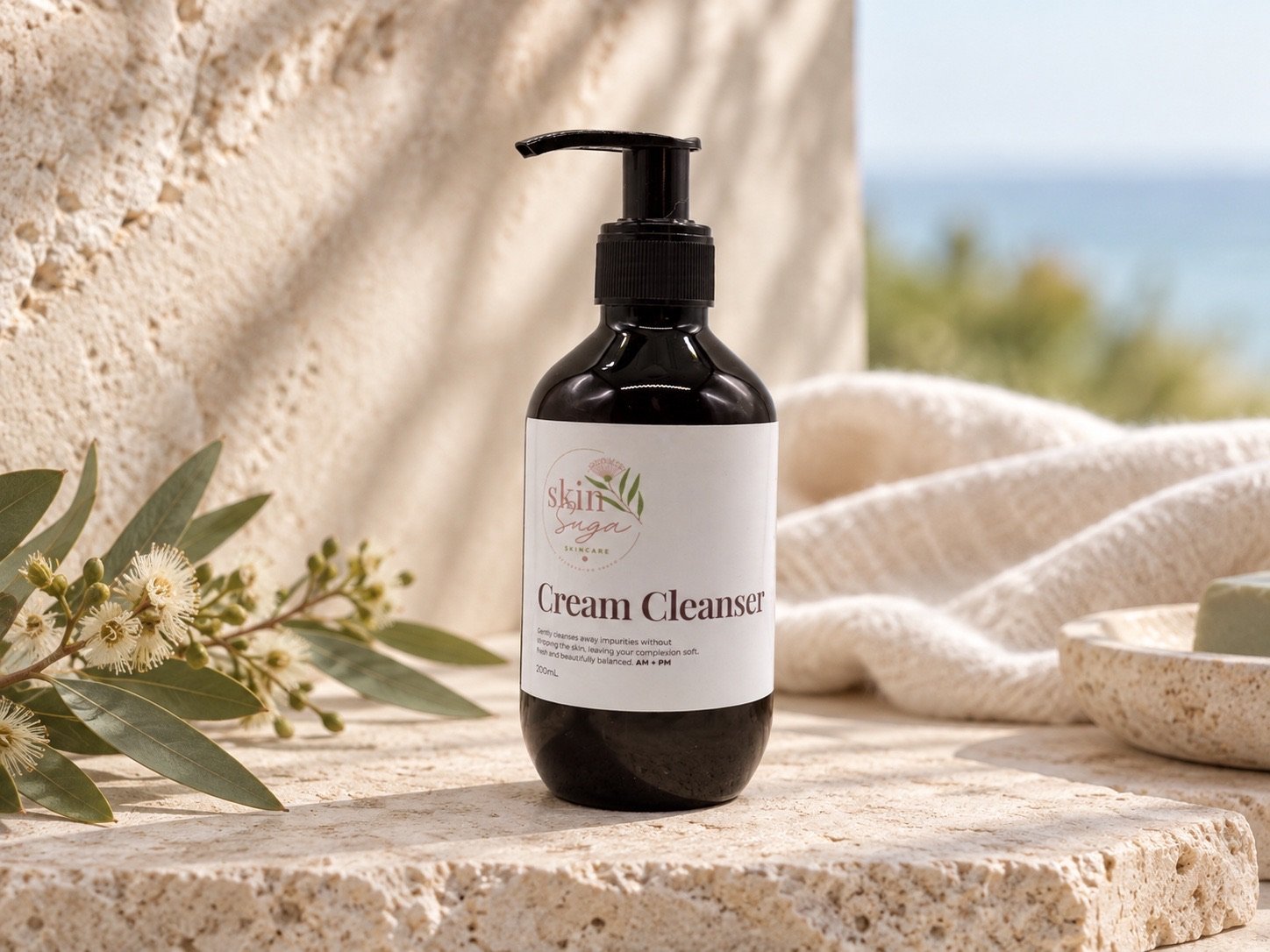
Cream Cleanser
Keep the cap and dispenser clean, avoid adding water to the container and follow the label’s storage and opening guidance.
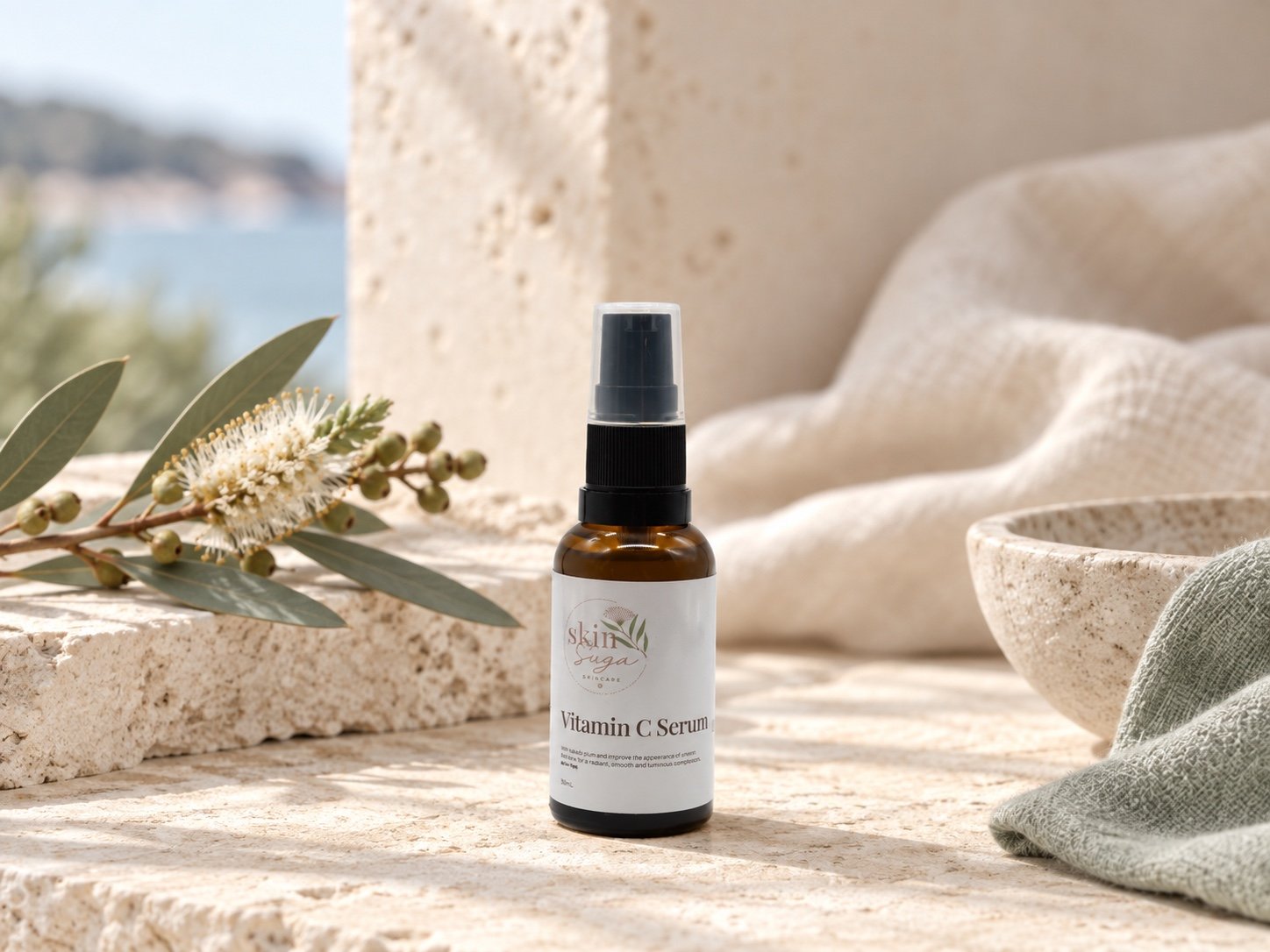
Vitamin C Serum
Protect antioxidant formulas from heat and light, close the package promptly and investigate unexpected colour or scent changes.
What not to do with expired skincare
- Do not dilute a thick cream with water.
- Do not add essential oils to cover an unusual smell.
- Do not keep expired sunscreen as an indoor or cloudy-day backup.
- Do not pass a questionable product to another person.
- Do not rely on a social-media shelf-life chart over the actual label.
- Do not pour cosmetics down drains in large quantities; follow local disposal guidance.
Frequently asked questions
Does skincare expire if it is unopened?
Yes. Unopened products still have a finite shelf life. Follow the printed expiry date and storage directions.
Can I use a product after the open-jar period if it smells fine?
The absence of a smell change does not verify preservation or stability. The labelled period is the safer guide.
Should I keep vitamin C serum in the fridge?
Only if the manufacturer instructs you to. Cool, stable, dark storage is generally more important than automatically refrigerating every serum.
How hot is too hot for sunscreen?
Follow the storage temperature on the label. Avoid hot cars and direct sun. Replace sunscreen when extreme exposure makes its stability uncertain.
Keep the shelf purposeful and the formulas fresh
Choose a coordinated routine you can use consistently, record opening dates and store every product according to its label.
Explore Daily Essentials RitualExplore Radiance & Glow Ritual
Sources and further reading
- ACCC Product Safety: Cosmetic ingredients labelling guide
- Therapeutic Goods Administration: Australian sunscreen regulatory guidelines
- CHOICE: Cosmetic expiry dates
Product labels and manufacturer directions take priority. When sunscreen stability is uncertain, replace it.