
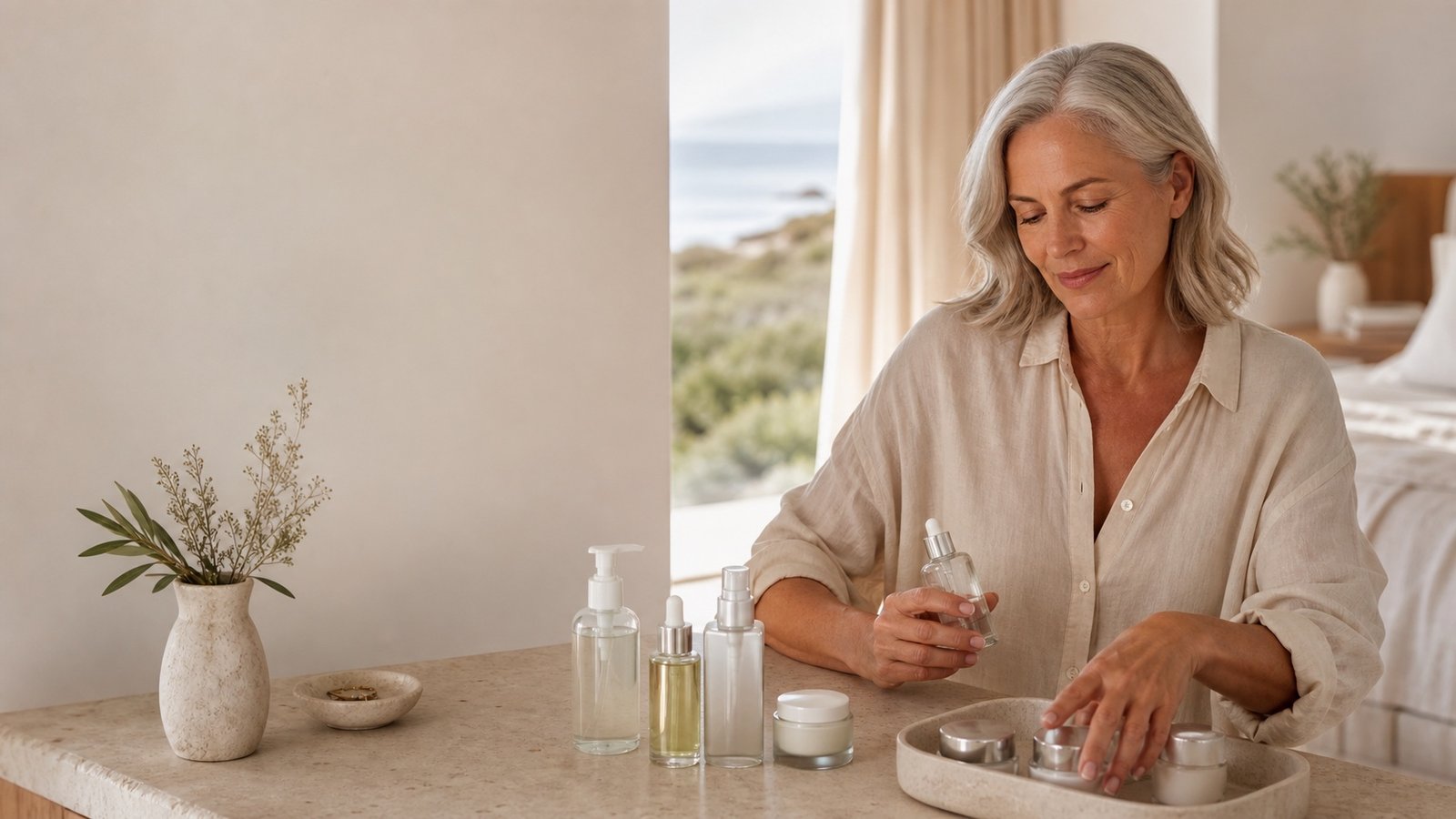
A calmer routine after 40
How do I simplify an overcomplicated skincare routine after 40?
The short answer: return to four jobs: gentle cleansing, one purposeful serum, moisturiser and morning sunscreen. Pause duplicate actives, keep only products your skin tolerates and reintroduce one optional step at a time. A shorter routine is easier to follow, easier to troubleshoot and often kinder to mature skin.
A crowded bathroom shelf can feel like evidence that you are taking skincare seriously. In practice, too many overlapping serums, acids, oils and masks can make it difficult to know what is helping, what is irritating and what is simply adding cost.
After 40, skin may become drier or less forgiving of frequent change. That does not mean every active must be abandoned. It means the routine needs a clear structure. The American Academy of Dermatology advises starting with one anti-ageing product because several introduced together can irritate the skin and make signs of ageing more noticeable.
Signs your routine has become too complicated
- You cannot explain the purpose of each product in one sentence.
- You use two or more products doing almost the same job.
- You regularly experience stinging, pilling, tightness or unexplained redness.
- You change products so often that none receives a fair trial.
- Your morning layers interfere with sunscreen or makeup.
- You skip the routine because it takes too long.
- You are using exfoliating acid, vitamin A and a strong treatment serum on the same night without a tolerance plan.
Start with a seven-day reset
A cosmetic reset does not mean “detoxing” the skin. It means temporarily reducing variables. For one week, keep cleansing gentle, use a familiar moisturiser and apply sunscreen each morning. If your skin is comfortable with a basic hydrating serum, it may stay. Pause optional masks, scrubs, exfoliating acids and newly introduced actives.
If you use prescription skincare, do not stop or change it without advice from the prescriber. If the face is swollen, blistered, very itchy or painful, seek medical care rather than conducting a product experiment.
Give every product one job
Cleanser: remove the day
It should remove sunscreen, makeup and residue without leaving the face tight. One cleanser may be enough; double cleanse only when one pass does not remove what you wear.
Serum: address the main priority
Choose hydration, radiance or age support rather than layering all three categories immediately. Hyaluronic acid suits dehydration; vitamin C suits a radiance focus; a multi-ingredient age-support serum can reduce the need for several separate bottles.
Moisturiser: maintain comfort
Select texture according to your current skin and climate. A light formula may suit humid weather; a richer one may suit winter, menopause-related dryness or night use.
Sunscreen: protect the progress
Use broad-spectrum SPF 30 or higher every morning and follow the label. Sunscreen is not an optional “active”; it is the foundation of an Australian daytime routine.
Facial oil: optional final comfort
Oil can be useful for dry mature skin, particularly at night. It is not compulsory and should not crowd out moisturiser or sunscreen.
A simple two-routine framework
Morning
- Rinse or cleanse gently.
- Apply one serum if needed.
- Use moisturiser if your sunscreen is not moisturising enough.
- Finish with broad-spectrum SPF 30 or higher.
Evening
- Remove makeup and sunscreen with a gentle cleanser.
- Apply one targeted serum or treatment according to directions.
- Use moisturiser.
- Add a few drops of facial oil only when extra comfort is needed.
How to reintroduce products without losing control
Add one product and keep everything else stable for at least one to two weeks when possible. Patch test first. Record the date, frequency and reason you are adding it. If irritation appears, stop the newest optional product and return to the last comfortable routine.
Visible cosmetic changes take time. Moisturiser can soften dehydration lines quickly, but tone and texture changes often require six weeks or longer. Constant switching prevents a fair assessment and can create the very roughness you are trying to improve.
Choose one priority for the next eight weeks
Write down the concern that matters most now: dehydration, dullness, uneven-looking tone or a more supported age-care routine. Select one serum category for that goal and keep the basic cleanser, moisturiser and sunscreen stable. Eight weeks is long enough to observe comfort and early cosmetic change for many products, though some results take longer.
A single priority also makes purchasing more disciplined. If a new trend product does not serve the current goal, it can wait. When the eight-week period ends, decide whether the product improved comfort or appearance enough to remain. Then change one variable, not the entire shelf.
Which Skin Suga ritual is the simplest start?
The Daily Essentials Ritual is the clearest foundation: Cream Cleanser, Anti-Ageing Toner, Hyaluronic Acid Serum and Nourishing Moisturiser. Each product has a distinct role, and the routine can be used without adding several competing treatments.
Once the foundation is comfortable, choose only one direction. The Radiance & Glow Ritual adds vitamin C and glow-focused oils; the Age-Defying Ritual uses Vitamin A Oil, Anti-Ageing Moisturiser and Eye Cream; the Ultimate Hydration Ritual adds deeper hydration and facial oil. You do not need all three rituals at once.
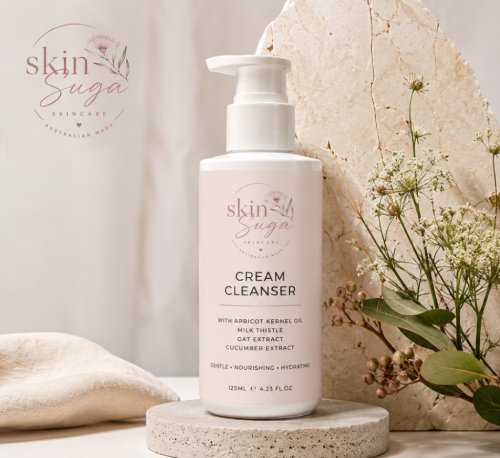
One cleanser
A dependable cream cleanser can replace a rotating collection of harsh foams and scrubs.
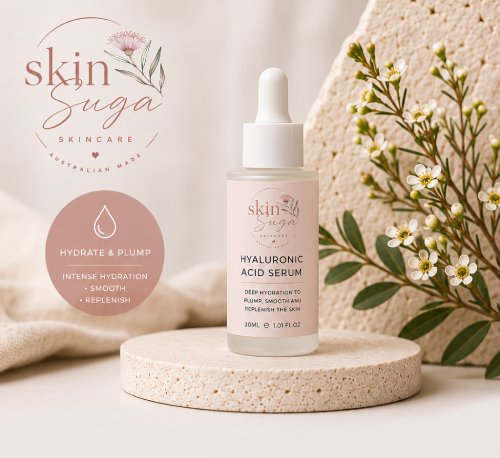
One clear serum job
Choose hydration first when the skin feels tight, flat or dehydrated rather than layering multiple trend serums.
Begin with the essentials
Daily Essentials is designed as an easy foundation. Build from it only when your skin has a clear need and the added step earns its place.
Explore Daily EssentialsView the Cream CleanserA monthly shelf audit
Check expiry and period-after-opening symbols, discard anything with a changed smell, colour or texture, and separate unopened backups from current products. Keep a small “testing” area for one new product only. This reduces accidental combinations and makes the routine easier to repeat.
Ask three questions about every item: What job does it do? Does my skin tolerate it? Would I notice if I stopped? If the answers are unclear, the product may not deserve daily space.
Common questions
How many products should mature skin use?
There is no ideal number, but every product should have a clear purpose. Cleanser, moisturiser and sunscreen form the basic structure; one targeted serum is often enough to begin.
Can I use vitamin C and vitamin A in a simple routine?
Yes, if your skin tolerates them. A common approach is vitamin C in the morning and vitamin A on selected evenings. Introduce slowly and keep sunscreen consistent.
What if my skin gets worse during the reset?
Stop optional new products and seek advice if there is persistent burning, swelling, itching, rash, pain or worsening breakouts. A simple cosmetic routine cannot diagnose a skin condition.
Do I need toner?
No step is mandatory except sensible cleansing and sun protection, but a hydrating toner may improve comfort and prepare skin for serum. Keep it only if it adds value.
Use these guides to refine the basics: a beginner routine after 40, how much product to apply and what to do when a routine stops working.
Sources and further reading
- American Academy of Dermatology: maximising anti-ageing products
- American Academy of Dermatology: limiting irritating product combinations
- American Academy of Dermatology: a simple three-step foundation
- American Academy of Dermatology: product reactions and contact dermatitis
General cosmetic education only; not medical advice.