
Gentle cleansing for mature skin
Cleansing balm vs cream cleanser for dry mature skin
The short answer: a balm is useful for dissolving heavy makeup and water-resistant sunscreen, while a cream cleanser is often the simpler everyday choice for dry mature skin. The better cleanser is the one that removes what you wear without leaving your face tight, coated or irritated.
Cleansers stay on the face for only a short time, but they set the tone for every step that follows. If cleansing leaves mature skin tight, rough or urgently needing cream, even an excellent serum has to work within an unnecessarily uncomfortable routine.
A cleansing balm is usually oil-rich and solid or buttery in the jar. It melts with massage, loosening makeup, sunscreen and oil-soluble residue before emulsifying with water. A cream cleanser is already a soft emulsion and tends to feel lighter. A gel cleanser can range from gentle and low-foam to strongly foaming, so the word “gel” alone does not tell you whether it will suit dry skin.
Choose by what needs removing
Choose a balm when
- You wear long-wear foundation, waterproof eye makeup or several sunscreen layers.
- You prefer a first cleanse that breaks down makeup with minimal rubbing.
- Your skin enjoys a richer texture and the balm rinses without leaving congestion.
Choose a cream cleanser when
- You wear light makeup or no makeup most days.
- Your main concern is dry, tight or sensitive-feeling skin.
- You want one cleanser for morning and evening.
- You prefer a low-fuss rinse-off texture.
Choose a gentle gel when
- Your T-zone is oily or you dislike richer residue.
- The formula is low-foam, non-abrasive and leaves skin comfortable.
- You need a second cleanse after balm, but only when one cleanse has not removed everything.
Does mature skin need double cleansing?
Not automatically. Double cleansing is a method, not a rule. If one careful cleanse removes your sunscreen and makeup and leaves no residue, a second round may only add time and exposure to surfactants. If you wear heavy or water-resistant products, a balm followed by a small amount of gentle cream or gel cleanser can be useful.
Use a simple test: after rinsing and gently patting dry, inspect around the hairline, nose and jaw. If makeup remains, improve the first cleanse or add a brief second cleanse. If the face is clean and comfortable, stop. Repeated cleansing does not make active products absorb “deeper”; it can make a dry barrier less comfortable.
Technique matters as much as texture
The American Academy of Dermatology recommends a gentle, non-abrasive cleanser, lukewarm water and fingertips rather than scrubbing tools. Mature skin does not need aggressive friction to become clean. Use enough product to let fingertips move easily, pay attention to the hairline and sides of the nose, then rinse thoroughly.
If you remove cleanser with a cloth, choose a soft one and use it once before washing. The cloth should lift residue, not polish the face. Pat dry and move into hydration while the skin is still slightly damp.
A practical evening cleanse
- Heavy makeup or resistant sunscreen: massage balm onto dry skin, add water to emulsify, then rinse. Follow with a brief cream cleanse only if residue remains.
- Light makeup or daily sunscreen: use one thorough cream cleanse for 30 to 60 seconds, then rinse.
- No makeup and a quiet day: a small amount of cream cleanser is usually enough.
- After cleansing: apply toner or serum, moisturiser and facial oil if needed. Do not wait until the face feels completely parched.
Do oils and foam tell you how gentle a cleanser is?
Not reliably. Oil-rich does not always mean nourishing, and foam does not automatically mean harsh. Cleansing performance comes from the complete surfactant and emollient system, its concentration, pH, fragrance, contact time and how it is used. A well-formulated low-foam gel may suit combination mature skin better than a balm that leaves residue. A cream cleanser may suit dry skin better than either.
Ingredient lists can offer clues but not a complete verdict. Fragrance and essential oils can trouble some sensitive skins, while other people tolerate them. Alcohol-free does not guarantee comfort, and “natural” does not mean non-irritating. Patch testing a rinse-off product is less predictive than testing a leave-on serum, so begin with a small amount and observe the skin after several uses.
How long should cleansing take?
Thirty to sixty seconds is generally enough for a normal evening cleanse, with a little more attention around the hairline and nose. Longer massage does not necessarily remove more. If heavy makeup remains, use the right first-cleanse texture rather than rubbing the same cleanser for several minutes.
Eye makeup deserves particular care. Hold the appropriate remover or balm against closed eyes briefly, then wipe gently according to directions. Avoid pulling the eyelid or allowing cleanser into the eye. Persistent eye irritation should be assessed rather than covered with additional eye cream.
Morning and evening do not need identical cleansing
An evening cleanse removes sunscreen, makeup, pollution and sweat. The morning task is smaller. Dry mature skin may need only lukewarm water, while combination skin or a rich overnight routine may feel better after a small amount of cleanser. Using less in the morning is not poor hygiene when the skin is clean and comfortable.
Why Skin Suga uses a cream cleanser
Skin Suga’s Cream Cleanser combines apricot kernel oil with milk thistle, oat extract, elderflower and cucumber extract. The formula is designed to remove makeup, sunscreen and daily impurities while leaving the skin soft rather than deliberately stripped. Oat and cucumber are useful comfort cues, while apricot kernel oil contributes to the emollient feel.
The Daily Essentials Ritual is the most straightforward ritual for someone rebuilding the basics. It pairs the Cream Cleanser with Anti-Ageing Toner, Hyaluronic Acid Serum and Nourishing Moisturiser. This gives you one dependable product in each job category rather than several competing cleansers and serums.
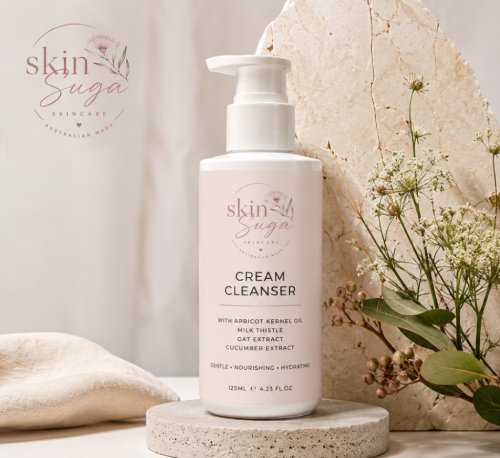
Cream Cleanser
A gentle everyday cleansing option with apricot kernel oil, oat, milk thistle, elderflower and cucumber.
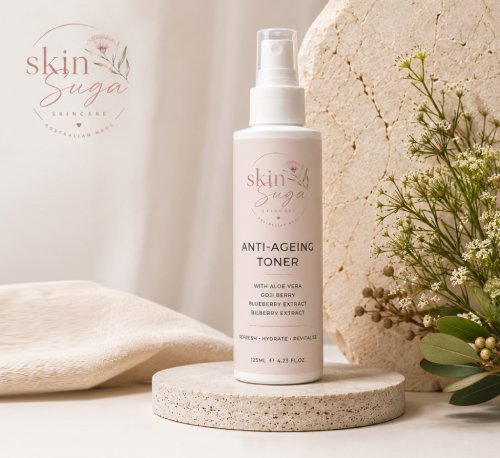
Hydrate after rinsing
Aloe vera, goji berry, blueberry and bilberry support a refreshed, comfortable next step.
Start with a dependable foundation
Choose the Daily Essentials Ritual when you want cleansing, hydration and moisturising in one uncomplicated sequence.
Explore Daily EssentialsView the Cream CleanserSigns your cleanser may not suit
Look beyond how your skin feels while the product is on. Tightness, persistent stinging, increased flaking, redness or itching after rinsing can mean the formula, frequency, water temperature or technique needs changing. A recurring itchy rash deserves professional assessment because contact dermatitis and other conditions cannot be solved by choosing a prettier cleanser texture.
Common questions
Is micellar water enough?
It may remove light makeup, but follow the product directions and consider rinsing if residue bothers your skin. Heavy makeup and resistant sunscreen may need a more thorough cleanse.
Should dry mature skin cleanse in the morning?
Some women prefer a water rinse after a thorough evening cleanse. Others need cleanser because of overnight products, sweat or oil. Let comfort and cleanliness guide the choice.
Can balm clog pores?
Any formula may be unsuitable for an individual. Emulsify and rinse the balm thoroughly, and stop if you notice persistent congestion or irritation.
Continue with the mature-skin double cleansing guide, whether to cleanse dry skin in the morning and why the face feels tight after washing.
Sources and further reading
- American Academy of Dermatology: Face washing 101
- American Academy of Dermatology: simple cleansing, moisturising and protection
- Australasian College of Dermatologists: perimenopausal skin
General cosmetic education only; not medical advice.