
Night-time hydration for mature skin
Why does my skin feel dry when I wake up after 40?
The short answer: overnight dryness is usually a combination of water leaving the skin, a less resilient mature-skin barrier, dry bedroom air and an evening routine that is not sealing hydration effectively. The solution is rarely a heavier cream alone; it is a gentler cleanse, water-binding hydration and a comfortable moisturising layer used in the right order.
Waking with tight cheeks, a papery texture or fine lines that look deeper can be disheartening, particularly when you applied moisturiser before bed. It does not necessarily mean your skin suddenly aged overnight. It often means the surface lost more water than your routine replaced or retained.
Your skin barrier continues working while you sleep. Water naturally moves through the outer layer and evaporates into the environment, a process called transepidermal water loss. Mature skin may be more vulnerable to this dry feeling because changes associated with age and menopause can affect oil production, barrier lipids and moisture retention. Air conditioning, heating, low humidity, hot evening showers and strong cleansers can add to the problem.
Why sleep and the skin barrier are connected
Sleep is not a cosmetic treatment, but research suggests that sleep quality and skin function are related. In one study, chronic poor sleepers showed more signs of intrinsic ageing and slower recovery after experimental barrier disruption than good sleepers. A separate study of women in their 40s found measurable changes in hydration, water loss, elasticity and texture after several nights of restricted sleep. These studies show associations and short-term responses; they do not prove that one late night permanently ages the face.
The practical lesson is kinder: when sleep has been poor, simplify rather than punish the skin. A late night is not the time to use extra exfoliant, scrub away dullness or add several new actives. Support comfort, reduce avoidable irritation and return to a consistent routine.
Four common reasons morning skin feels tight
1. The evening cleanse removes too much
Cleansing is important for removing makeup, sunscreen and daily residue, but squeaky-clean is not the goal. Very hot water, long cleansing, repeated foaming or rough cloths can leave dry mature skin feeling depleted before the night routine begins. A cream cleanser used with fingertips and lukewarm water is often a calmer choice.
2. Hydration is applied without anything to hold it
Humectants such as hyaluronic acid attract water and can improve the feel of dehydration. They work best as part of a complete routine. Applying a light hydrating serum and stopping there may not provide enough comfort in a dry room. Follow it with moisturiser, and consider a small amount of facial oil as the final step when your skin needs more nourishment.
3. Bedroom conditions are drying
Air conditioning and heating reduce ambient humidity. A fan directed at the face can also make evaporation feel more noticeable. Adjusting airflow, avoiding an overheated bedroom and using a humidifier in very dry conditions may help, although a humidifier must be cleaned correctly.
4. The routine is too active
Retinoids, exfoliating acids and strong acne treatments can all increase dryness or irritation, especially when introduced together. Persistent stinging, redness or peeling is not a sign that skincare is working harder. Reduce frequency, return to a basic routine and seek professional advice if discomfort continues.
A five-step evening routine for dry mornings
- Cleanse gently. Remove the day without scrubbing or hot water.
- Mist or hydrate. Apply a hydrating toner to freshly cleansed skin if it feels comfortable.
- Add a humectant serum. Use hyaluronic acid on slightly damp, not dripping, skin.
- Apply moisturiser. Spread an even layer over face, neck and décolletage.
- Seal when needed. Press two or three drops of a nourishing facial oil over the driest areas. More oil is not always more effective.
Which Skin Suga ritual fits this concern?
The Ultimate Hydration Ritual is the most coherent starting point because it brings gentle cleansing, toning, hyaluronic acid, moisturiser and facial oil into one sequence. The Vegan Hyaluronic Acid Serum attracts moisture; the Nourishing Moisturiser combines jojoba oil, shea butter, green tea, mangosteen, acai and avocado oils; and the Nourishing Facial Oil adds sweet almond, jojoba, olive, sea buckthorn, avocado, chia and vitamin E as the final comfort layer.
If overnight care is the main priority and your skin already has a dependable daytime routine, the Night Recovery Ritual offers a cream cleanser, Vitamin A Oil, Night Cream and Eye Cream. Introduce the Vitamin A Oil gradually and follow its directions. If your barrier is already sore or peeling, settle the skin before adding vitamin A.
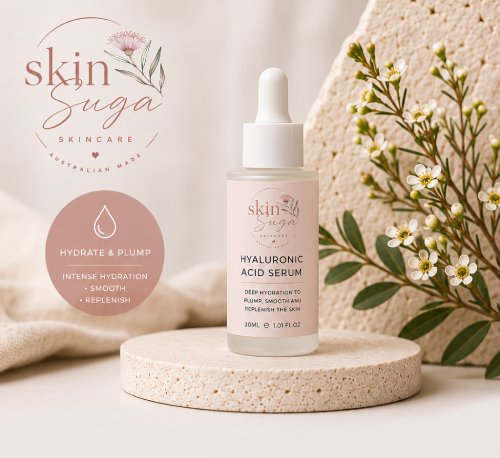
Hyaluronic Acid Serum
A lightweight water-binding step for skin that feels dehydrated or looks temporarily creased on waking.
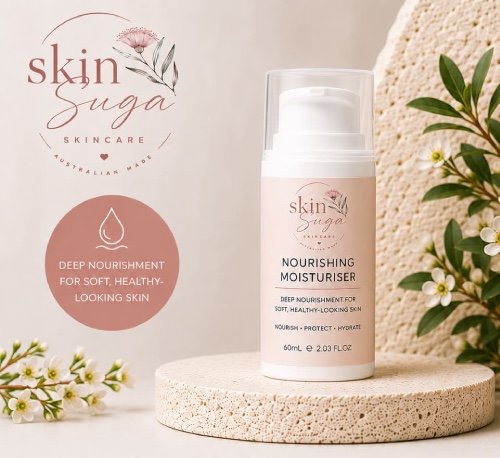
Nourishing Moisturiser
A plant-oil and shea-butter moisturising layer that helps skin feel softer and more comfortable.
Build a more comfortable night
Choose the Ultimate Hydration Ritual for a complete hydration sequence, or add the Hyaluronic Acid Serum when cleansing and moisturising are already working well.
Explore the Ultimate Hydration RitualView the Hyaluronic Acid SerumChange one overnight variable at a time
When several factors change together, it becomes hard to identify what helped. Begin by softening the cleanse and applying moisturiser before the face has fully dried. Keep that routine stable for a week. If mornings are still uncomfortable, add the hydrating serum. If the room is very dry, adjust heating or airflow. Add facial oil only after you know how the moisturiser performs on its own.
Keep a brief note of morning tightness, flaking and comfort rather than judging only in the mirror. Fine dehydration lines can look different with lighting and sleep position. The useful result is skin that feels consistently comfortable and tolerates the routine, not a promise that every line disappears by breakfast.
When dryness needs professional attention
Skincare can improve cosmetic comfort, but it cannot diagnose eczema, dermatitis, rosacea or other conditions. See a GP or dermatologist if dryness is severe, itchy, cracked, inflamed, painful, spreading or accompanied by a persistent rash. Sudden changes may also deserve assessment, particularly after starting medication or treatment.
Common questions
Should I wash my face again in the morning?
If your skin is dry and you cleansed properly at night, a lukewarm water rinse may be enough. If you wake oily, have exercised or use a rich overnight product that needs removal, use a small amount of gentle cleanser.
Will drinking more water fix dry facial skin?
General hydration supports health, but dry facial skin is not always a sign that you need to drink more. The skin barrier, environment, cleanser and product routine can all matter. Seek medical advice if excessive thirst or dryness is new or concerning.
Can I use facial oil instead of moisturiser?
Oil can soften and reduce the dry feel, but it does not replace every function of a balanced moisturiser. Many mature-skin routines work best with moisturiser first and a small amount of oil last.
Continue with why skin can stay dry after moisturising, how to apply hyaluronic acid and air-conditioning skincare for mature skin.
Sources and further reading
- Clinical and Experimental Dermatology: sleep quality and skin ageing
- Skin Research and Technology: sleep restriction in women in their 40s
- American Academy of Dermatology: gentle face washing
- Australasian College of Dermatologists: perimenopausal skin
General cosmetic education only; not medical advice.