

A useful ingredient can still be the wrong formula
Why does niacinamide make my face red after 40?
The short answer: Niacinamide is generally well tolerated and is different from flushing niacin, but a niacinamide product can still make your face red when the concentration is too strong for you, the skin barrier is already irritated, several actives are layered together or another ingredient in the formula causes irritation or allergy. Stop a product that burns or creates lasting redness, simplify the routine and reintroduce only after the skin is comfortable. Swelling, hives, blistering or persistent rash needs professional advice.
Niacinamide has become a familiar ingredient in brightening, hydrating and age-supporting formulas. Its popularity can make a reaction confusing: if it is often described as soothing, why does the face feel hot or look red? The answer is that ingredients do not act in isolation. Concentration, pH, the formula around them, the amount applied and the condition of the skin all shape tolerance.
A reaction also does not prove an allergy to niacinamide itself. Fragrance, preservatives, botanical extracts or another active may be responsible. The timing and pattern matter. Immediate burning on compromised skin points in a different direction from an itchy rash that appears after repeated use.
Niacinamide is not the same as flushing niacin
Niacinamide, also called nicotinamide, and nicotinic acid are forms of vitamin B3. Nicotinic acid taken as a medicine or supplement is well known for causing a flush. DermNet notes that nicotinamide does not usually cause that characteristic flushing response.
That does not make every topical niacinamide product irritation-proof. A high-strength serum, frequent application or a complex active blend may sting. Online references to “niacin flush” are often imprecise when the product actually contains niacinamide. Treat the symptom seriously without assuming the mechanism.
Why mature skin may react after years of tolerance
Skin can become drier and more reactive through perimenopause, menopause, weather, illness or a change in prescription treatment. Retinoids, exfoliating acids, scrubs and over-cleansing can weaken the comfortable baseline. A familiar niacinamide product may then sting because the context has changed.
Check what else entered the routine in the same week. A new sunscreen, cleanser or stronger vitamin C formula can be the real trigger. Using multiple niacinamide products can also raise the total exposure without being obvious because it appears in serum, moisturiser and foundation.
What to do when redness appears
- Stop the newest product: Rinse it away if burning is significant.
- Pause optional actives: Set aside acids, retinoids and scrubs until comfort returns.
- Cleanse gently: Use lukewarm water and a familiar mild cleanser.
- Moisturise simply: Choose a product already known to suit your skin.
- Protect daily: Continue a tolerated broad-spectrum sunscreen and physical sun protection.
Concentration is not a scoreboard
More niacinamide is not automatically better. Many studies and established formulas use moderate concentrations, while consumer serums may advertise ten or even twenty percent. A high number can increase the chance of tackiness, pilling or irritation without giving every person a better visible result.
You do not need to know the exact percentage to make a sensible decision. If a product causes repeated redness at the labelled amount, it is not serving you. Choose a lower-strength or less complex formula, use it less often or avoid the ingredient. Consistency with a tolerable routine is more useful than enduring discomfort.
Irritation versus allergy
Irritation often causes burning, stinging, dryness and redness where the product was applied. Allergic contact dermatitis is an immune reaction and can involve itch, swelling, rash or spread beyond the original area. The appearances overlap, so repeated reactions deserve medical assessment rather than online diagnosis.
Seek urgent care for facial or throat swelling, breathing difficulty or widespread hives. See a GP or dermatologist for a persistent rash, eyelid involvement, weeping skin or repeated reactions to several products. Patch testing by a clinician may identify a specific allergen.
How to reintroduce niacinamide cautiously
Wait until the skin has returned to its ordinary baseline. Patch test the complete product on a small area according to its directions. If comfortable, apply it two or three times a week rather than daily, using a small amount and no other new active that night.
Do not patch test on already irritated skin. Keep a simple note of date, amount and other products used. If redness returns in the same pattern, stop. There is no skincare prize for forcing tolerance, and niacinamide is optional rather than essential.
Check the complete ingredient list
Two serums with the same niacinamide percentage can feel completely different. Alcohol, fragrance, essential oils, exfoliating acids, vitamin C derivatives and preservatives all influence the finished formula. A reaction to one product does not prove that every niacinamide product will cause the same result, but repeated testing is unnecessary when your skin is already uncomfortable.
Also look for duplication. Niacinamide may appear in cleanser, toner, serum, moisturiser, sunscreen and foundation. None of those products must be problematic alone, yet layering several can make it harder to identify the source of redness. Simplify to one treatment product and keep the rest of the routine familiar while you assess it.
Redness is not proof that a product is working
A warm, pink face is sometimes presented as a normal adjustment to active skincare. That assumption can prolong irritation. Niacinamide does not need to create visible redness, tingling or peeling to support the appearance of skin. When a formula repeatedly causes discomfort, reducing the amount without changing frequency may still leave the same problem.
Use comfort as useful feedback. Stop, allow the baseline to return and decide whether the product adds enough value to justify a cautious retry. A simple hydrating and moisturising routine remains worthwhile even when niacinamide is removed completely.
A low-pressure active routine
- Cleanse: Use a cream cleanser and lukewarm water.
- Hydrate: Apply a familiar serum only if it does not sting.
- Treat: Use the niacinamide product at a reduced frequency.
- Moisturise: Finish with a comfortable cream.
- Change one thing: Wait before adding another active or increasing frequency.
Ritual first: Age Defy Ritual
The Age Defy Ritual places active skincare inside a complete cleanse, treatment and moisturising sequence. Skin Suga’s Anti-Ageing Elixir contains niacinamide alongside bakuchiol, peptides, hyaluronic acid, vitamin C, squalane and green tea, so introduce the complete formula slowly rather than judging one ingredient in isolation.

Anti-Ageing Elixir
A multi-active formula containing niacinamide, bakuchiol, peptides and hydration-supporting ingredients. Introduce gradually.
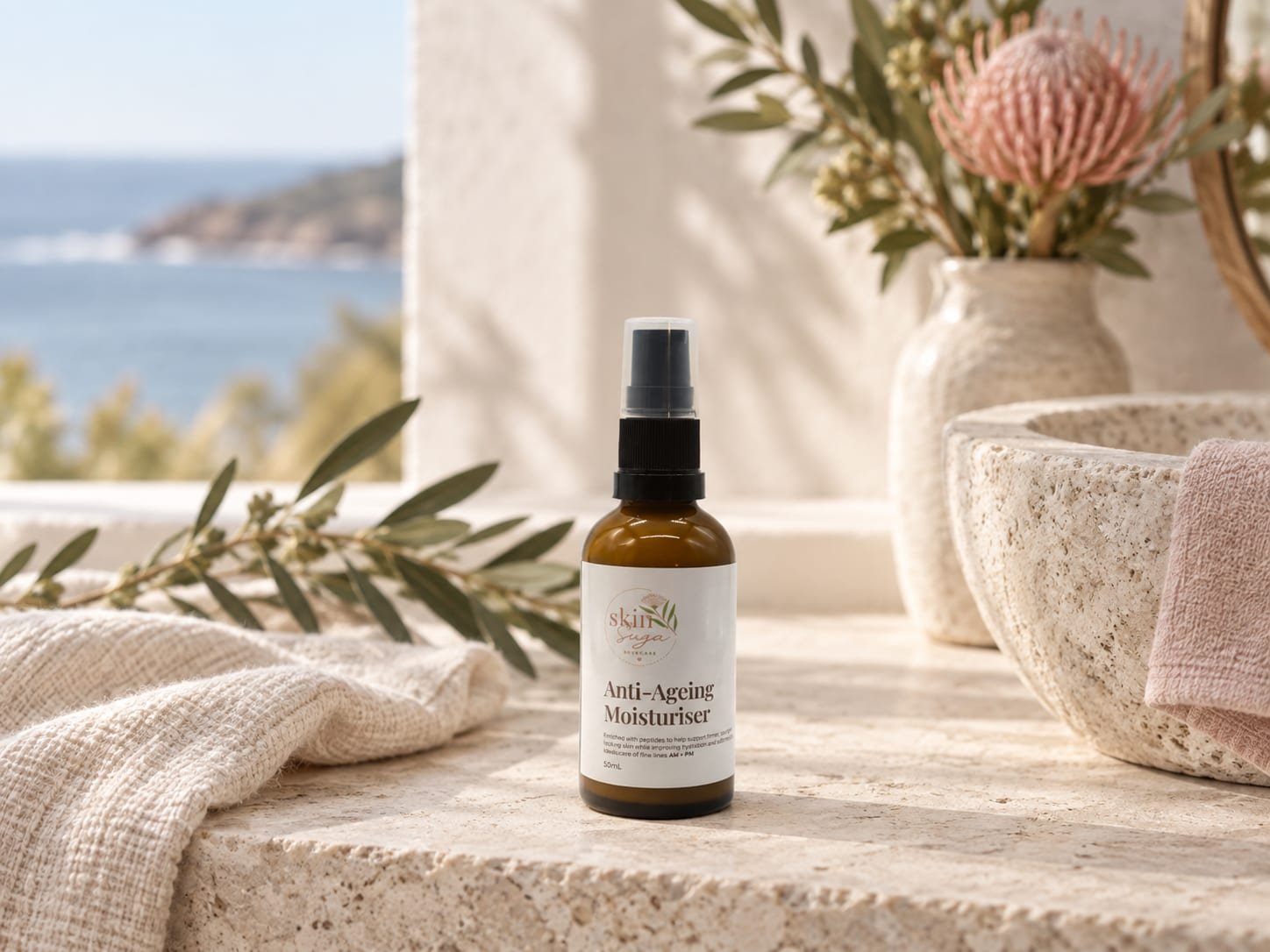
Anti-Ageing Moisturiser
Hyaluronic acid, rice protein peptides, jojoba, shea butter and Native Snowflower support the moisturising step.
Use active care at the pace of your skin
Begin with a stable ritual, then increase frequency only when the complete formula stays comfortable.
Common questions
Can niacinamide purge the skin?
Niacinamide does not usually increase cell turnover in the way associated with purging. New redness or bumps may reflect irritation or another ingredient.
Can I use niacinamide with vitamin C?
Many modern formulas are compatible, but layering several active products may still irritate sensitive skin.
Should niacinamide tingle?
It does not need to tingle to work. Persistent burning or redness is a reason to stop.
Can I use it every day?
Only if the formula suits you. Lower frequency can be entirely reasonable for reactive mature skin.
Sources
- DermNet: Nicotinamide
- Cleveland Clinic: Niacinamide and skin
- American Academy of Dermatology: Rosacea skincare tips
Persistent redness can have many causes and needs individual assessment when it does not settle.