Barrier lipids, explained without the hype
What do ceramides do for mature skin?
The short answer: Ceramides are lipids naturally found between cells in the outer skin. Together with cholesterol and fatty acids, they help form a barrier that slows water loss and keeps irritants out. A well-formulated ceramide moisturiser can improve dryness and support barrier function, especially when mature skin feels rough or tight. It does not rebuild facial structure or erase wrinkles, and the finished formula matters more than the word ceramide on the front label.
Ceramides are often described as the mortar between skin-cell bricks. The picture is simplified, but useful: the outer skin depends on an organised mixture of lipids to reduce water loss. Age, menopause, dry weather, harsh cleansing and inflammatory skin conditions can all affect how well that barrier performs.
Adding ceramides through skincare is not the same as replacing every natural lipid exactly. Formulation determines whether the ingredient is delivered in a stable, comfortable cream and whether the surrounding humectants, emollients and occlusives suit your skin. A beautiful barrier product is a team, not one hero ingredient.
What ceramides actually are
Ceramides are a family of waxy lipid molecules found in the stratum corneum, the outermost layer of skin. They sit alongside cholesterol and free fatty acids in organised layers. This lipid matrix helps control transepidermal water loss and supports the skin’s defensive function.
Ingredient lists may name ceramide NP, AP, EOP or other types. Phytosphingosine can also appear as a related lipid component. The number of ceramide types does not by itself predict performance. Ratios, delivery system, supporting ingredients and regular use all matter.
Why mature skin may notice lipid loss
Mature skin commonly becomes drier and less efficient at holding water. The surface may feel rough, tight or more reactive to wind, air conditioning and active ingredients. Menopause can add another shift in dryness and sensitivity. These changes do not happen identically to every woman, but they make barrier-focused care more relevant.
A ceramide cream may reduce the visible and sensory effects of dryness by improving moisturisation. Fine dehydration lines can look softer when the surface is well hydrated. This is different from rebuilding collagen, lifting sagging skin or treating an underlying disease.
A barrier-supporting routine
- Cleanse gently: Use a mild cleanser once in the evening and lukewarm water.
- Add water: Apply a hydrating serum or mist if comfortable.
- Moisturise: Use a ceramide or other lipid-rich cream over slightly damp skin.
- Seal selectively: Add facial oil only where extra emollience is useful.
- Protect: Finish mornings with broad-spectrum SPF50 or SPF50+ sunscreen.
Do you need ceramides specifically?
No single cosmetic ingredient is compulsory. Mature skin can be comfortable with moisturisers built around glycerin, hyaluronic acid, shea butter, squalane, petrolatum or plant oils. Ceramides are a well-supported option, not the only route to effective moisturisation.
If your current moisturiser keeps the face soft and calm without congestion or stinging, there is no need to replace it simply because it lacks a ceramide headline. If dryness persists, compare texture, humectants, emollients and occlusives before assuming one missing ingredient is the entire problem.
Ceramides versus hyaluronic acid
Hyaluronic acid is a humectant that helps bind water within a formula and at the skin surface. Ceramides are lipids associated with the barrier matrix. They perform different roles and often appear together. A water-binding serum can be followed by a lipid-rich moisturiser to combine hydration with reduced moisture loss.
In very dry Australian conditions, humectant serum without a cream may leave the skin wanting more. Conversely, a heavy balm on dehydrated skin may soften the surface without providing the light water-based layer you prefer. Build the routine by function rather than collecting ingredient trends.
How to read a ceramide moisturiser label
Look at the whole ingredient list and the product’s intended skin type. Ceramides may sit beside cholesterol, fatty acids, glycerin, niacinamide, silicones or occlusive ingredients. Fragrance and numerous botanical extracts can complicate a product for reactive skin even when ceramides are present.
Packaging should protect the formula from contamination and excessive air exposure. Follow the directions and use enough to cover dry areas without leaving a heavy layer you dislike. A product that is pleasant enough to use consistently is more valuable than a technically impressive jar that stays unopened.
Texture matters as much as the ingredient headline
A lotion may suit combination mature skin, while a cream or balm may feel better on dry cheeks. You can also use different amounts across the face rather than forcing one thick layer everywhere. The best choice leaves the skin comfortable without persistent greasiness, pilling or congestion.
Seasonal changes are normal. A lighter moisturiser may be enough through a humid coastal summer, while heating, winter wind or air conditioning can make a richer finish useful. Ceramides do not remove the need to adjust texture, and a richer product is not automatically more effective if you avoid using it regularly.
How to assess results
- Start at night: Introduce the moisturiser once daily.
- Keep other products stable: Avoid starting an acid or retinoid in the same week.
- Track comfort: Notice tightness, flaking and stinging rather than expecting a lifted face.
- Adjust amount: Use more on dry cheeks and less on congestion-prone areas.
- Review after several weeks: Consistent comfort is the useful outcome.
When a moisturiser is not enough
Persistent itch, cracking, rash, eyelid swelling or weeping skin may indicate eczema, contact dermatitis or another condition. A cosmetic moisturiser can support comfort but should not delay diagnosis. See a GP or dermatologist when symptoms are severe, spreading or recurrent.
Also check routine behaviour. Hot water, rough cloths, frequent exfoliation and several active serums can overwhelm even an excellent moisturiser. Removing the trigger may help more than adding another barrier product.
Ritual first: Ultimate Hydration Ritual
The Ultimate Hydration Ritual does not claim to be a ceramide system. It demonstrates the same functional logic: gentle cleansing, water-binding hydration, moisturising emollients and an optional oil finish. Skin Suga’s Nourishing Moisturiser uses jojoba, shea butter and botanical oils, while the Hyaluronic Acid Serum supplies a separate hydration step.
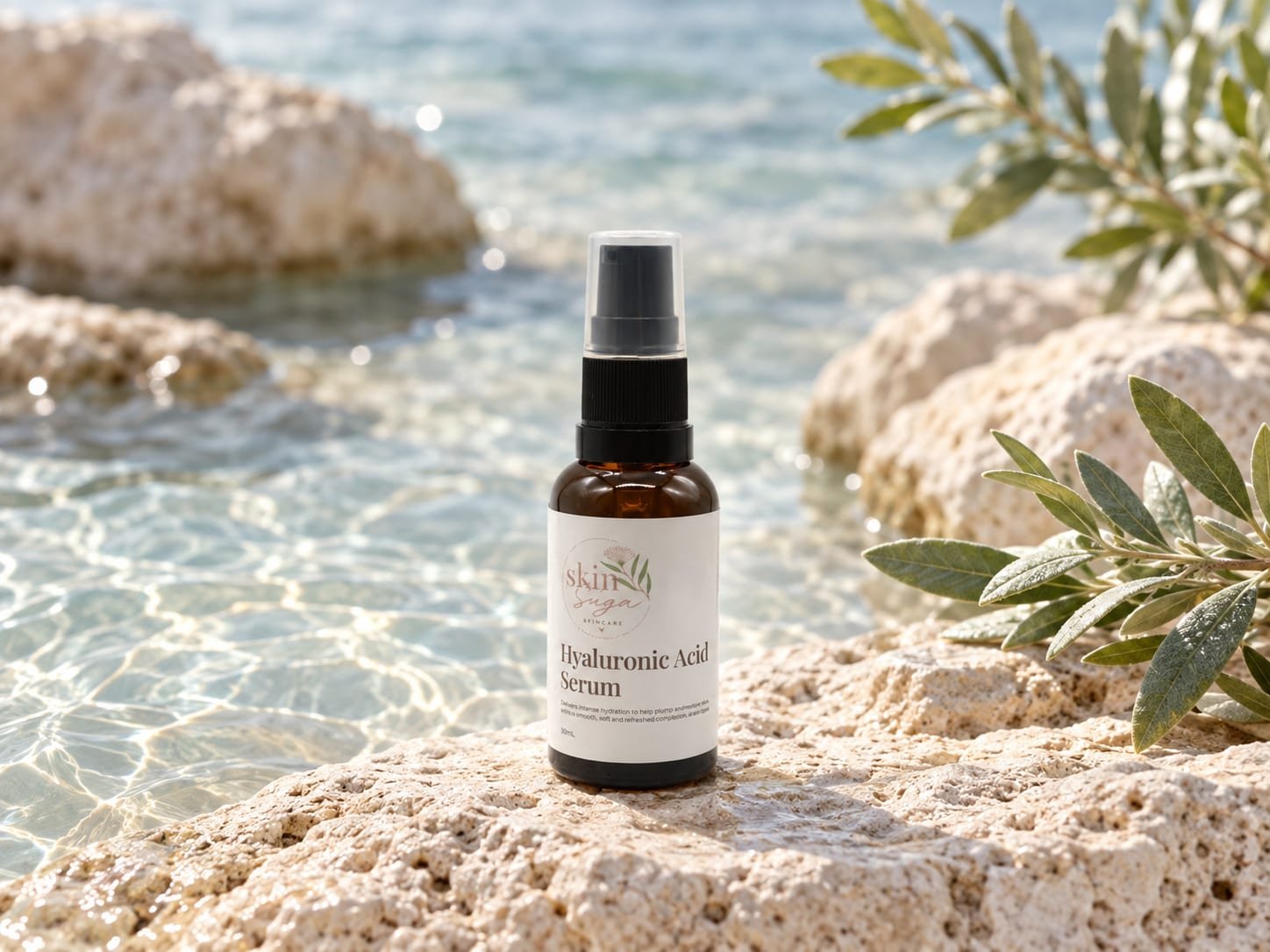
Hyaluronic Acid Serum
A lightweight water-binding layer for use before moisturiser when mature skin feels dehydrated.
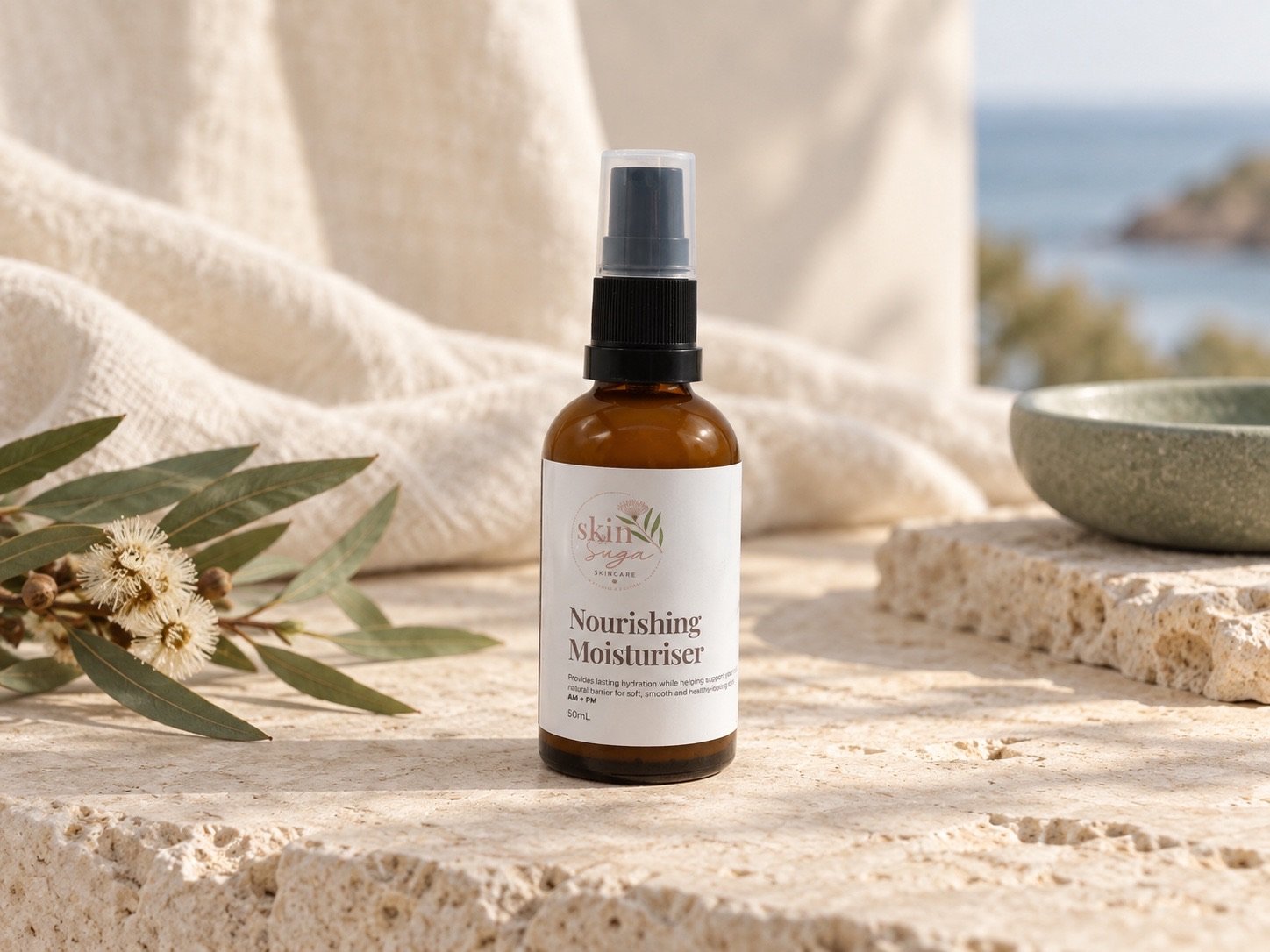
Nourishing Moisturiser
Jojoba, shea butter, green tea, mangosteen, acai and avocado oil provide emollient comfort without a ceramide claim.
Build by function, not a buzzword
Combine gentle cleansing, hydration and a moisturiser your skin can use consistently.
Explore Ultimate Hydration RitualView Nourishing Moisturiser
Common questions
Can ceramides clog pores?
Ceramides themselves are not a reliable predictor of congestion. The complete texture and formula determine how a product behaves for you.
Can I use ceramides with retinoids?
Yes. A comfortable moisturiser is often useful alongside a retinoid, but reduce active frequency if irritation develops.
Do ceramides remove wrinkles?
No. Better moisturisation can soften dehydration lines, but ceramides do not erase structural wrinkles.
How often should I use a ceramide cream?
Follow the label. Many are suitable once or twice daily when tolerated.
Sources
- PubMed: Skin barrier care in mature skin xerosis
- PMC: Ceramide-containing formulations review
- DermNet: Emollients and moisturisers
A cosmetic moisturiser supports comfort and appearance; it does not diagnose or treat persistent skin disease.