Ingredient guide
Is sweet almond oil good for mature skin?
The short answer: Sweet almond oil can be useful for mature skin because it is an emollient that softens the surface and reduces a rough, tight feel. It does not add water to skin, erase wrinkles or rebuild collagen. Use it as the final step over a water-based serum or moisturiser, and avoid it if you have a known almond allergy or if the formula irritates your skin.
Think softness, not transformation
Sweet almond oil is rich in fatty acids and is used in skincare as an emollient. Emollients fill some of the tiny gaps between surface skin cells and make rough skin feel smoother and more flexible. That can be especially welcome after 40, when lower surface lipids, climate and cleansing habits may contribute to a dry or papery feel.
Its role is straightforward. It can improve the feel and appearance of dryness while it is on the skin. It does not add water like a humectant, and it should not be described as rebuilding collagen, reversing menopause or healing a skin condition. A realistic promise is often the most useful one: comfortable, supple-feeling skin.
Oil and hydration are not the same thing
Water-based layers and oils solve different cosmetic problems. A hydrating mist or serum supplies a water-rich layer and may include humectants that attract water. A moisturiser combines water, humectants, emollients and often ingredients that slow evaporation. Facial oil adds emollience and helps reduce the dry feeling that returns when water escapes.
This is why facial oil usually performs best near the end of a routine. If you apply oil to very dry, dehydrated skin with no water-based step underneath, the surface may feel smoother without feeling truly comfortable. Try serum or moisturiser first, then press two or three drops of oil over the driest areas.
Who may enjoy sweet almond oil?
It can suit mature skin that feels rough, tight or less supple, particularly on the cheeks, neck and décolletage. It may also make a night routine feel more cushioning in air conditioning or cool, dry weather. People with combination skin can use it selectively rather than coating the whole face.
More is not better. Too much oil can feel heavy, interfere with makeup or encourage you to cleanse more aggressively the next morning. Begin with one or two drops. Warm them between clean fingertips and press, rather than rubbing quickly.
What about pores and breakouts?
No ingredient is guaranteed non-comedogenic for every person. The behaviour of a finished formula depends on all its ingredients, the amount used and the individual. If you are prone to congestion, patch test along the jaw or use the oil only on dry areas. Stop if you consistently see new clogged bumps where you apply it.
Facial oil is not a cleanser unless the product has been designed and instructed for cleansing. Leaving a plain oil on the skin and then trying to remove it with strong detergent can create an unhelpful cycle. Use each product according to its intended role.
Allergy and sensitivity matter
Anyone with a known almond allergy should seek appropriate medical advice before using an almond-derived cosmetic. Refined and unrefined oils differ, and online generalisations cannot determine individual safety. Even without a food allergy, any cosmetic can irritate or sensitise. Patch test a new leave-on product and stop if you develop itching, swelling or a persistent rash.
Keep facial oils away from the eye itself. If the product migrates and causes watering or blurred vision, rinse and discontinue. Store it away from heat and direct light, close the lid properly and follow the period-after-opening guidance. A strong rancid or paint-like smell, unexpected cloudiness or major texture change is a reason to replace it.
A practical evening routine
- Cleanse once. Remove sunscreen and makeup with a gentle cream cleanser and lukewarm water.
- Add hydration. Apply a hydrating mist or serum if your skin enjoys it.
- Moisturise. Smooth a comfortable cream across the face, neck and décolletage.
- Seal selectively. Press one to three drops of facial oil over dry areas.
- Adjust the next morning. If the skin feels greasy or makeup slides, use less next time.
Choose the ritual before the bottle
The Ultimate Hydration Ritual is the relevant Skin Suga starting point because it places oil within a complete sequence rather than expecting one ingredient to do every job. Cleansing, water-based hydration, moisturising and a final emollient layer work together.
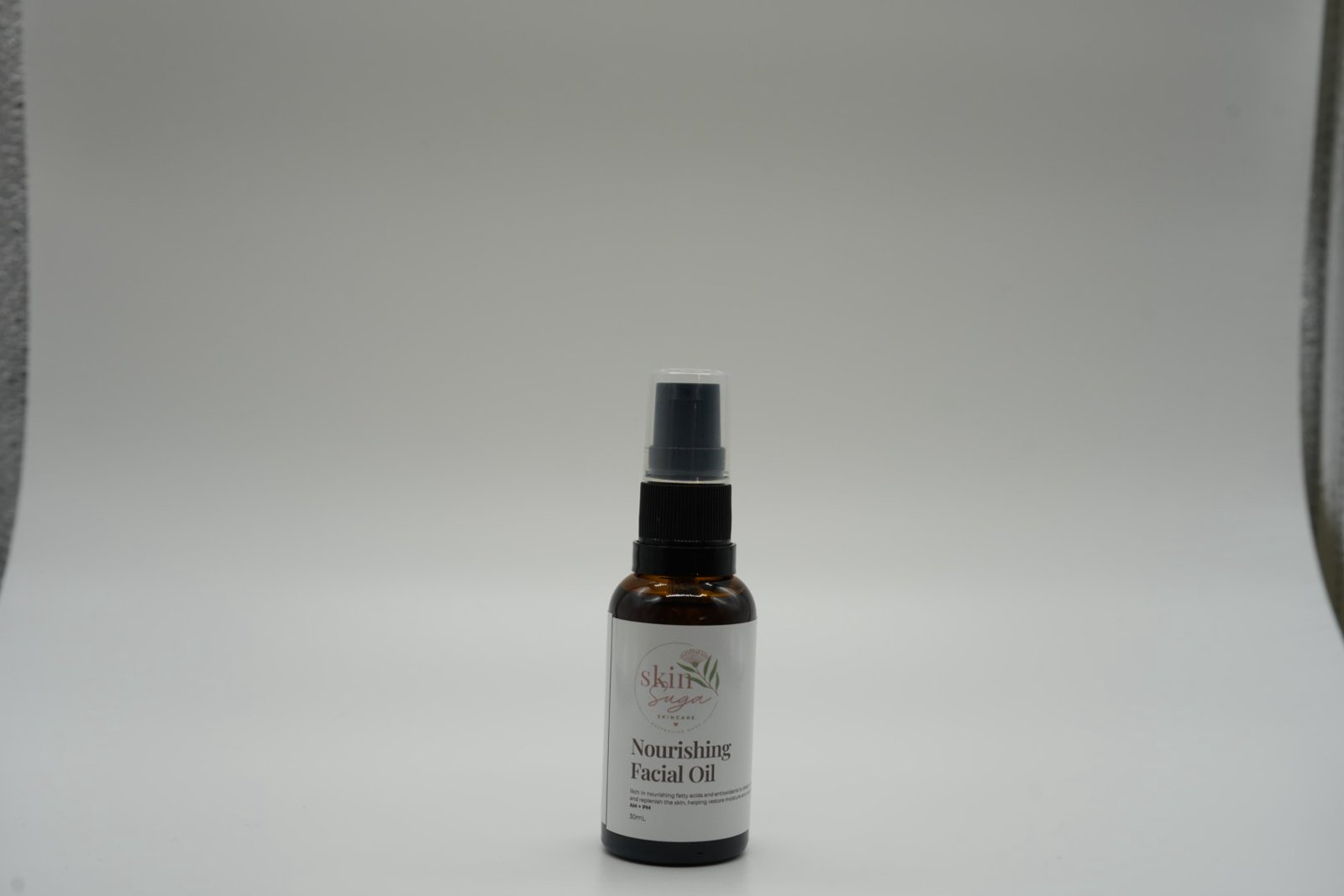
For an individual product, Nourishing Facial Oil includes sweet almond oil alongside jojoba, avocado, chia, sea buckthorn and vitamin E. Use a small amount over moisturiser. The blend is designed to leave skin feeling nourished and supple, not to treat a medical condition.
Can you use it during the day?
Yes, if a tiny amount sits well under your sunscreen. Apply moisturiser, press one drop onto dry areas, allow it to settle and then apply your separate sunscreen. If the sunscreen pills or moves, reserve the oil for evening. Never mix facial oil directly into sunscreen because that can disturb the tested sunscreen film.
Using almond oil with active skincare
Facial oil can improve comfort around an active routine, but it does not neutralise irritation. Apply retinoid or exfoliant products according to their directions and only on a schedule your skin tolerates. On active nights, a simple moisturiser may be easier to assess than several oils and serums. If the skin burns or peels, reduce the active and seek advice rather than adding more oil over continuing irritation.
Neck, décolletage and hands
These areas often feel dry and receive substantial sun exposure. Extend moisturiser to them, then press any remaining oil from your palms over the surface. In the morning, use sunscreen and clothing on exposed skin. An oil can improve softness, but it is not sun protection and cannot undo existing UV damage.
Freshness and oxidation
Plant oils can oxidise. Choose packaging that limits unnecessary light and air, close it promptly and avoid storing it on a sunny windowsill. Follow the period-after-opening symbol. If the odour becomes sharply rancid or the texture changes unexpectedly, stop using it. Vitamin E may help support formula stability, but it does not make an opened oil last indefinitely.
How to measure the amount
Begin with one drop for the face and add a second only if the skin still feels rough. The neck and chest may need another drop. This sounds modest, but facial oils spread readily and excessive use can make the next cleanser work harder than necessary.
Wait ten minutes before deciding you need more. If the surface remains slick for hours, reduce the quantity next time. If dryness returns despite adequate moisturiser and a few drops of oil, reassess the cleanser, environment and possible skin condition rather than continuing to increase the oil.
Is the kitchen bottle suitable?
Choose a cosmetic product formulated, preserved and packaged for use on facial skin. Food oils are intended for food and may not offer the same quality controls, stability or user directions as a finished cosmetic. A blended facial oil can also feel lighter and spread more evenly than a single heavy application.
The practical verdict
Sweet almond oil is a useful supporting emollient for many women with dry-feeling mature skin. Its strength is modest and tangible: softness, slip and comfort. Keep the claims proportional, layer it over hydration and let a few drops do the work.
Layer oil where it belongs
Build hydration first, then finish with a small amount of facial oil over the areas that feel dry.
Explore the Ultimate Hydration Ritual