
Extend care below the jawline
How should I care for my neck and décolletage after 40?
The short answer: Use the same gentle, consistent principles that support your face: cleanse without scrubbing, apply hydration and moisturiser down to the upper chest, and protect exposed skin with broad-spectrum sunscreen. The neck and décolletage do not need an overcrowded collection of special products, but they do need deliberate daily care.
It is common to build a careful facial routine and stop at the jaw. The neck and upper chest are then left to cope with years of Australian sun, clothing friction, fragrance, hot water and irregular moisturising. By the time texture or uneven-looking tone becomes noticeable, the contrast can feel sudden even though the change developed gradually.
The useful response is not to attack the area with stronger products. Neck skin can be less tolerant than facial skin, particularly near the folds and sides where product transfers onto clothing. A calm routine should improve comfort and support a smoother, more hydrated appearance without creating irritation.
Why the neck and chest can look different from the face
These areas receive repeated incidental UV exposure while driving, walking, gardening and sitting near windows. The chest is also easy to miss when sunscreen is applied in a hurry. Skin changes associated with age and menopause may reduce moisture and resilience, while side sleeping can create temporary creases across the upper chest. None of this means a cosmetic product can reverse structural ageing, but consistent protection and moisturising can improve how the surface looks and feels.
The neck is constantly moving. Heavy layers may collect in horizontal folds, and strong retinoids or exfoliating acids that the face tolerates can sting the neck. The upper chest may react to perfume, hair products and laundry residue. Treat sensitivity as information, not a challenge to use more.
The three priorities that matter most
1. Daily sun protection
In Australia, broad-spectrum sunscreen is the foundation. Apply an adequate amount to exposed neck, ears and upper chest, and follow the product label for reapplication. Clothing, shade and a broad-brimmed hat add protection. Skincare cannot compensate for inconsistent UV protection.
2. Comfortable hydration
Water-binding ingredients such as hyaluronic acid can help the surface feel more hydrated. Follow with moisturiser so the hydrating step is not left alone. Apply with flat hands and light upward or outward strokes; firm rubbing is unnecessary.
3. A routine the area tolerates
Introduce active products separately and less frequently than you might on the face. If a vitamin A product is intended for the face, check its directions before extending it to the neck. Stop if persistent burning, swelling, rash or peeling develops.
A simple morning and evening routine
Morning
- Rinse or cleanse gently if needed.
- Apply a thin hydrating layer from face to upper chest.
- Use moisturiser where the skin feels dry.
- Finish with broad-spectrum sunscreen on all exposed skin.
Evening
- Remove sunscreen and daily residue with a gentle cleanser.
- Apply hydrating toner or serum while skin is comfortable and slightly damp.
- Smooth moisturiser over neck and décolletage.
- Use facial oil only when extra overnight comfort is useful.
Which Skin Suga ritual fits?
The Ultimate Hydration Ritual is the clearest ritual-first choice for dry-feeling neck and décolletage because it coordinates Cream Cleanser, Anti-Ageing Toner, Hyaluronic Acid Serum, Nourishing Moisturiser and Nourishing Facial Oil. The aim is not five thick layers. Use measured amounts and keep sunscreen as the final daytime step.
Skin Suga’s Hyaluronic Acid Serum provides the water-binding stage. Nourishing Moisturiser follows with jojoba oil, shea butter, green tea, mangosteen, acai and avocado oils to support softness and comfort. Facial oil can be reserved for selected evenings, particularly in winter or air-conditioned rooms.
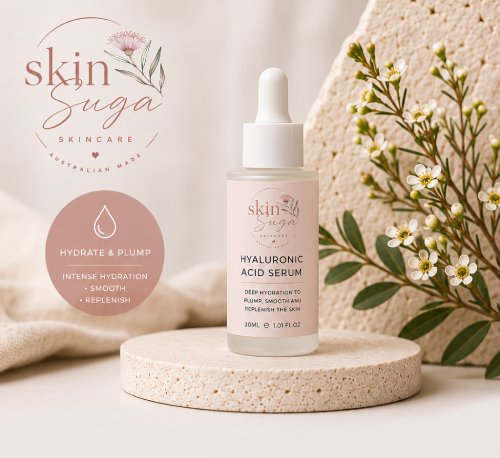
Hyaluronic Acid Serum
Use a light layer across the face, neck and upper chest when the skin feels dehydrated.
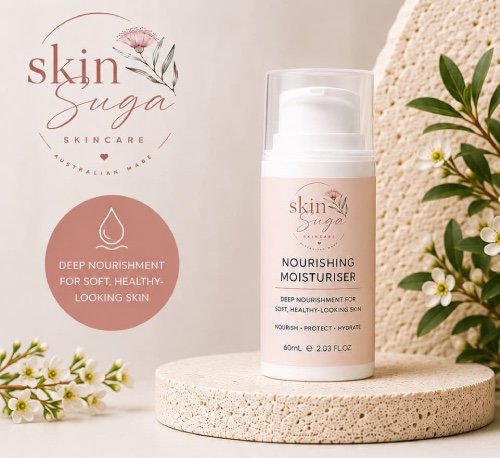
Nourishing Moisturiser
Jojoba, shea butter and botanical oils provide a comfortable final moisturising layer.
Bring the whole area into one ritual
Choose Ultimate Hydration for a coordinated cleanse, hydration and nourishment sequence.
Explore Ultimate HydrationView Hyaluronic Acid SerumCommon mistakes to avoid
Do not apply perfume directly over irritated chest skin, scrub vertical or horizontal lines, or assume tingling means an active is working. Avoid pulling facial skin downward with repeated forceful massage. If sunscreen pills, reduce the number and amount of products beneath it rather than skipping protection.
Give the routine time. Moisturising can improve comfort quickly, but visible tone and texture changes are gradual. Photographing the area in the same light every four weeks is more useful than checking different mirrors each day.
Adjust the routine for Australian seasons
In hot, humid weather, the neck may feel crowded beneath hair, clothing and sunscreen. Use lighter amounts of serum and moisturiser, but keep sunscreen quantity and coverage consistent. A moisturising sunscreen may remove the need for separate daytime cream. In winter, heating and dry wind can make the chest feel rougher, so a fuller moisturiser layer at night may be useful.
Outdoor routines also change with clothing. A high neckline protects more of the chest, while open collars, exercise tops and swimwear expose different edges. Apply protection according to what will actually be uncovered, including the back and sides of the neck. Reapply after swimming, heavy sweating or towel drying according to sunscreen directions.
How much product should you use?
There is no benefit in coating the neck with a layer so heavy that it transfers onto clothes. Start with the facial amount you know works, then add a small separate portion for the neck and chest. Spread it evenly with the whole hand. If the area still feels dry after the product settles, add a little more at night rather than stacking several new formulas.
For serum, a thin continuous film is enough. Moisturiser should leave comfort, not stickiness. Facial oil is best pressed onto the driest zones with two or three drops shared across the area. Always wash hands before applying products near the collarbone, particularly after using hair styling products or fragrance.
What results are realistic?
A hydrating routine can make dry surface lines look softer and improve the feel of roughness. Consistent sunscreen can help prevent additional UV-related change. Cosmetics cannot remove established deep creases, diagnose pigmentation or promise to rebuild the neck. That distinction keeps expectations useful and lets you judge the routine by comfort, tolerance and a healthier-looking surface.
Review the area after six to eight weeks of consistent care, not after a single rich night cream. Keep lighting and camera angle similar. If the routine is comfortable but a specific cosmetic concern remains important, a dermatologist can explain evidence-based options without requiring you to abandon the basic daily care.
When to seek professional advice
A cosmetic routine cannot assess changing spots, persistent rash, unexplained itching or a lesion that bleeds or does not heal. Arrange a skin check with a qualified health professional for concerning changes, and maintain routine skin examinations appropriate to your risk.
Common questions
Do I need a separate neck cream?
Not necessarily. A gentle facial moisturiser can often be used on the neck and chest if the area tolerates it. A separate product is useful only when its texture or ingredients solve a real need.
Can I put facial oil on my décolletage?
Yes, in a small amount at night when the skin feels dry. Apply moisturiser first and avoid transferring heavy oil onto delicate clothing.
Should sunscreen go over moisturiser?
Yes. Allow moisturiser to settle, then apply sunscreen as the final skincare step and follow its label.
Continue with care for ageing hands, hot showers and dry mature skin and antioxidants for mature skin.
Sources and further reading
- Cancer Council Australia: sunscreen and sun protection
- Therapeutic Goods Administration: sunscreens
- American Academy of Dermatology: caring for skin during menopause
General cosmetic education only; not medical advice.