
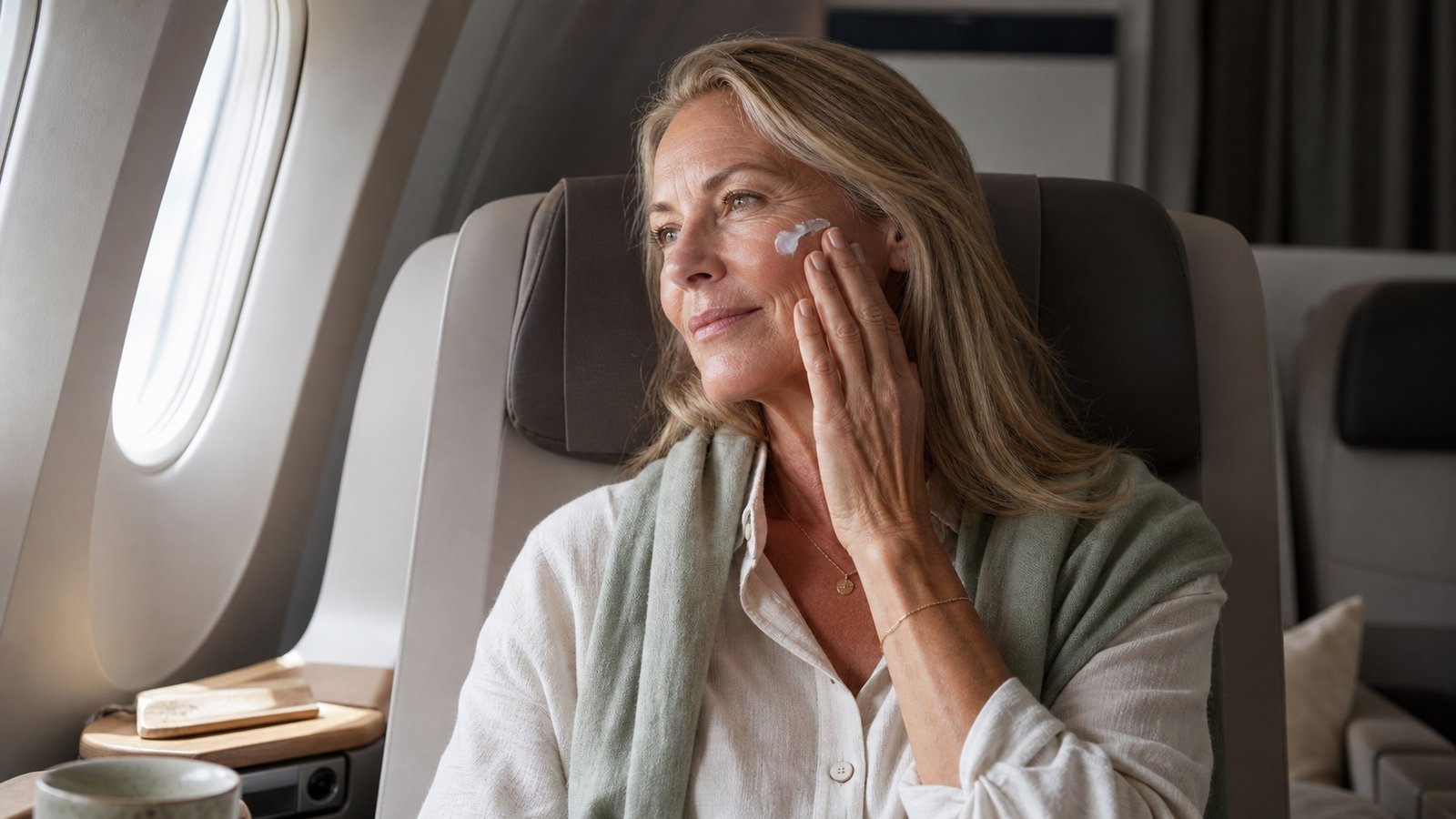
Skincare guide · Australian travel
What skincare does mature skin need on a long-haul flight?
The short answer: Keep it simple: begin the flight with clean skin, apply a hydrating serum to slightly damp skin, seal it with moisturiser and reapply moisturiser when skin feels tight. Skip strong actives, facial mists used on their own and elaborate seat-side cleansing. On arrival, cleanse gently, moisturise and use broad-spectrum SPF50 or SPF50+ if it is daytime.
A flight from Australia to Europe or North America can keep you in dry cabin air for well over ten hours. Mature skin does not need a miniature bathroom cabinet at 11,000 metres; it needs a clean, comfortable barrier and a routine you can repeat with clean hands.
Aircraft cabins are pressurised for safety and comfort, but their humidity is much lower than most homes. Water can leave the upper layers of the skin more readily in this environment. After 40, skin often produces less oil and holds water less efficiently, so dryness may show up as tight cheeks, more visible fine lines, rough makeup or an urge to keep misting. These are temporary comfort changes, not evidence that a flight has permanently aged your skin.
The answer is not to keep adding watery layers without sealing them in. A face mist can feel refreshing, but if it evaporates from bare skin in very dry air it may not provide lasting comfort. Pair water-based hydration with an emollient moisturiser. A small amount of facial oil can be pressed over dry areas if you already tolerate it, but it should complement moisturiser rather than replace every other step.
Prepare before you board
Do your full cleanse at home, the airport hotel or shortly before leaving for the airport. Remove makeup if you are comfortable travelling without it, or keep base makeup light. Clean skin makes it easier to apply moisturiser later without rubbing airport residue across the face. If you need makeup, use familiar products and avoid testing a new peel, retinoid or exfoliating mask on travel day.
Apply a hydrating serum to slightly damp skin, then a moisturiser appropriate to your normal skin. Dry or cool-weather skin may prefer a richer cream. Combination skin may prefer a lighter layer with extra cream only on the cheeks. If you will be exposed to daylight through the airport, during ground travel or after landing, finish with broad-spectrum SPF50 or SPF50+ sunscreen and use a hat, sunglasses, clothing and shade.
Pack travel-sized products that you already use. Decanting is practical only when the container is clean, closes securely and is labelled. Keep fingers out of open jars where possible. Cabin skincare should never come at the expense of hand hygiene, sleep or hydration. Drinking water supports normal body hydration, although it does not replace moisturiser at the skin surface.
A calm long-haul flight routine
- Start clean. Complete your normal gentle cleanse before boarding and wash or sanitise hands before touching your face.
- Layer hydration once. Apply Hyaluronic Acid Serum to slightly damp skin, then follow promptly with moisturiser.
- Seal dry areas. Use Nourishing Moisturiser on cheeks, around the mouth and neck; keep the layer lighter through an oilier T-zone.
- Reapply by comfort, not the clock. Press a small amount of moisturiser onto tight areas with clean fingers rather than repeatedly rebuilding the whole routine.
- Protect during daylight. Reapply sunscreen when your travel includes UV exposure. Aircraft windows and bright terminal glazing do not make sun protection irrelevant.
- Reset on arrival. Gently cleanse, moisturise and return to your normal routine. Delay strong exfoliation if skin feels dry or reactive.
What to avoid in the cabin
Strong exfoliating acids, scrubs and unfamiliar actives are poor travel companions. Dry air, interrupted sleep, friction from masks or pillows and repeated touching already make comfort harder to predict. A product that is normally well tolerated may feel more noticeable when skin is dry. Keep vitamin A, peels and concentrated acids for a settled evening at your destination unless your clinician has given you different instructions.
Sheet masks can be pleasant, but they are not essential and can be awkward to apply hygienically. They also do not replace moisturiser. Cleansing wipes may leave surfactant or fragrance behind and require repeated rubbing. If you must remove makeup mid-flight, use a familiar, gentle option with clean hands and follow with moisturiser; otherwise wait until you can wash properly.
Do not spray mist toward neighbouring passengers or use aerosol products in the cabin. If you carry a non-aerosol face mist, apply it discreetly and immediately follow with serum or moisturiser. More product is not always more hydration. Pilling, stickiness and congestion are signs to simplify.
How to handle an overnight flight
Treat the longest sleep period as a simplified night routine. Clean skin, serum and moisturiser are enough. An eye cream can be applied around the orbital bone if it is already part of your routine. Avoid placing rich cream too close to the lash line, where it can migrate into the eyes while you sleep. A clean eye mask and a clean pillow cover or scarf can reduce friction and contact with shared surfaces.
When the cabin lights come on, you do not need to cleanse again just because it is morning at the destination. If skin feels comfortable, press on moisturiser where needed. If it feels greasy or coated, wait until landing for a proper lukewarm rinse or gentle cleanse. The local clock does not change what is physically on your skin.
On arrival in a different climate
Climate shifts can be as noticeable as the flight. Arriving from a Perth summer into a northern winter may call for a richer moisturiser; landing in tropical humidity may call for a lighter layer. Make one adjustment at a time. Cleansing aggressively to remove the “flight feeling” can deepen tightness, so use lukewarm water, fingertips and a cream cleanser rather than a scrub.
If your face is puffy, cool water, gentle movement, rest and time are more sensible than vigorous facial massage. Swelling that is sudden, painful, one-sided or accompanied by breathing difficulty requires medical attention. Persistent rash, cracking or eye irritation also deserves professional advice.
Ritual first: Ultimate Hydration Ritual
The Ultimate Hydration Ritual is the most coherent starting point for dry-cabin travel because it organises cleansing, water-based hydration and moisturising into one sequence. Use the full ritual before departure and on arrival; take only the essential serum and moisturiser into the cabin.
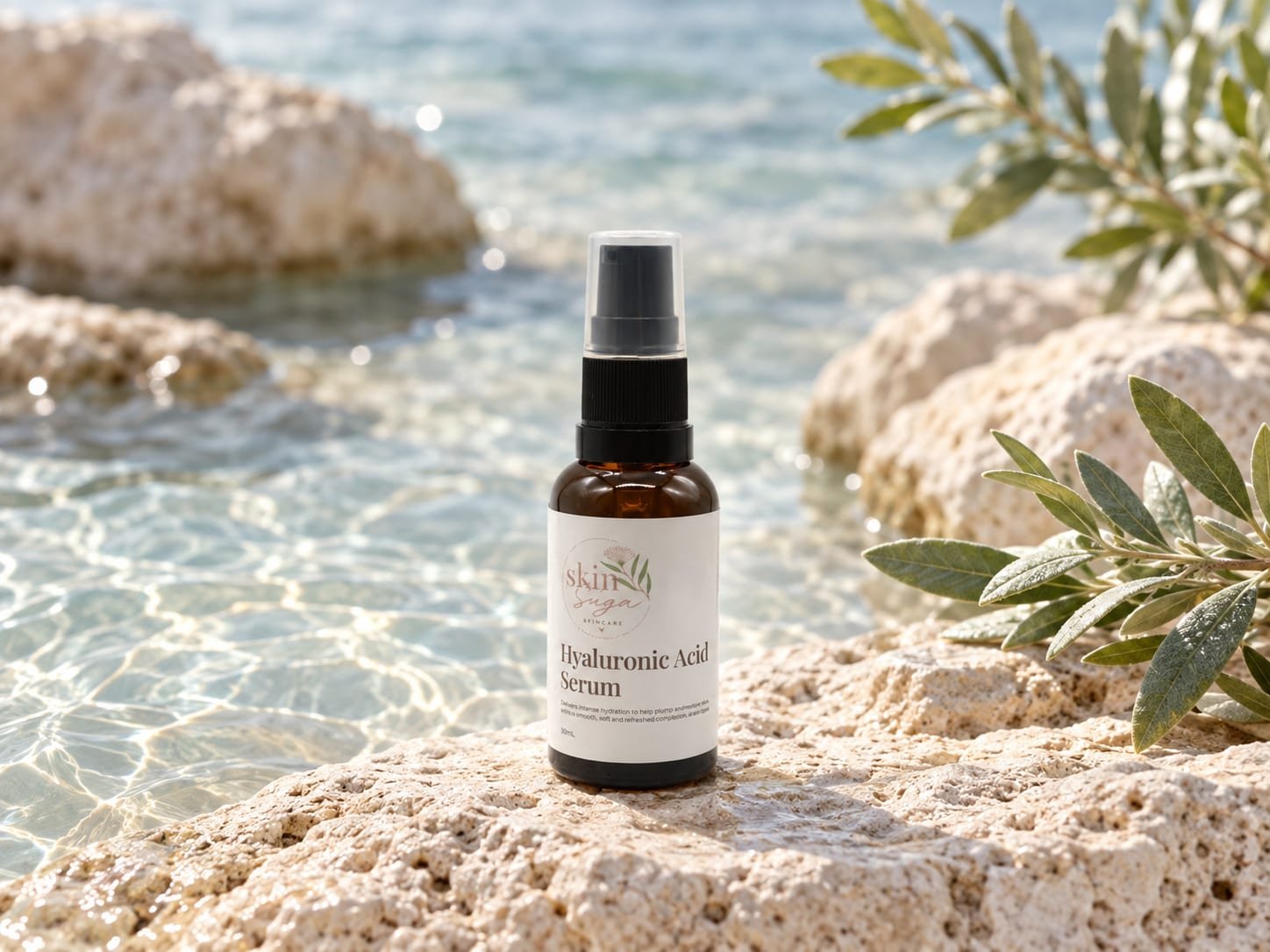
Hyaluronic Acid Serum
Vegan hyaluronic acid and Radish Root Ferment provide a lightweight water-binding layer. Apply to slightly damp skin and follow with moisturiser rather than allowing it to dry alone in cabin air.
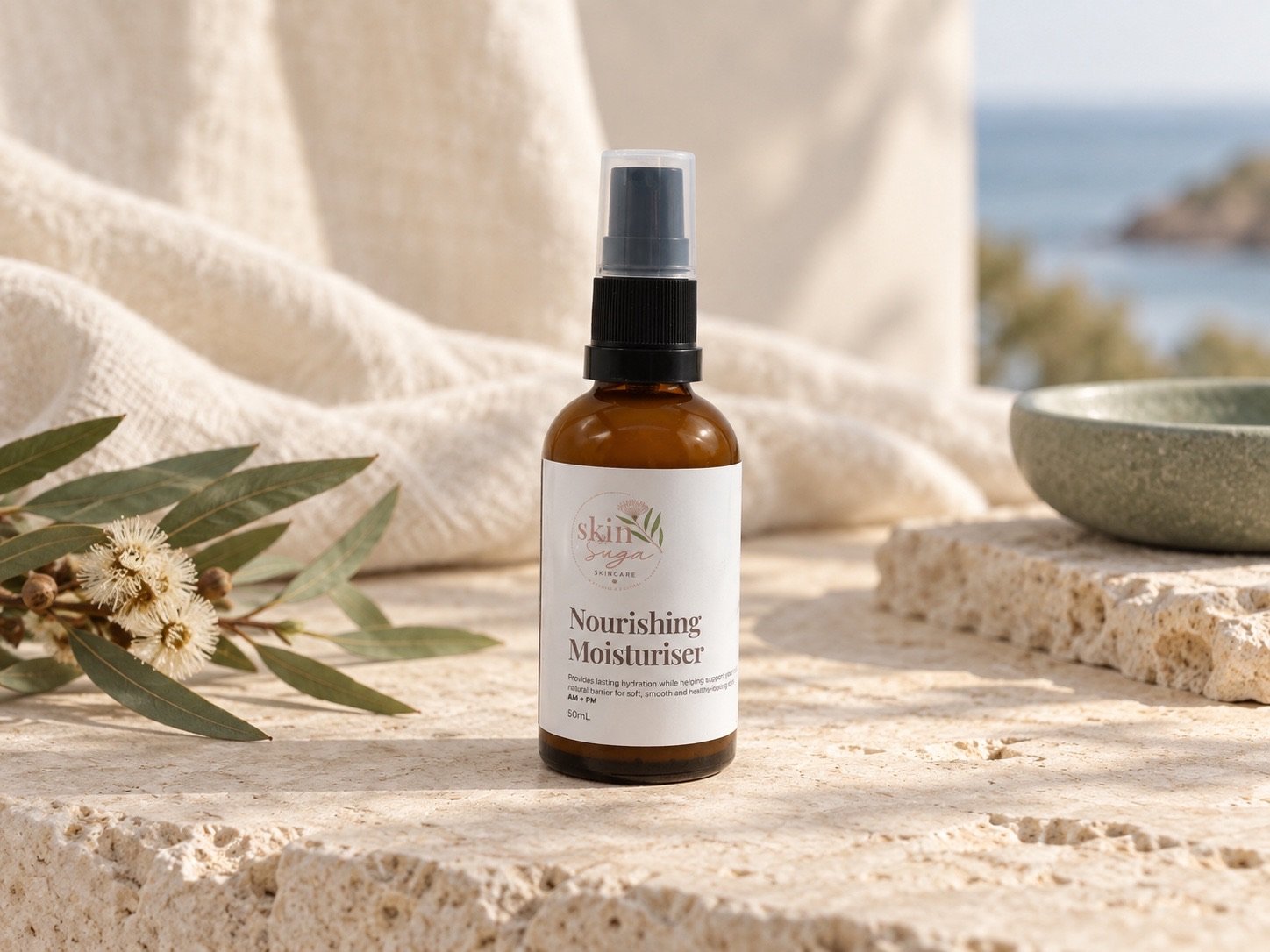
Nourishing Moisturiser
A richer comfort layer for dry cheeks, neck and areas that feel tight during long travel. Apply a modest amount and press rather than rub when reapplying.
Pack a routine, not a collection
Begin with the complete hydration ritual, then keep only the serum and moisturiser within reach during the flight.
Common questions
Should I wear sunscreen inside the plane?
Use sunscreen when you will be exposed to daylight during airport transfers, at the destination or near a bright aircraft window. Broad-spectrum SPF50 or SPF50+ is only one part of protection; clothing, shade, sunglasses and a hat remain important.
How often should I mist my face?
There is no required schedule. Mist only when it feels useful and pair it promptly with serum or moisturiser. Repeated misting on its own may provide only brief relief in very dry air.
Can I use facial oil instead of moisturiser?
Oil can soften and reduce water loss, but it does not provide the same water-based hydration as a complete moisturiser. For most dry mature skin, use it over or mixed with a compatible moisturiser rather than as the only step.
What if my skin breaks out after flying?
Return to a gentle routine and avoid scrubbing or adding several acne treatments at once. Persistent, painful or widespread changes should be assessed by a health professional.
Sources
- Port Macquarie Dermatology: Travel skincare guide
- Neutral Bay Dermatology: Caring for skin when flying
- Adore Beauty: In-flight skincare routine
- Cancer Council Australia: Sunscreen advice
General cosmetic skincare information only. Seek medical advice for persistent rash, significant swelling, pain, eye symptoms or breathing difficulty.