Humectant serum needs a complete hydration routine
Can hyaluronic acid make mature skin drier in a dry climate?
The short answer: Hyaluronic acid is not proven to “steal” water from mature skin in dry air, but a lightweight serum may feel insufficient when humidity is low. Apply a modest amount to slightly damp or comfortable skin, then follow with moisturiser. If tightness continues, assess the complete formula, cleansing routine, environment and frequency rather than blaming one ingredient in isolation.
The claim that hyaluronic acid always pulls water out of the skin in dry weather has become a popular online warning. It sounds scientific, but it reduces a complex finished formula to one dramatic sentence. Hyaluronic acid is used as a humectant because of its relationship with water. Whether a serum feels hydrating depends on its molecular forms, concentration, supporting ingredients, the condition of the skin and what is applied afterwards.
What hyaluronic acid actually does
Hyaluronic acid is naturally present in the body and is widely used in topical products. In a cosmetic serum, it helps hold water near the upper layers of the skin and can improve the immediate feel of hydration and smoothness. Different molecular weights behave differently, and a finished product usually contains water, humectants, preservatives and texture ingredients rather than isolated hyaluronic acid.
Research supports topical hyaluronic acid as a moisturising ingredient, including studies in dry skin. That does not mean every formula suits every climate or complexion. A gel serum can add water-based hydration but may not provide enough emollient or occlusive support for mature skin exposed to winter wind, strong air conditioning or the low humidity common in parts of inland Australia.
When someone says hyaluronic acid made them drier, the experience deserves attention even if the popular explanation is too simple. The serum may have been used alone, layered over an unsuitable cleanser, applied in excess, or combined with an underpowered moisturiser. Fragrance, preservatives or another ingredient may also be the source of discomfort.
Why low humidity changes the feel of a routine
Dry air increases the importance of reducing water loss from the skin surface. Humectants supply one part of the answer; moisturisers also use emollients to smooth the spaces between surface cells and occlusive ingredients to slow evaporation. Mature skin often responds better when these functions are combined rather than expecting a clear serum to do everything.
A slightly damp face can make hyaluronic acid serum easier to spread. Damp does not mean dripping wet, and there is no need to race from the tap. Apply a small amount, then use moisturiser while the skin still feels comfortable. The moisturiser step is particularly useful in air-conditioned offices, heated homes and dry winter weather.
If the routine becomes sticky or pills, more serum is not the answer. Reduce the amount and remove duplicated hydrating layers. A thin application usually distributes more evenly and leaves room for moisturiser and sunscreen. The goal is lasting comfort by midday, not the glossiest finish immediately after application.
A practical troubleshooting test
For one week, keep cleansing, sunscreen and makeup unchanged. Use hyaluronic acid once daily beneath a familiar moisturiser. Note how the skin feels after ten minutes, at lunch and before bed. If comfort improves, the basic pairing is useful. If tightness appears, stop the serum for several days while keeping the moisturiser steady, then compare.
Next, check water temperature and cleansing frequency. Hot showers, foaming cleansers, scrubs and repeated washing can create more dryness than a serum can correct. Use lukewarm water, a gentle cream cleanser and pat rather than rub. Apply skincare soon after cleansing instead of allowing the face to become tight.
Persistent scaling, burning, rash or cracking may not be simple cosmetic dryness. Eczema, contact dermatitis and other conditions need qualified assessment. Cosmetics can support comfort and appearance but should not be used to diagnose or treat a medical skin condition.
How Skin Suga fits the routine
Skin Suga Hyaluronic Acid Serum is the focused water-binding step. Use a small amount and follow with moisturiser rather than treating it as a complete moisturising routine by itself. This is especially important when the air is dry or mature skin feels less cushioned than it once did.
The Ultimate Hydration Ritual is the preferred starting point because it coordinates gentle cleansing, hydration and moisturising. A ritual-first approach reduces guesswork and makes it easier to identify whether an extra product is genuinely improving comfort. During the day, finish with broad-spectrum sunscreen used as directed.
A practical Skin Suga routine
- Cleanse with lukewarm water and a gentle cream cleanser.
- Pat away excess water but leave skin slightly damp or comfortably dry.
- Apply a small, even amount of Skin Suga Hyaluronic Acid Serum.
- Follow promptly with a moisturiser that provides emollient comfort.
- Use broad-spectrum sunscreen in the morning and adjust richness as humidity changes.
Introduce one change at a time. Keep the remaining steps steady for several days so you can tell whether the change improves comfort, appearance and ease of use. If persistent burning, swelling, hives, cracking or a changing lesion appears, stop experimenting and seek advice from a qualified health professional.
Common mistakes to avoid
- Using hyaluronic acid serum as the only moisturising step in very dry air.
- Applying several pumps until the skin feels sticky.
- Letting the face become tight before applying moisturiser.
- Trying to correct harsh cleansing with additional serum.
- Assuming every reaction is caused by hyaluronic acid rather than the full formula.
Mature skincare does not need to feel aggressive to be worthwhile. Tingling is not a quality test, a longer ingredient list is not automatically better, and a product cannot compensate for inconsistent sunscreen or harsh cleansing. A short routine used comfortably and consistently is the stronger foundation.
Adjusting the routine for Australian conditions
Humidity, heat, wind, indoor air conditioning and ultraviolet exposure can change how the same products feel. Use lighter layers in humid weather and add more moisturising support when dry air increases tightness. Keep skincare away from a sunny windowsill or hot car. During the day, broad-spectrum sunscreen remains the final skincare step and should be used with clothing, shade and other sun-protective measures.
Allow layers to settle before sunscreen, but do not turn waiting time into a rigid rule. If products pill, reduce the amount and number of cosmetic layers rather than reducing sunscreen. Reapply sunscreen according to its label, particularly after sweating, swimming or towel drying.
Begin with the complete ritual
The Ultimate Hydration Ritual is the recommended starting point because a coordinated ritual gives the concern a stable foundation. It helps avoid duplicated serums and conflicting textures. Once that base is comfortable, Hyaluronic Acid Serum is the focused individual product for this question.
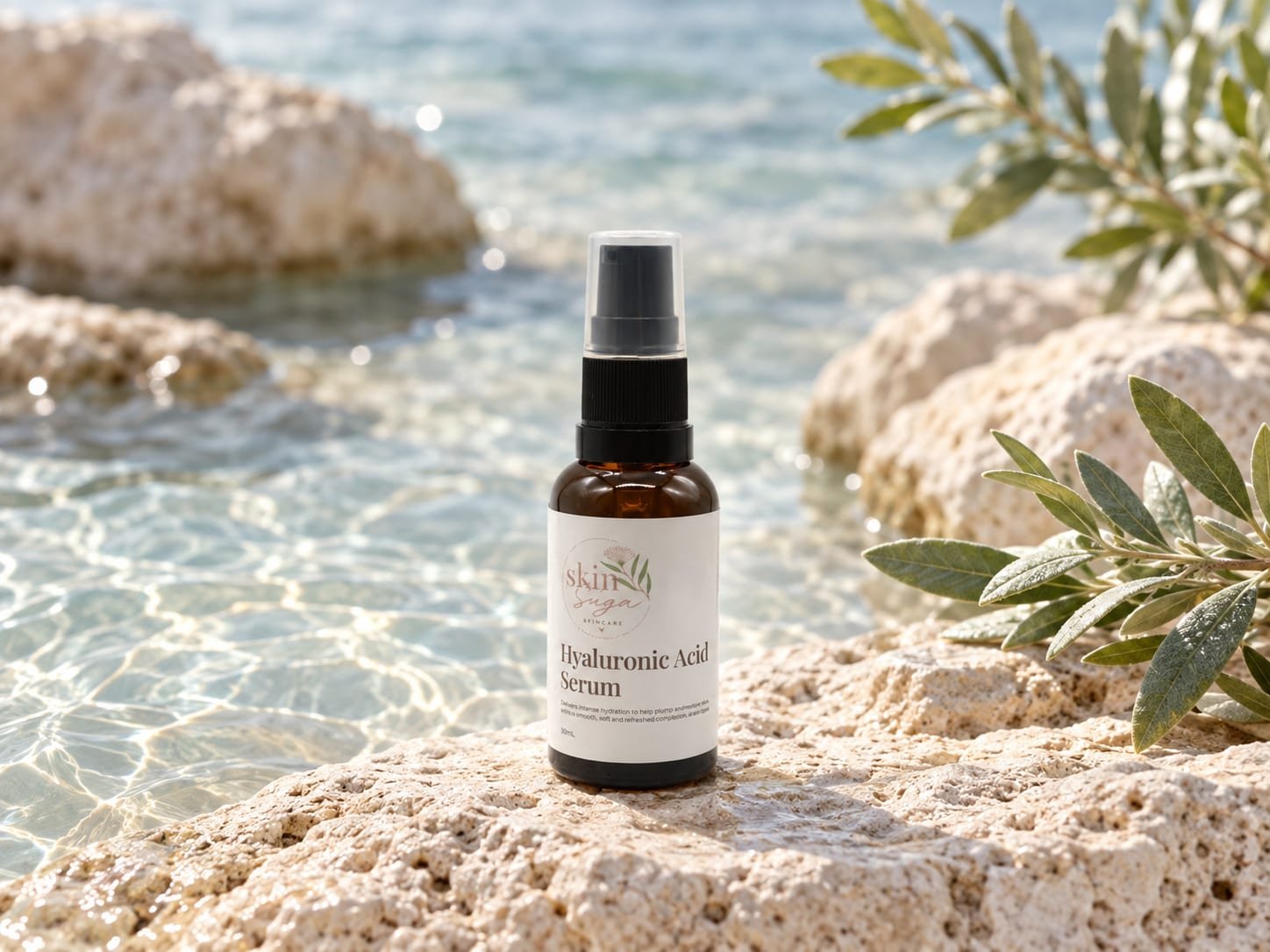
Hyaluronic Acid Serum
A focused Skin Suga option selected for the concern in this guide. Follow the label, patch test first and adjust frequency according to comfort.
Ultimate Hydration Ritual
A ritual-first path for women who want compatible steps and a clear order of use before adding individual products.
How to assess progress realistically
In the first week, judge comfort, spread, pilling and whether the routine is easy to repeat. Hydrating and emollient products can change surface feel quickly, while visible changes in tone and fine texture are gradual and vary between people. Compare the skin in similar natural light rather than relying on filtered photographs. Normal pores, lines and texture remain normal at every age.
Cosmetics support appearance and comfort; they do not diagnose or treat eczema, rosacea, acne, pigmentation disorders or other medical conditions. Seek professional care when symptoms are persistent, painful or changing. No Skin Suga product is presented as a substitute for medical advice or regulated sun protection.
Frequently asked questions
Does hyaluronic acid pull water out of skin?
That explanation is not well established for normal cosmetic use. A serum can still feel insufficient in dry conditions, so pair it with moisturiser and assess the complete routine.
Should I apply it to wet skin?
Slightly damp skin can help spreadability, but dripping skin is unnecessary. Follow the product directions.
Can I use face oil instead of moisturiser?
Oil can add emollient and occlusive comfort, but it does not provide the same water-based components as a complete moisturiser. Many dry routines use serum, moisturiser and then a little oil if needed.
How often should mature skin use it?
Many people use it once or twice daily, but frequency should follow the label and your skin response. Reduce use if the routine becomes uncomfortable or overly layered.
Choose the calmer next step
Start with a complete ritual, then add only the product that answers a clear need.
Sources and further reading
- Hyaluronic acid: A key molecule in skin aging
- Hyaluronic acid formulation for xerosis: randomised trial
- American Academy of Dermatology: Dry skin overview
- American Academy of Dermatology: Tips to relieve dry skin
Sources support the general educational information above. Product recommendations are Skin Suga’s cosmetic guidance and are not endorsements by the source organisations.