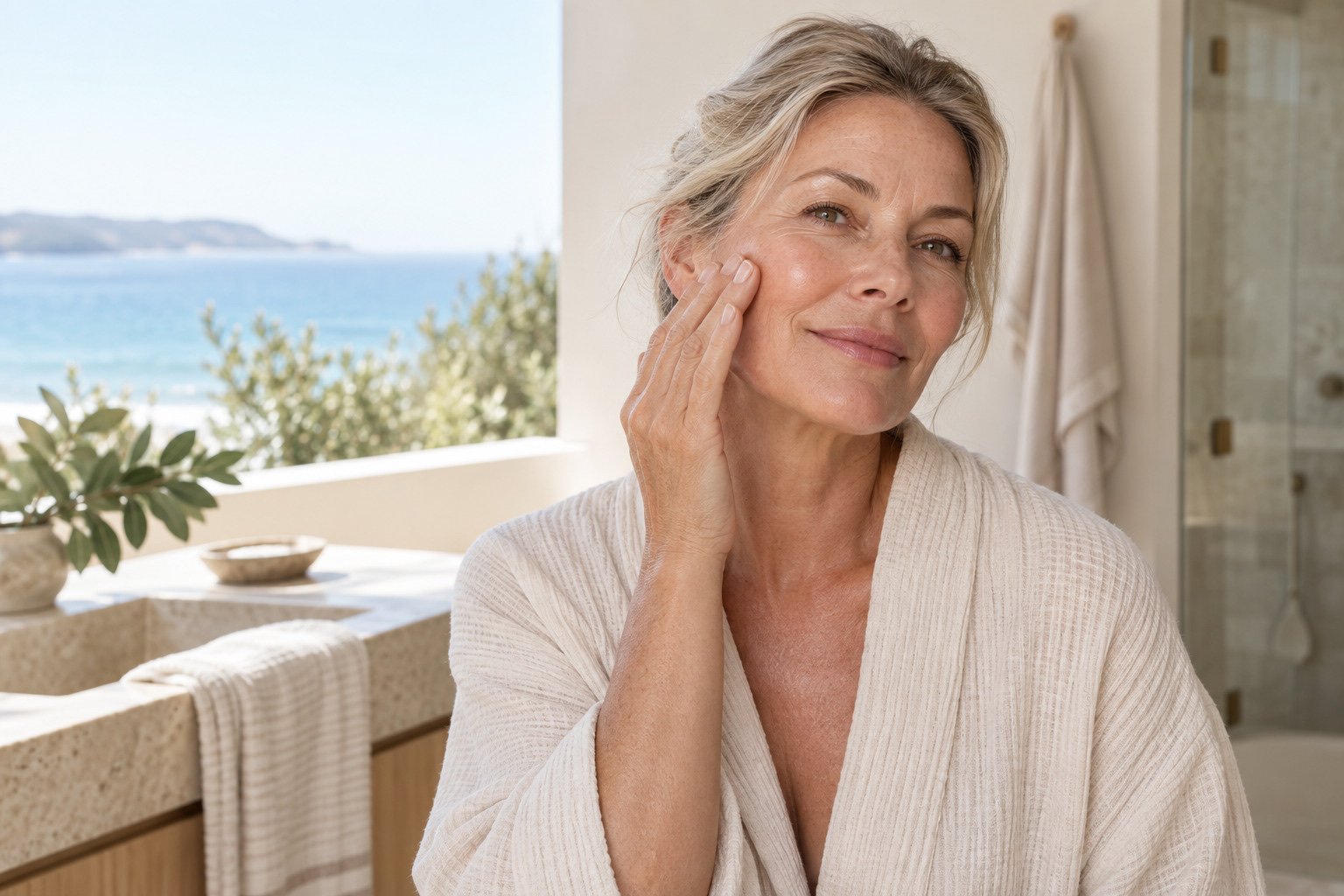
Radiance without chasing poreless perfection
Can you get glass skin after 40 without a 10-step routine?
The short answer: Yes, skin over 40 can look fresh, hydrated and light-reflective without a 10-step routine. The realistic goal is comfortable skin with a smooth, well-moisturised surface, not skin without pores, lines or texture. A gentle cleanse, one hydrating layer, moisturiser, daily sun protection and an optional facial oil are usually a better foundation than repeatedly exfoliating or stacking every trending active.
Glass skin began as a description of exceptionally clear, luminous-looking skin. Online, it is often presented as a poreless finish created by many essences, masks and active ingredients. Real mature skin still has pores, expression lines and unevenness. Its glow comes from the way a hydrated, calm surface reflects light, not from erasing normal anatomy.
That distinction matters after 40. Skin can become drier and slower to recover from over-cleansing or too many strong products. A routine designed to force shine can leave the face tight, irritated or covered by a heavy film. The more useful aim is resilient-looking radiance: skin that feels comfortable before it looks glossy.
What creates a glass-like glow?
Several small effects work together. Water in the outer skin layers helps surface cells sit more evenly. Emollients smooth the spaces between those cells, while a light occlusive layer slows evaporation. Gentle removal of loose surface cells can improve brightness, but inflammation and over-exfoliation do the opposite.
Lighting, makeup and camera processing also influence the images that define the trend. A face photographed beside a window with a dewy base will look different from the same face outdoors at midday. Use inspiration as a direction, not as a biological standard your skin must meet.
Why ten steps are not required
Each extra layer adds another formula, preservative system and potential source of irritation. More layers can also pill beneath sunscreen or makeup. If several products perform the same hydrating job, the routine becomes expensive without becoming more effective.
A short routine makes it easier to see what helps. It also encourages consistent sunscreen use, which is more important to long-term visible skin ageing than a rotating collection of glow products. Add a step only when it has a distinct purpose and earns its place through comfort and repeatability.
A simple morning glass-skin routine
- Cleanse lightly: Rinse with lukewarm water or use a small amount of cream cleanser if oil, sweat or overnight residue is present.
- Hydrate: Apply a thin layer of hyaluronic acid serum to slightly damp, not dripping, skin.
- Moisturise: Smooth on enough moisturiser to remove tightness without leaving a thick film.
- Protect: Finish with a suitable broad-spectrum SPF50 or SPF50+ sunscreen and follow its label.
- Optional finish: If skin remains dry, press one small drop of facial oil onto dry areas before sunscreen only when the layers remain stable.
Hydration first, oil second
Hyaluronic acid is a humectant, meaning it helps hold water within a cosmetic formula and at the skin surface. It is not an oil and does not replace moisturiser. Apply a modest amount, then use moisturiser to support a comfortable finish. In dry or air-conditioned conditions, leaving a humectant serum completely uncovered can feel less comfortable than sealing it with cream.
Facial oil performs a different job. Plant oils add emollience and reduce the dry, papery look that can scatter light. They do not supply water. For that reason, a water-based serum and moisturiser normally come before oil. Use less than social media demonstrations suggest: one or two drops may be enough for the whole face.
Can exfoliation make skin look more luminous?
Occasional gentle exfoliation can reduce a rough, dull-looking surface, but daily acids and scrubs are not the entry ticket to glow. Stinging, persistent redness, flakes and sudden sensitivity are signs to step back. Mature skin that is inflamed usually reflects light less evenly and feels worse under makeup.
Do not introduce exfoliation, a new vitamin C serum and a retinoid in the same week. Keep the basic routine stable, add one product at a time and follow its directions. If you use prescription skincare, take advice from the prescriber before changing the routine around it.
An evening routine for soft surface radiance
- Remove the day: Cleanse away makeup, sunscreen and residue with fingertips and lukewarm water.
- Add one treatment: Use either your established antioxidant or vitamin A step according to its directions, not every active at once.
- Restore water: Apply hydrating serum when it suits the treatment and your skin feels comfortable.
- Moisturise: Choose a cream that keeps skin flexible through the night.
- Seal dry areas: Press a small amount of facial oil over cheeks or other dry areas as the final step.
How Australian conditions change the routine
Australia does not have one skincare climate. Humid Brisbane weather may make multiple layers feel sticky, while a dry Perth afternoon or air-conditioned office can increase the feeling of water loss. Reduce rich layers in humidity and add a measured oil finish when the air is dry. The routine can change with the season without losing consistency.
Sun protection remains central. A luminous finish is not worth compromising the amount or evenness of sunscreen. If skincare pills underneath, reduce the number and quantity of morning layers, allow each to settle, and test compatibility before adding anything new.
What if dewy products make you look greasy?
Grease and hydration are not the same. Start by reducing oil rather than removing moisturiser. Apply products in thinner layers and keep richer textures to the cheeks. A light moisturiser may suit the centre of the face while a nourishing cream is reserved for dry areas.
Give the routine several minutes before judging it. If a film remains uncomfortable, blot gently and use less next time. A healthy-looking finish can be satin rather than high shine.
Ritual first: Radiance & Glow Ritual
The Radiance & Glow Ritual gives glow-focused care a sensible order: gentle cleansing, antioxidant support, hydration and a nourishing finish. It is designed as a coordinated routine, so you do not need to assemble ten overlapping products.
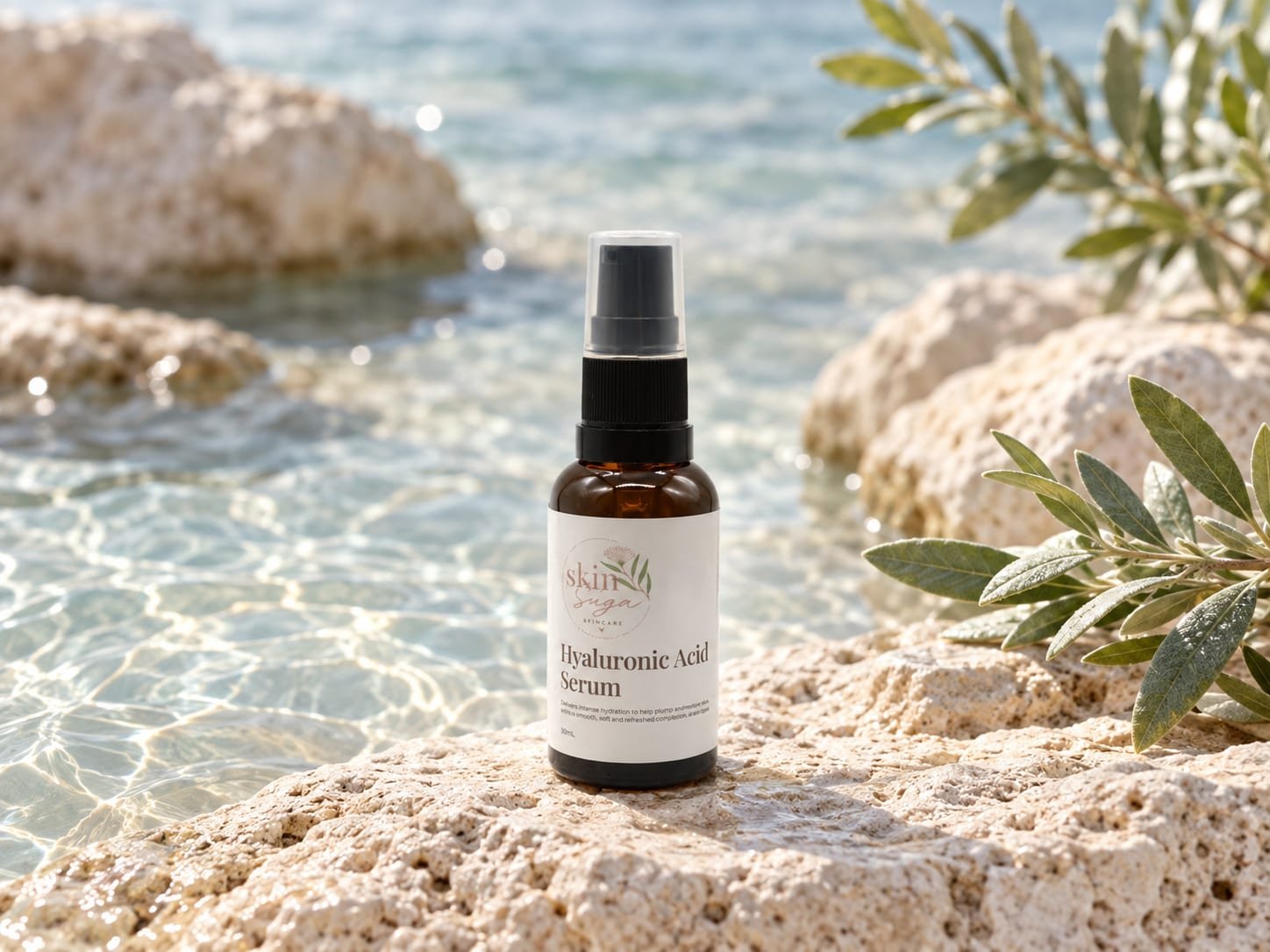
Hyaluronic Acid Serum
A water-binding hydration step that helps mature skin feel softer and look more comfortably plumped.
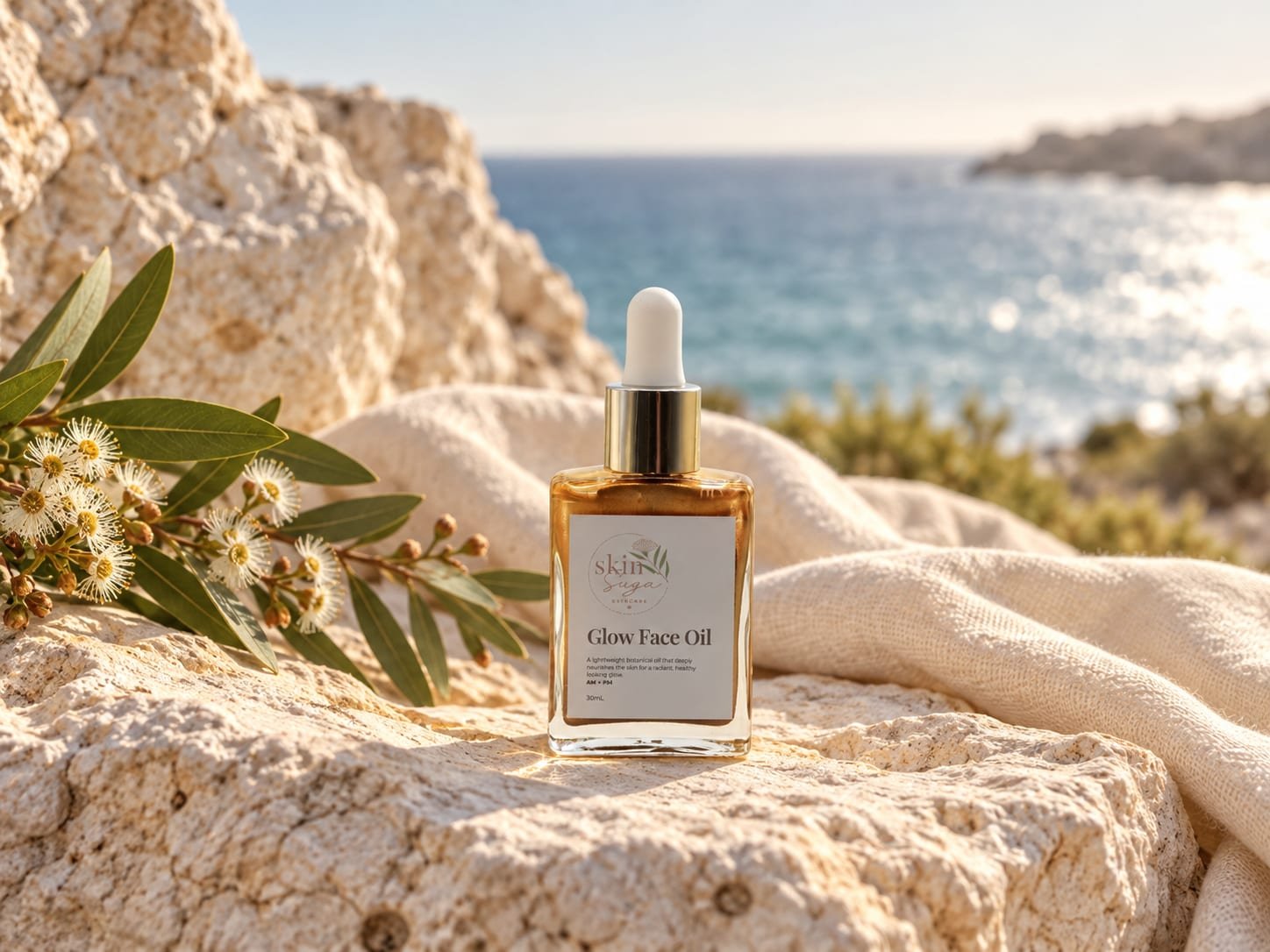
Glow Face Oil
A lightweight blend of nourishing plant oils used as the final layer when mature skin needs more emollience.
Build glow from comfort
Hydrate first, moisturise well and use only the finishing oil your skin needs.
Common questions
Can mature skin really look glassy?
It can look smooth, hydrated and luminous, but pores, lines and natural texture remain normal and healthy.
Do I need an essence and a serum?
No. Use one hydrating layer unless two products have clearly different jobs and both improve comfort.
Will facial oil clog pores?
Any formula can disagree with an individual skin type. Start with one drop, avoid areas that become congested and stop if breakouts or irritation appear.
How quickly can skin look more hydrated?
Surface hydration can improve the appearance of dryness quickly. More lasting comfort depends on consistent use and avoiding irritating routines.
Sources
- American Academy of Dermatology: How to select a moisturiser
- American Academy of Dermatology: Face washing 101
- Cancer Council Australia: Sunscreen basics
General cosmetic skincare information only. Natural texture is normal, and no topical routine can create literally poreless skin.