
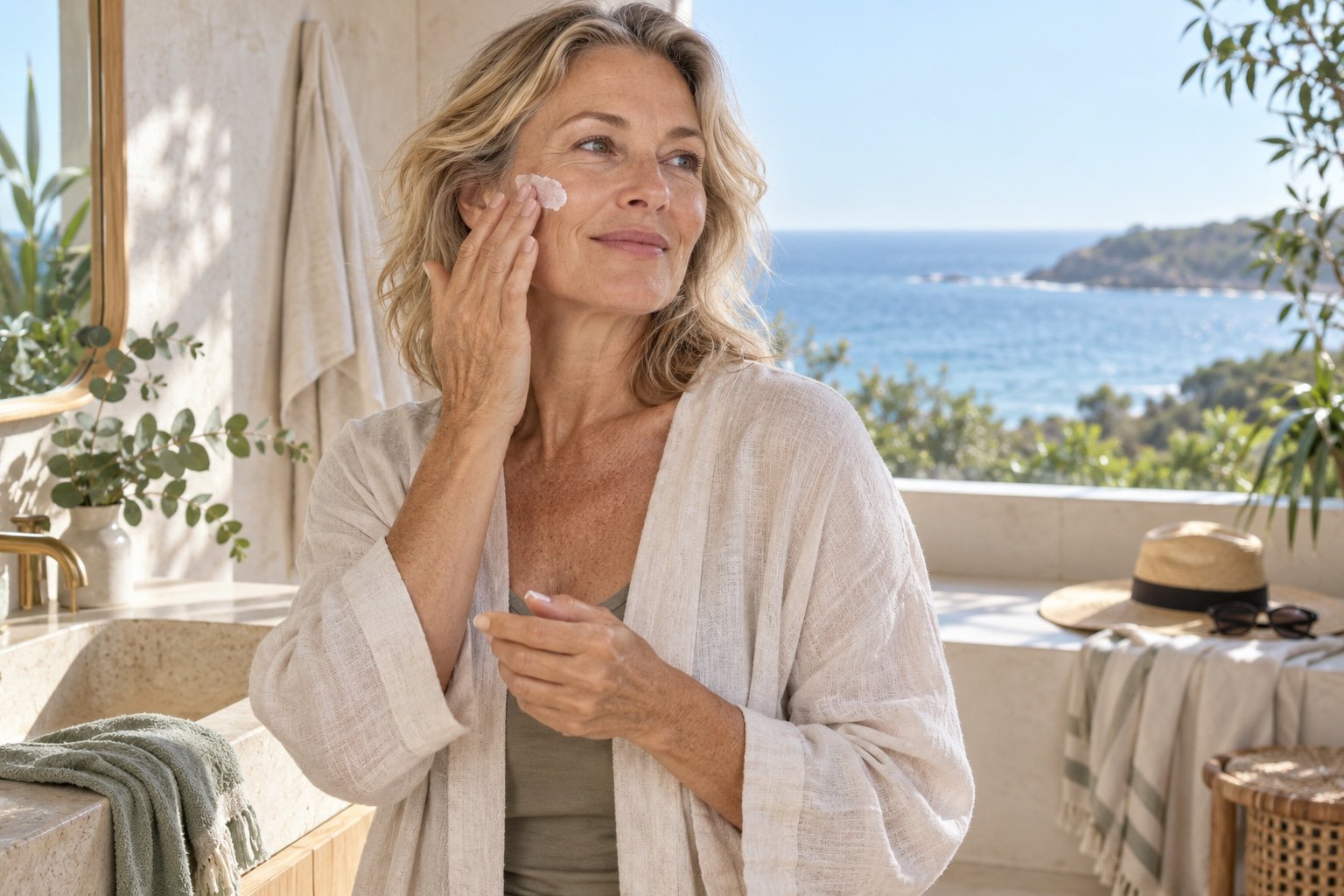
Sun protection after 50
Does sunscreen work differently on mature skin?
The short answer: No. Sunscreen filters ultraviolet radiation in the same way at every age. What changes after 50 is the skin wearing it: mature skin may feel drier, thinner or more reactive, and it often carries more cumulative sun exposure. Choose a broad-spectrum SPF 50 or 50+ you can apply generously, then use shade, clothing and a hat as the rest of your sun-protection plan.
The protection is the same; the wearing experience can change
Sunscreen works by using approved UV filters to absorb, scatter or reflect ultraviolet radiation before it can damage skin. Your age does not make those filters behave differently. A correctly applied broad-spectrum SPF 50 or 50+ product still protects mature skin from both UVA and UVB radiation. UVA reaches more deeply into skin and contributes to visible changes associated with cumulative sun exposure, while UVB is strongly associated with sunburn. Both matter in Australia.
The practical difference after 50 is usually comfort and consistency. Hormonal change, lower sebum production, medications, climate and years of sun exposure can leave skin feeling drier or more easily irritated. A sunscreen that looked elegant in your thirties may now pill over moisturiser, settle into dry patches or sting around the eyes. That does not mean sunscreen has stopped working. It means the surrounding routine or the sunscreen format may need adjusting.
Why sunscreen remains especially important after 50
Visible pigmentation, uneven tone, fine lines and rough texture reflect many influences, including genetics, normal ageing and cumulative UV exposure. Daily sun protection cannot erase exposure that has already occurred, but it can help reduce further UV exposure. It also supports the work of the rest of your skincare because a carefully chosen serum or moisturiser cannot compensate for frequent unprotected sun.
Australian guidance does not create a separate sunscreen category for mature skin. Look for the same essentials recommended for adults generally: broad-spectrum protection, a high SPF, a suitable water-resistance claim for swimming or sweating, and a formula you will actually use in the recommended amount. Sunscreen should be one part of a broader approach that includes protective clothing, a broad-brimmed hat, shade and sunglasses.
How much should you apply?
Under-application is one of the most common reasons people receive less protection than the label indicates. Follow the amount and timing on your sunscreen label. Australian public-health guidance commonly describes about one teaspoon for the face, neck and ears combined, and about seven teaspoons for an average adult body when exposed. Apply it before going outdoors and reapply as directed, especially after swimming, sweating or towel drying.
Do not rely on the SPF in foundation alone for a long outdoor day. Most people do not apply makeup as thickly or evenly as sunscreen testing requires. A dedicated sunscreen as the final skincare step is easier to apply generously. Makeup can then sit over it once the film has settled.
Make mature skin more comfortable under sunscreen
If sunscreen catches on dry patches, the answer is not necessarily a richer sunscreen. Begin with a gentle morning routine. Rinse or cleanse without leaving the face tight, apply a light hydrating layer if you enjoy one, then use a moisturiser that leaves the skin comfortable rather than greasy. Give each layer a moment to settle before sunscreen. Too many slippery layers can cause pilling; too little moisturisation can make the finish look uneven.
If your eyes sting, keep the product away from the mobile eyelid unless its directions specifically allow that use, and try a different face sunscreen. If your face flushes or develops an ongoing rash, stop the new product and seek advice from a pharmacist, GP or dermatologist. Sensitive skin can react to filters, fragrances, preservatives or simply the combination of several products. The label matters more than broad marketing terms such as “clean” or “natural”.
A simple morning order
- Cleanse gently. Use lukewarm water and avoid scrubbing. If your skin is comfortable after a water rinse, a full cleanse may not be necessary every morning.
- Add hydration only if useful. A mist or serum can support a comfortable feel, but it is optional.
- Moisturise. Use enough to soften dry areas without creating a heavy film.
- Apply sunscreen. Follow the label amount and directions. Cover the face, ears, neck and other exposed skin.
- Complete the plan. Use shade, clothing, a hat and sunglasses rather than expecting sunscreen to work alone.
Choose a ritual before adding more products
A reliable routine makes sunscreen easier to wear than a crowded shelf does. The Skin Suga Daily Essentials Ritual is the most relevant starting point here because it organises cleansing, hydration and moisturising before your separate sunscreen step. It does not replace sunscreen and should never be presented as sun protection.
If your morning skin feels persistently dry, the Anti-Ageing Moisturiser combines emollient and humectant ingredients to help skin feel smoother and more comfortable. Use a modest amount, allow it to settle, then apply your chosen broad-spectrum sunscreen according to its label.
Does mature skin need mineral sunscreen?
Not automatically. Mineral and organic UV filters can both provide effective broad-spectrum protection when a product meets Australian requirements and is used correctly. The best choice is the one that suits your skin, lifestyle and label directions. A formula that leaves a visible cast, feels too drying or irritates your eyes may reduce how consistently you use it, so trying another approved sunscreen is reasonable.
Choose the finish for the day you actually have
A richer cream sunscreen can suit a dry winter morning, while a fluid or gel-cream may sit better in Perth heat. Water resistance matters when you will swim, exercise or perspire, but it does not make a product permanent. Follow the reapplication directions after water, sweat and towel drying. For an ordinary office day, comfort under makeup may be the deciding factor.
Test a new sunscreen on several normal days before relying on it for a long outdoor event. Notice eye comfort, pilling, shine and whether you are tempted to apply less than the labelled amount. A technically elegant product is valuable because it encourages correct use, not because its texture changes the meaning of the SPF number.
How to reapply without turning it into a beauty project
Reapplication is easiest when the format suits the situation. Wash or dry your hands when possible, then press or smooth a fresh layer over exposed areas. If you wear makeup, a deliberate light base is easier to refresh than heavy layers. Powder products and makeup sprays should not be assumed to replace the amount of sunscreen directed on a primary sunscreen label.
Keep sunscreen somewhere cool and accessible, but do not leave it in a hot car. Check the expiry date, close the cap and replace a product if heat or age has caused an unexpected change in smell, separation or texture. When the formula no longer spreads evenly, the sensible choice is a fresh tube.
Cloud, windows and short errands
UV can still be present on cloudy days, and incidental exposure accumulates through driving, walking and time near bright windows. The right response depends on the UV level and your day, not on fear. Check a trusted Australian UV forecast, plan protection for the time you will be outside and remember that side windows in cars do not block all UVA equally.
A sunscreen habit works best when it is ordinary. Place it beside the moisturiser, apply it before getting dressed and keep a separate body sunscreen near the door. Consistency removes the need to negotiate with yourself every morning.
What about vitamin D?
Do not abandon sun protection to self-treat a suspected vitamin D deficiency. Individual needs vary with skin type, health, location and lifestyle. Speak with your GP if you are concerned. Deliberate unprotected exposure is not a precise or risk-free dosing strategy.
When to ask a dermatologist
A skincare routine is not a substitute for skin checks. Ask a health professional about a spot that is new, changing, bleeding, persistently sore or simply worries you. Regular self-checks and professional advice are particularly important when you have a history of extensive sun exposure or skin cancer.
Build the comfortable layers beneath sunscreen
Start with a calm cleanse, hydration and moisturiser, then finish with your own Australian broad-spectrum sunscreen.
Explore the Daily Essentials Ritual