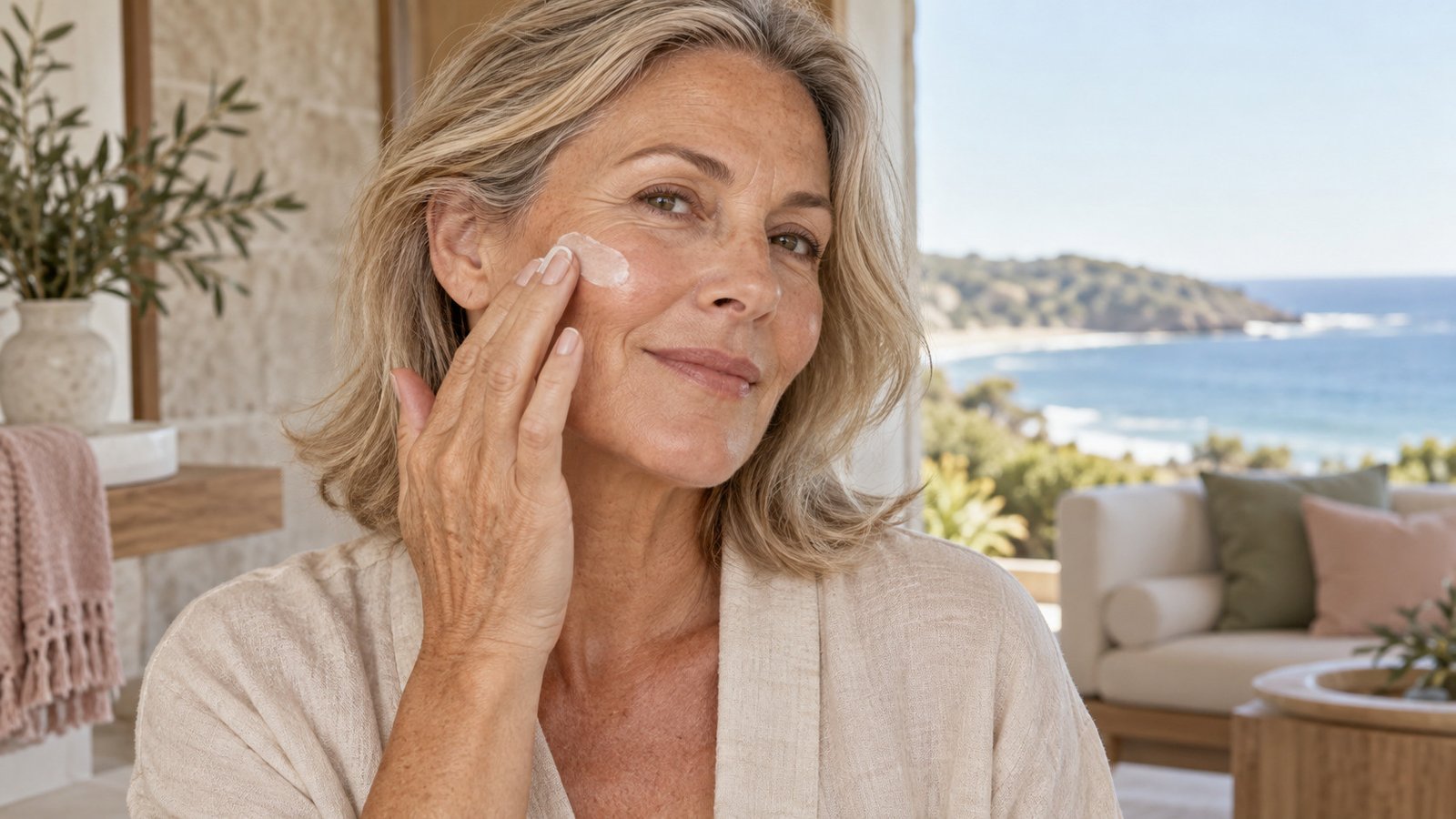
Hydration softens the surface, not your expression
Can moisturiser reduce wrinkles after 40?
The short answer: Moisturiser can reduce the appearance of some fine lines by trapping water, smoothing dry surface cells and making skin look temporarily plumper. It cannot erase deep wrinkles, lift sagging skin or reverse structural ageing. Use it consistently for comfort and surface smoothness, and pair it with daily sun protection because UV exposure contributes strongly to visible skin ageing.
Moisturiser is one of the most useful mature-skin products precisely because its job is modest and dependable. It helps the surface hold water, reduces roughness and improves comfort. Those changes can make fine dehydration lines look softer, sometimes within minutes.
The effect is not the same as removing a wrinkle. Deep lines reflect repeated movement, collagen and elastin changes, sun exposure, genetics and facial structure. A cream works at the surface and upper skin layers; it cannot lift tissue or recreate lost volume.
Why dry skin makes lines look deeper
When the outer layer is short of water, individual surface cells do not lie as smoothly. Light catches on roughness, and fine lines appear sharper. Moisturiser supplies a water-containing formula and ingredients that reduce evaporation, so the surface becomes more flexible and even-looking.
This is why an immediate result is usually temporary plumping. Continue using the product to maintain the effect. It is still worthwhile: comfort, makeup application and a brighter-looking surface are meaningful cosmetic benefits.
What a moisturiser contains
Most moisturisers combine humectants, emollients and occlusives. Humectants such as glycerin or hyaluronic acid help bind water. Emollients such as jojoba, shea butter and plant oils smooth the spaces between surface cells. Occlusive ingredients reduce water loss.
The balance determines whether a product feels like a gel, lotion, cream or balm. No category is automatically best after 40. Choose the lightest texture that keeps your skin comfortable through the day or night.
Can an anti-ageing cream rebuild collagen?
Some active ingredients have evidence for longer-term changes in the appearance of photoaged skin, but a label saying anti-ageing does not prove a product will rebuild collagen. Moisturisation itself mostly improves hydration and surface appearance.
If a formula contains vitamin A or another active, assess the evidence and tolerance for that complete product. Strong irritation can make fine lines look more obvious, so more activity is not always a better result.
What moisturiser cannot do
A cream cannot permanently fill a deep fold, remove a dynamic expression line, lift jowls or treat a medical skin condition. Claims such as facelift in a jar are not realistic. Dermatology guidance notes that immediate firming from a cream is generally a moisturising effect and is temporary.
This boundary protects you from disappointment. Use moisturiser for hydration, softness and a smoother look. Seek qualified medical advice if you want to discuss prescription or procedural options.
A morning routine for smoother-looking skin
- Rinse or cleanse gently. Avoid leaving the face tight.
- Add water-based hydration. Apply Hyaluronic Acid Serum to slightly damp skin if it suits you.
- Moisturise. Spread a thin, even layer over face and neck.
- Allow it to settle. Give the surface a brief moment before sunscreen.
- Protect from UV. Apply broad-spectrum SPF50 or SPF50+ sunscreen according to the label and use other SunSmart measures.
An evening routine for dry mature skin
- Cleanse the day away. Remove makeup and sunscreen without scrubbing.
- Hydrate while slightly damp. Use serum only if it remains comfortable.
- Choose a nourishing cream. Apply enough to remove tightness, not a thick mask.
- Add oil only if needed. Press two or three drops over dry areas as the final step.
Light or rich moisturiser after 40?
Use skin feel and climate. A light moisturiser can suit combination skin, humid weather and mornings under sunscreen. A richer cream can feel better on dry cheeks, in winter or under strong air conditioning.
You can use different textures on different areas. The T-zone may need a light layer while the cheeks need more. This is often more comfortable than forcing one heavy amount over the whole face.
Should moisturiser go on damp skin?
Slightly damp skin can help spread a moisturiser and retain some water. Dripping-wet skin may dilute the layer and encourage pilling. Pat gently, then apply before the face becomes tight.
How long should you wait for results?
Comfort and temporary plumping may be noticeable quickly. Give a new, well-tolerated formula several weeks for a fair assessment of surface smoothness. Use it consistently and compare in the same lighting.
If the cream stings, burns or causes a persistent rash, stop. There is no benefit in pushing through irritation with a cosmetic product.
Why sunscreen matters more than a wrinkle claim
Ultraviolet exposure accelerates visible ageing and increases skin cancer risk. In Australia, Cancer Council recommends SPF50 or SPF50+, broad-spectrum, water-resistant sunscreen when UV is 3 or above, used with clothing, a hat, shade and sunglasses.
Moisturiser and sunscreen have different jobs. Unless a moisturising product is an approved sunscreen used exactly as directed, add a separate sunscreen as the final morning step.
When lines are caused by irritation
Sudden fine lines with redness, flaking or stinging can reflect dryness or irritation rather than rapid ageing. Simplify the routine, pause exfoliants and use familiar gentle products. Persistent symptoms need professional advice.
How to compare moisturisers fairly
Introduce one formula at a time and keep the rest of the routine steady. Note comfort at thirty minutes, by late afternoon and the next morning. A product that looks beautifully dewy for ten minutes but leaves the face tight by lunch may be too light; one that transfers heavily or congests the T-zone may be richer than you need.
Use photographs only in consistent natural light. Bathroom spotlights, phone processing and facial expression can alter the apparent depth of lines more than a moisturiser does. A fair comparison is about comfort and repeatable surface smoothness, not a perfect single image.
Ritual first: Age Defy Ritual
The Age Defy Ritual brings cleansing, hydration and moisturising into a consistent mature-skin routine. The aim is comfortable, smoother-looking skin and a repeatable process, not an unrealistic promise to erase every line.
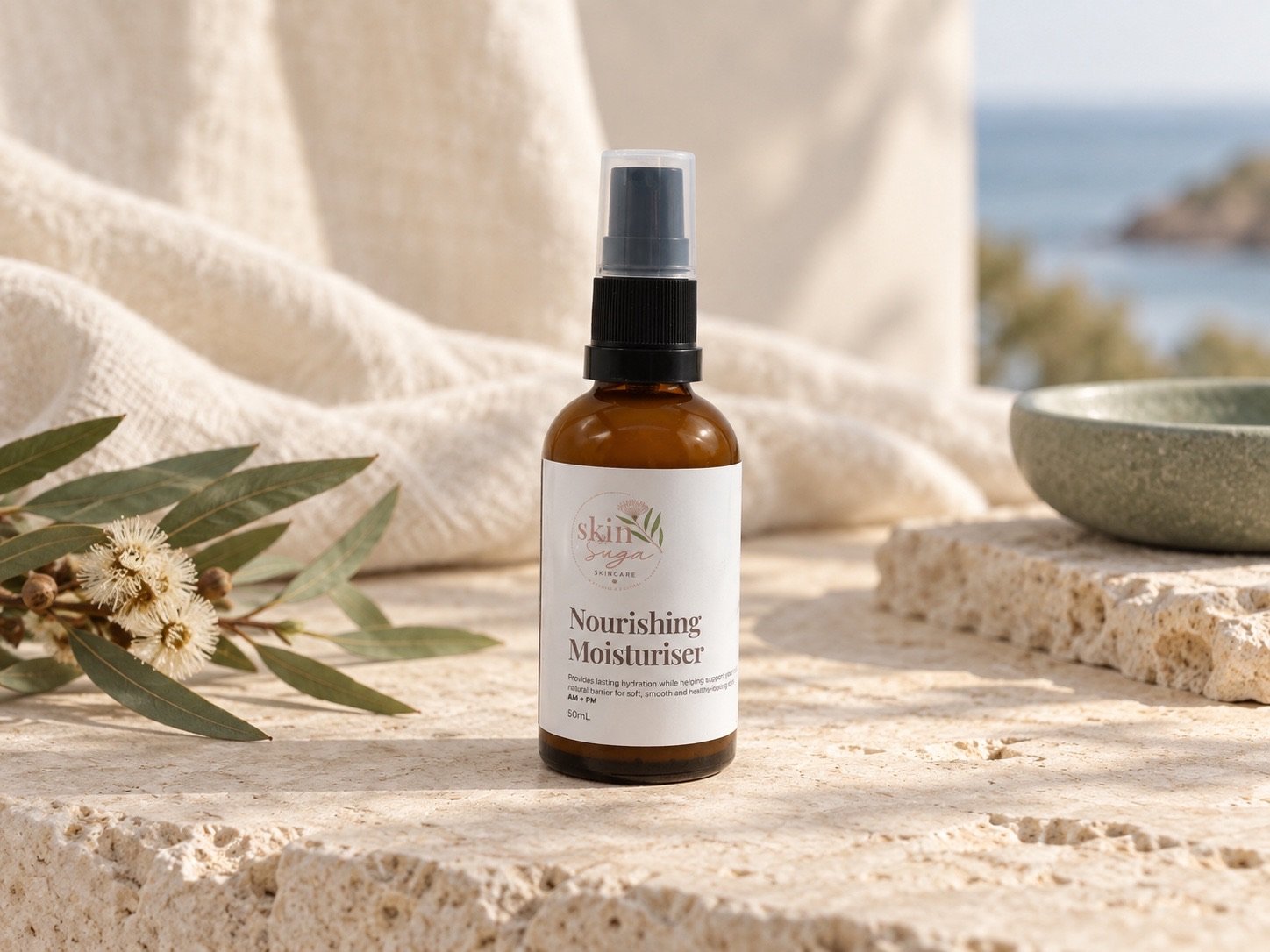
Nourishing Moisturiser
Jojoba, shea butter and avocado provide a richer finishing layer for dry-feeling mature skin.
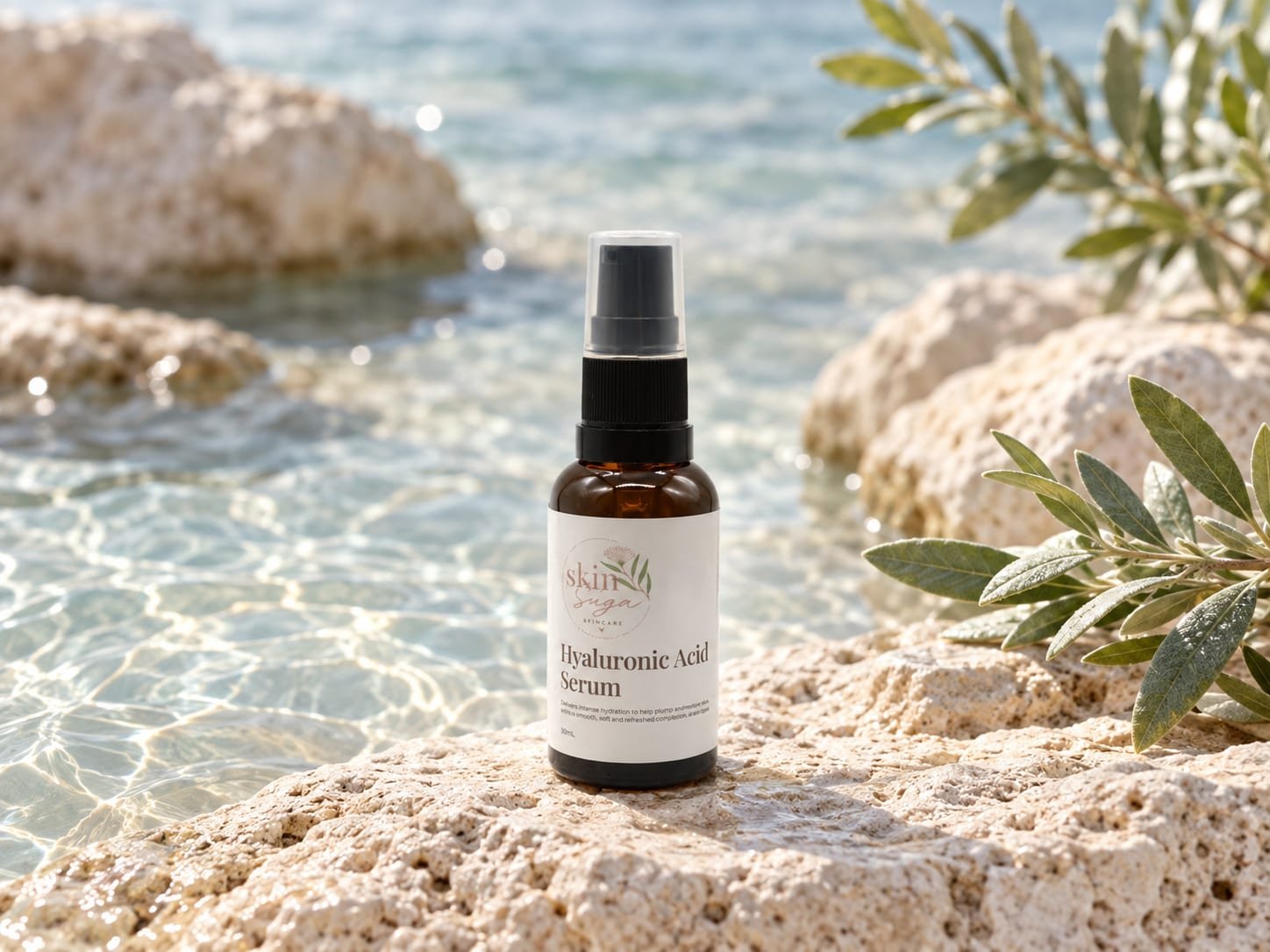
Hyaluronic Acid Serum
Vegan hyaluronic acid with radish root ferment for a lightweight hydration step before cream.
Choose comfort over impossible claims
Hydrate the surface, protect every day and let consistency do the quiet work.
Common questions
Can moisturiser remove deep wrinkles?
No. It can soften surface appearance, but deep wrinkles reflect structural changes beyond the reach of a cosmetic cream.
Does expensive moisturiser work better?
Price does not guarantee performance. Formula, tolerance and consistent use matter.
Should I use more cream at night?
Use enough for comfort. A thicker visible layer is not automatically more effective.
Can I skip serum?
Yes. A complete moisturiser can be enough, especially during sensitive periods.
Sources
- American Academy of Dermatology: Wrinkle remedies
- American Academy of Dermatology: Firming sagging skin
- Cancer Council Australia: Sunscreen basics
General cosmetic skincare information only. Cosmetic moisturiser can improve appearance and comfort but does not treat disease or permanently alter facial structure.