
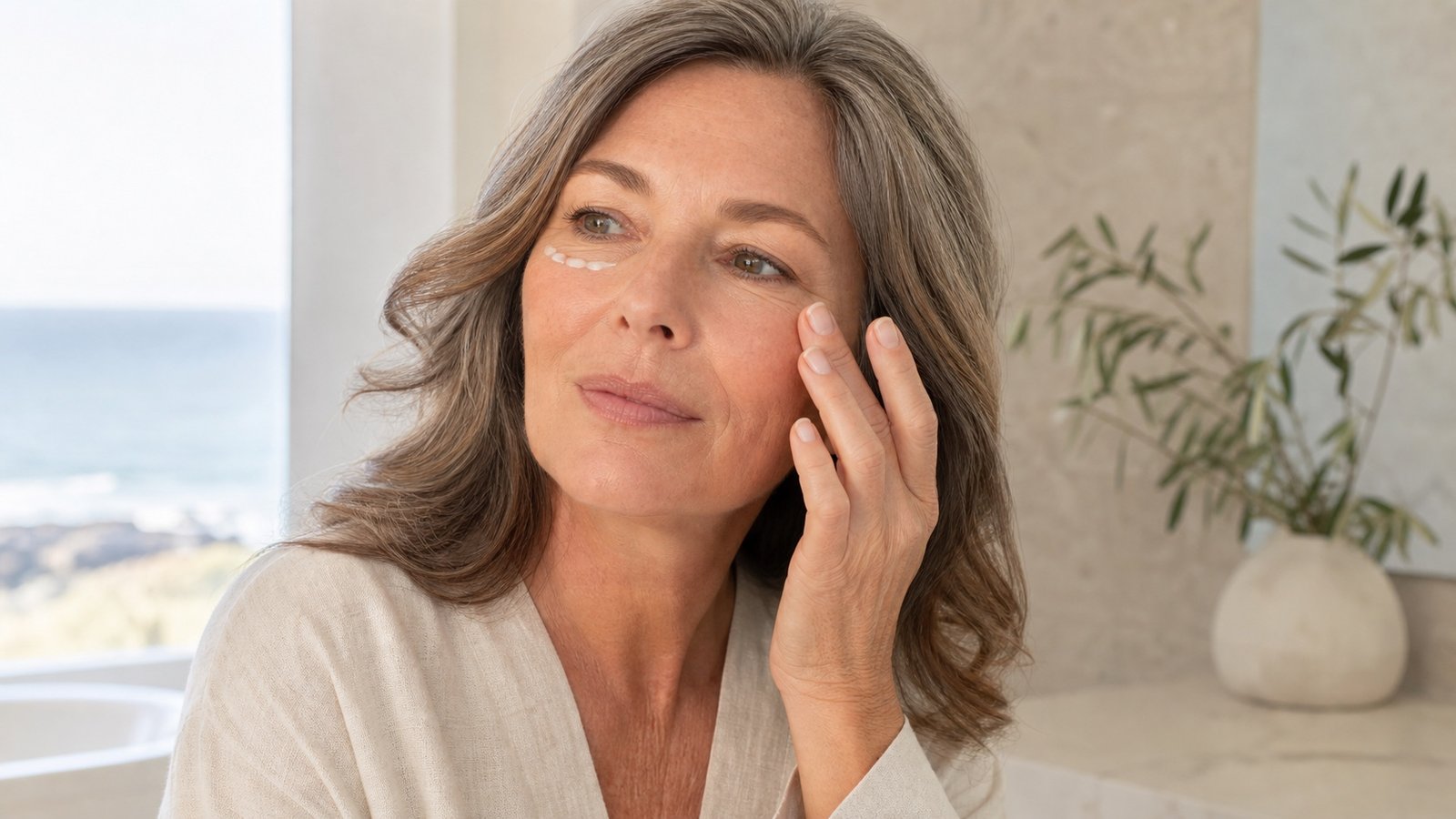
Eye-area guide · Mature skin
Can you use eye cream on your eyelids after 40?
The short answer: Usually, apply eye cream around the orbital bone rather than directly over the mobile upper eyelid or against the lash line, unless the product directions specifically say eyelid use is suitable. Use a rice-grain amount for both eyes, tap gently with clean fingers, avoid direct eye contact and stop if the area becomes itchy, swollen, persistently red or sore.
The skin around the eyes is thin, mobile and frequently exposed to makeup, sunscreen, hair products and residue transferred from fingers. That makes careful placement more useful than a generous layer. Eye cream should make the area feel comfortable, not leave it greasy or migrate into the eyes.
“Eyelid” can mean different areas. The mobile upper lid is the skin between the crease and lashes. The orbital area extends around the bony rim beneath the brow and under the eye. Many cosmetic eye creams are intended for the orbital area, not the wet lash line. Always let the label and manufacturer directions take priority.
After 40, the eye area may look drier and fine lines can appear more noticeable when the surface lacks water or is irritated. A moisturising formula can soften the appearance of dryness, but it cannot treat medical puffiness, eyelid dermatitis, infection or a sudden eye problem. If symptoms are persistent or one-sided, the right next step is assessment rather than another cosmetic layer.
Where to place eye cream
Feel for the firm orbital bone beneath the eye and below the eyebrow. Dot a very small amount along that rim, leaving space from the lashes. The warmth of the skin and normal movement will help the product spread slightly. There is no need to push cream into the inner corner or right under the lower lashes.
For the upper eye area, apply beneath the eyebrow along the bony ridge if the product directions permit it. Avoid coating the mobile lid by default. Rich oils and creams can move while you blink or sleep, and too much product can reach the eye even when it was originally placed several millimetres away.
A careful eye-area routine
- Wash your hands. Residue from fragrance, nail products, hair colour and household cleaners can be transferred to eyelids.
- Cleanse gently. Remove makeup without scrubbing. Use lukewarm water and pat dry.
- Use very little. Divide about a rice-grain amount between both eyes.
- Tap around the bone. Use a ring finger and light tapping or pressing movements.
- Keep a clear margin. Stay away from the wet lash line, tear duct and direct eye contact.
- Protect by day. Use suitable broad-spectrum sunscreen around the exposed eye area, plus sunglasses, a hat and shade.
Why eyelids can react even when the cheeks do not
DermNet notes that eyelid skin is particularly sensitive to irritants and allergens. A trigger may be applied directly, such as makeup or sunscreen, or arrive indirectly from fingers. Rubbing, dry air, heat, cold and humidity extremes can also contribute. This is why a product tolerated on the cheeks is not automatically suitable for the mobile eyelid.
Stinging does not always mean allergy, and allergy does not always happen on the first use. If an itchy, red, scaly or swollen eyelid keeps returning, stop eye-area cosmetics and seek medical advice. Patch testing may be needed to identify allergic contact dermatitis. Do not self-treat close to the eye with medicated creams unless a health professional has told you exactly what to use.
Morning application with sunscreen and makeup
Use the lightest useful amount of eye cream and allow it to settle before sunscreen. Sunscreen remains essential around the exposed eye area, but formulas can sting if they enter the eye. Choose a sunscreen you can apply at the labelled amount and follow its directions. Sunglasses and a broad-brimmed hat reduce reliance on a perfect cream application alone.
If concealer creases, reducing eye cream may work better than adding powder. Apply only where the skin feels dry, wait for the layer to settle, then press concealer on in a thin film. Heavy rubbing can disturb sunscreen and exaggerate texture. Pilling or migration is a cue to simplify the stack, not to skip sun protection.
Night application and facial oils
At night, cleanse away makeup and sunscreen before applying eye cream. Keep facial oil on the surrounding cheeks and temples rather than over the mobile lids. If you use the Bright Eyes Ritual, treat the Eye Cream as the targeted eye-area step and the Glow Face Oil as care for the rest of the face. Avoid building a thick, slippery layer immediately before lying down.
Sleep, allergies, salt intake and normal fluid shifts can all influence how the eye area looks in the morning. Cosmetic products may improve the appearance of dryness and tired-looking skin, but they do not diagnose the cause of persistent swelling. Sudden swelling with breathing difficulty is urgent; pain, vision change, discharge or severe redness also needs prompt medical advice.
How much eye cream is too much?
If the area remains shiny, sticky or blurred with product several minutes after application, reduce the amount next time. A thicker layer does not force ingredients deeper into the skin. It is more likely to migrate, interfere with makeup or collect near the lashes. Start with less than you think you need, then add a pinpoint amount only to a dry outer corner. This makes one small jar last longer and keeps the routine comfortable.
Ritual first: Bright Eyes Ritual
The Bright Eyes Ritual pairs targeted Eye Cream with Glow Face Oil for the surrounding face. This keeps application roles clear: a small amount around the orbital bone, then facial oil on drier facial areas away from the lash line.
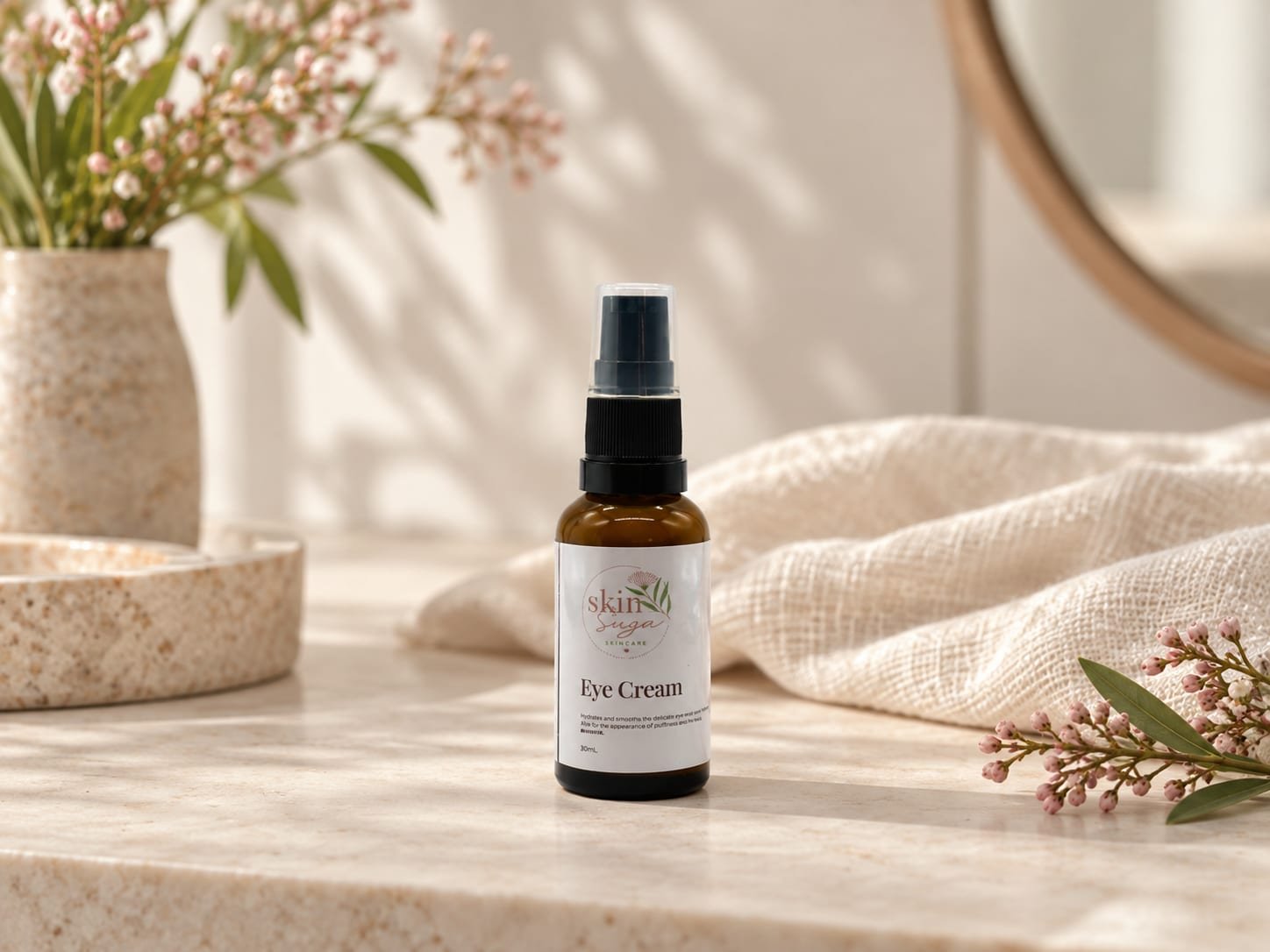
Eye Cream
Sea Buckthorn, Resveratrol, Vitamin E, Jojoba Oil and Cucumber Seed Oil help hydrate and soften the look of dryness around the eye area.
Keep the delicate area simple
Use one targeted cream in a tiny amount and let clean placement do more work than extra layers.
Common questions
Can eye cream go on crow’s feet?
Yes, if the product directions allow it. Tap a small amount over the outer orbital area without pulling the skin.
Why does eye cream sting?
It may have migrated into the eye, the area may be irritated, or an ingredient may not suit you. Rinse with clean water, stop use and seek advice if symptoms persist.
Can I use facial moisturiser instead?
A familiar gentle moisturiser may be enough for some people, but avoid products with strong actives or fragrance around the eyes. A dedicated eye cream makes small-dose placement easier.
Should eye cream go before or after moisturiser?
Apply targeted eye cream after serum and before or alongside facial moisturiser. The exact order matters less than using a small amount and keeping other products away from the lash line.
Sources
- DermNet: Eyelid contact dermatitis
- American Academy of Dermatology: Applying skincare in order
- Cancer Council Australia: Sunscreen advice
General cosmetic information only. Seek prompt care for pain, vision change, marked swelling, discharge or persistent eyelid rash.