
A facial oil is optional, and one drop can be enough
Can oily mature skin use facial oil?
The short answer: Yes, but facial oil is optional and should be matched to how your skin behaves. Start with one drop at night over or instead of a richer moisturiser, use it only on drier areas if needed and stop if congestion worsens. Oily skin can still be dehydrated, but more oil is not automatically the answer.
Oily mature skin is not excluded from facial oils, but an oil should solve a real comfort problem rather than be added because mature skin is expected to be dry. A one-drop trial over drier areas can be enough. If the face becomes more congested, greasy or uncomfortable, stop and return to a lighter moisturiser.
Oiliness and dehydration can occur together
Oiliness describes sebum at the surface. Dehydration describes a lack of water in the outer skin layer. A face can look shiny around the nose and forehead while feeling tight after cleansing. Adding a large amount of oil may soften the surface, but it does not automatically correct the missing-water feeling.
A better first step may be a gentle cleanser, a humectant serum and a light moisturiser. Facial oil can then be tested only where extra emollience is useful, such as dry cheeks or the neck.
What facial oil does
Botanical oils act mainly as emollients and partial occlusives. They soften roughness, improve slip and help reduce water loss. They do not add water by themselves, replace sunscreen or treat acne. An oil blend can also contain antioxidant compounds, but that does not make it a medical treatment.
Texture matters. A thin oil used sparingly can feel elegant, while several drops over a rich moisturiser may remain greasy. Product amount is often more important than the fact that the label says facial oil.
The finish should feel flexible and comfortable, not wet. If hair sticks to the face or the pillowcase becomes oily, reduce the amount before changing the entire routine.
Can face oil clog pores?
Any leave-on product can be unsuitable for an individual. Acne-prone skin varies, and terms such as non-comedogenic reduce rather than eliminate the possibility of breakouts. A botanical oil that suits dry cheeks may not suit an oily, acne-prone T-zone.
Patch test, introduce one product at a time and monitor the skin for several weeks. Stop if small bumps, inflamed spots or itching clearly increase. Persistent adult acne or a sudden change after 40 deserves professional assessment because hormones, medicines and skin conditions can contribute.
How much oil should you use?
Begin with one drop for the whole face, or half a drop pressed between fingertips and applied only to dry areas. More product does not create a better barrier. It simply increases the amount sitting at the surface.
Apply at night first so you can judge the finish without sunscreen or makeup. If one drop disappears comfortably and the skin feels balanced in the morning, continue once or twice a week. Increase only when there is a clear need.
A low-risk trial for oily mature skin
- Cleanse gently without trying to strip all surface oil.
- Apply a hydrating serum if the skin feels tight.
- Use a light moisturiser in a thin layer.
- Warm one drop of facial oil between fingertips.
- Press it onto dry cheeks or neck, avoiding congested areas.
- Repeat only two or three nights a week at first.
- Stop if breakouts, itching or persistent greasiness increase.
- Use broad-spectrum sunscreen every morning.
Should oil go before or after moisturiser?
Oil generally goes after water-based serum and moisturiser because it is the more occlusive texture. This order helps keep the water-binding and emollient layers beneath it. Some oil-serum hybrids have different directions, so always follow the label.
If applying both moisturiser and oil feels heavy, choose one. A light moisturiser may be sufficient on humid nights. On cooler nights, one drop of oil over the cheeks may provide the extra comfort without coating the T-zone.
Do not use oil to fight oil
The claim that facial oil trains oily skin to stop producing sebum is not established. Sebum production is influenced by hormones, genetics, medicines and skin biology. An oil can improve softness, but it should not be sold as a way to rebalance oil glands.
Likewise, stripping the face with harsh cleansers is not a reliable way to control oil. It can leave the surface irritated and tight. Cleanse gently and choose leave-on textures based on comfort.
Where Skin Suga fits
The Daily Essentials Ritual is the most sensible foundation because oily mature skin still benefits from consistent cleansing, hydration and moisturising. Begin with the lighter routine. Treat facial oil as an optional finishing step rather than the centre of the plan.
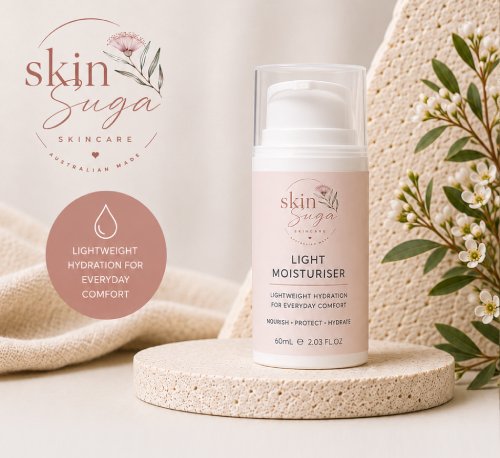
Light Moisturiser
A lighter daily texture for mature skin that wants surface comfort without a rich or heavily occlusive finish.
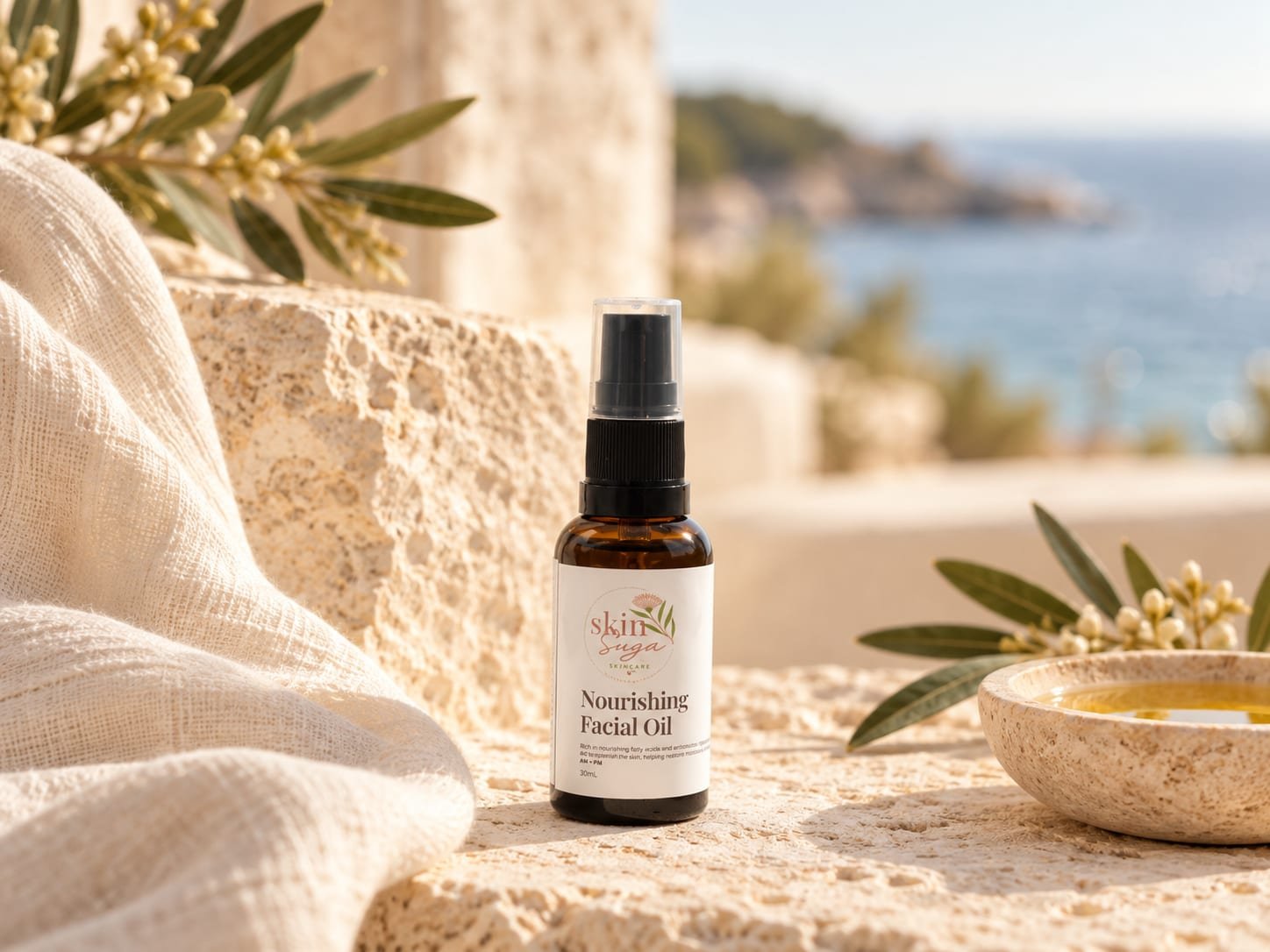
Nourishing Facial Oil
A botanical oil blend to trial sparingly on drier areas when a light routine does not provide enough evening comfort.
When facial oil is probably unnecessary
- Your face is already comfortable after a light moisturiser.
- The climate is humid and all leave-on layers feel heavy.
- You have active acne and your clinician has advised a specific non-comedogenic routine.
- You are using a rich sunscreen or night cream that already provides enough emollience.
- You repeatedly develop small bumps after oil use.
- You are adding it only because social media says every mature-skin routine needs oil.
What about the neck and cheeks?
Combination application is often the best answer. The forehead and nose may need only light moisturiser, while cheeks and neck benefit from one small drop of oil. Apply products by zone rather than treating the entire face as one skin type.
The neck can also be sensitive, so introduce oil gradually and avoid fragrance-heavy formulas if you react easily. Stop if redness or itching develops.
How to judge the trial fairly
Do not assess an oil only by the glow immediately after application. Check how the skin feels the next morning, whether sunscreen applies normally and whether congestion changes over two to four weeks. Keep the rest of the routine stable during the trial.
Photographs taken in the same natural light can help you notice unwanted shine or new bumps without relying on memory. Stop sooner for itching, swelling or a clear reaction. A product does not need to be used up simply because it was purchased.
Frequently asked questions
Can facial oil replace moisturiser?
It can for some people, but oil does not provide the same water-binding ingredients as a balanced moisturiser. Oily dehydrated skin may prefer a light moisturiser first.
Will facial oil make pores smaller?
No. Oil may make the surface look smoother temporarily, but it does not permanently change pore size.
Can I use face oil every night?
Only if it remains comfortable and does not worsen congestion. Start a few nights a week and use the smallest effective amount.
What if my skin is oily only in summer?
Change the texture seasonally. Use a lighter moisturiser in humid weather and reserve oil for dry winter areas rather than following one fixed routine all year.
Let one drop prove its value
Build the routine on gentle hydration, then add facial oil only where it clearly improves comfort.
Sources and further reading
- American Academy of Dermatology: Moisturiser for acne-prone skin
- DermNet: Emollients and moisturisers
- DermNet: Topical formulations
This is general cosmetic education. Persistent acne, folliculitis, rash or a sudden change in oiliness should be assessed by a qualified health professional.