
Temporary compression is not a skincare failure
Why do pillow creases last longer on skin after 50?
The short answer: Pillow creases are temporary compression marks. They can appear to linger longer as mature skin becomes drier, thinner and less springy, but a morning crease is not proof that your pillow permanently created a wrinkle overnight. Gentle hydration, moisturiser and time can soften the appearance; persistent or changing marks should be assessed professionally.
A pillow crease is a temporary pressure mark, not a diagnosis and not proof that one night created a permanent wrinkle. It may linger longer after 50 because mature skin is often drier, thinner and less elastic than younger skin. Hydration and moisturiser can soften its appearance while the surface recovers, but skincare cannot promise to erase established lines or change the anatomy of sleep.
What creates a morning pillow crease
When the face presses into bedding for several hours, skin can fold or compress. The direction depends on sleep position, pillow shape and how the cheek contacts the fabric. On waking, the fold may remain visible until the tissue redistributes and normal movement returns.
This is different from an expression line created repeatedly by facial muscle movement, although both can appear in areas where established wrinkles already exist. A temporary diagonal cheek mark that fades through the morning is usually a compression pattern. A line that is present every day, changes suddenly or comes with swelling, rash or pain needs a different assessment.
Why it can seem slower to fade after 50
Ageing skin undergoes changes in collagen, elastin, thickness, oil production and water retention. Ultraviolet exposure accumulated over time also affects elasticity. Together, these changes can make the skin surface less springy and more likely to show temporary folds.
Dehydration can exaggerate fine surface lines because dry cells reflect light unevenly. A rich night before, alcohol, illness, air conditioning or winter heating can all change how the face looks in the morning. That does not mean drinking one extra glass of water or applying one serum will immediately change deeper skin structure.
Sleep quality is associated with skin health in research, but evidence does not support dramatic claims that a special pillowcase or sleeping position alone prevents facial ageing. Treat those claims cautiously.
Why the same crease can look different from day to day
Morning skin is influenced by more than the pillow. Room temperature, humidity, alcohol, salty food, illness, allergies, late-night cleansing and the richness of the evening routine can all change visible puffiness or dryness. Lighting matters too: low side light can emphasise a shallow line that appears much softer in even daylight.
Use a pattern rather than one morning to judge what is happening. If the mark fades, moves with changes in sleep position and is not accompanied by other symptoms, it is more consistent with temporary compression. Photographing it every day is rarely helpful and can turn normal variation into unnecessary worry.
What skincare can reasonably do
A gentle hydrating serum can increase water at the outer skin, while moisturiser softens roughness and reduces water loss. This can make a temporary crease look less sharp and help the face feel comfortable. The effect is cosmetic surface support, not reconstruction of collagen.
Do not scrub the mark or use a strong exfoliant in an attempt to remove it. Friction can create redness that lasts longer than the original crease. A cool or lukewarm rinse, light hydration and normal facial movement are usually a calmer approach.
Daily broad-spectrum sunscreen matters because ultraviolet exposure is a major contributor to visible photoageing. Sunscreen will not remove today’s pillow line, but consistent protection helps reduce preventable additional damage over time.
Does a silk pillowcase prevent sleep wrinkles?
Smoother fabric may reduce friction and feel comfortable, but strong clinical evidence that silk pillowcases prevent permanent wrinkles is limited. A pillowcase can also collect oil, sweat and hair products, so regular washing matters more than a luxury label.
If side sleeping is medically comfortable and helps you sleep, do not sacrifice sleep quality in pursuit of a perfectly uncreased cheek. Back sleeping may reduce facial compression for some people, but it is not suitable or comfortable for everyone. Health needs and sleep safety come first.
A calm five-minute morning response
Rinse or cleanse gently. Apply a lightweight hydrating serum, then moisturiser. Avoid massaging aggressively. Let the face move naturally while you dress and have breakfast. By the time sunscreen and makeup are applied, a temporary mark may have softened.
If makeup catches in the line, press a small amount of moisturiser onto the area and allow it to settle before sunscreen. Use thin makeup layers rather than filling the crease with heavy powder.
A warm shower is not required to “steam out” a crease. Excess heat can worsen dryness and facial redness. Lukewarm water and a normal routine are gentler. Facial massage should remain light; pulling hard on mature skin does not rebuild elasticity and can leave the cheek looking irritated.
A night-and-morning routine for visible pillow creases
- Cleanse gently in the evening without hot water or scrubbing.
- Apply a humectant serum for lightweight hydration.
- Use night cream to soften and reduce overnight water loss.
- Keep bedding clean and choose a comfortable pillow surface.
- In the morning, rinse or cleanse gently.
- Apply hydration and moisturiser without aggressive massage.
- Finish with broad-spectrum sunscreen before daytime exposure.
Where Skin Suga fits
The Night Recovery Ritual is the relevant ritual when morning dryness makes temporary creases look more obvious. It provides a coordinated evening sequence rather than promising that one product will stop normal compression.
Skin Suga Night Cream contains shea butter, sea buckthorn, oat oil, rosehip, pomegranate and Kakadu plum in a richer night texture. Hyaluronic Acid Serum can sit underneath as the lightweight hydration step. Together they support surface comfort while you sleep; they do not guarantee a line-free morning.
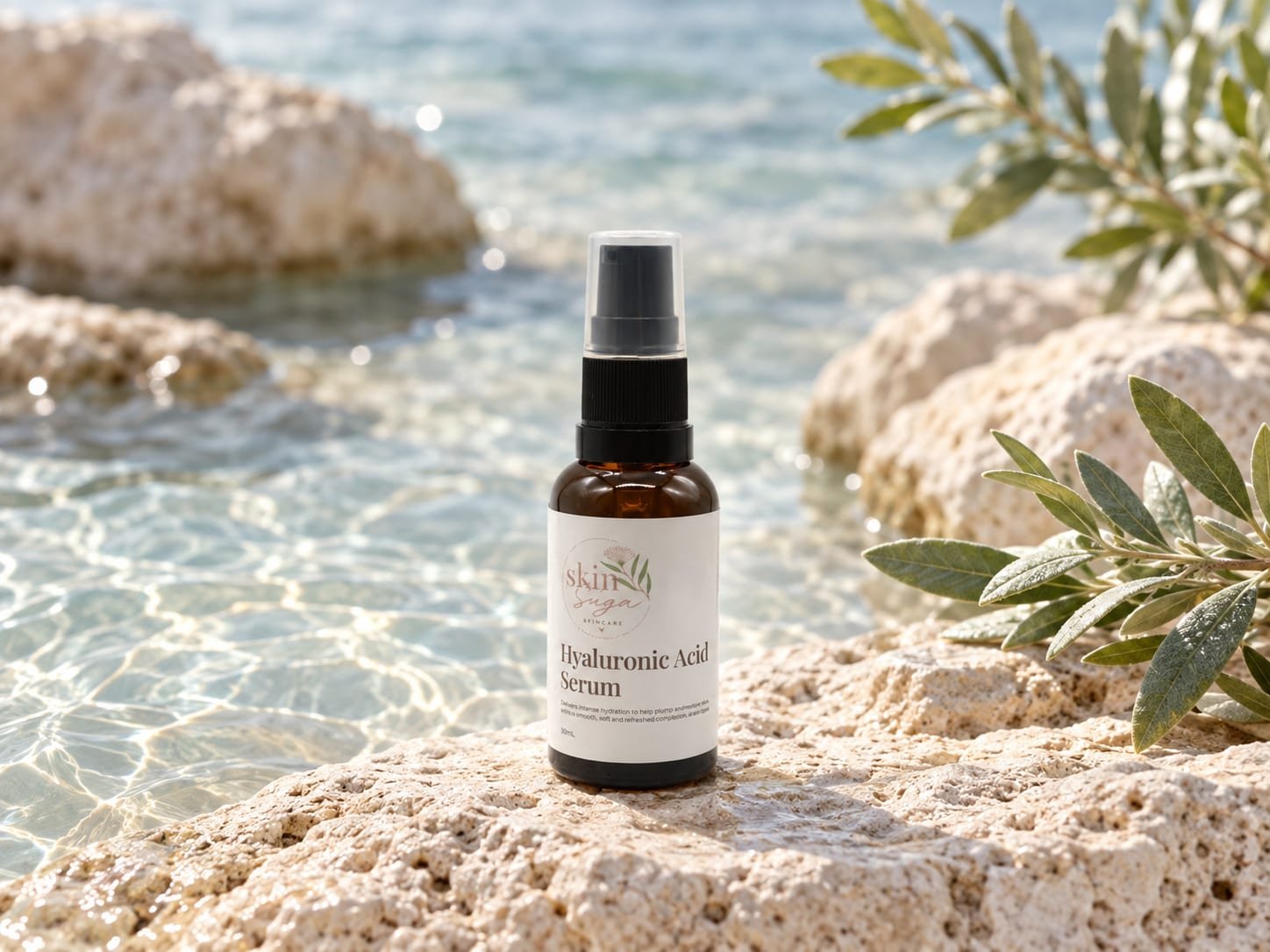
Hyaluronic Acid Serum
A humectant step for temporary surface dehydration and a less cushioned morning feel.
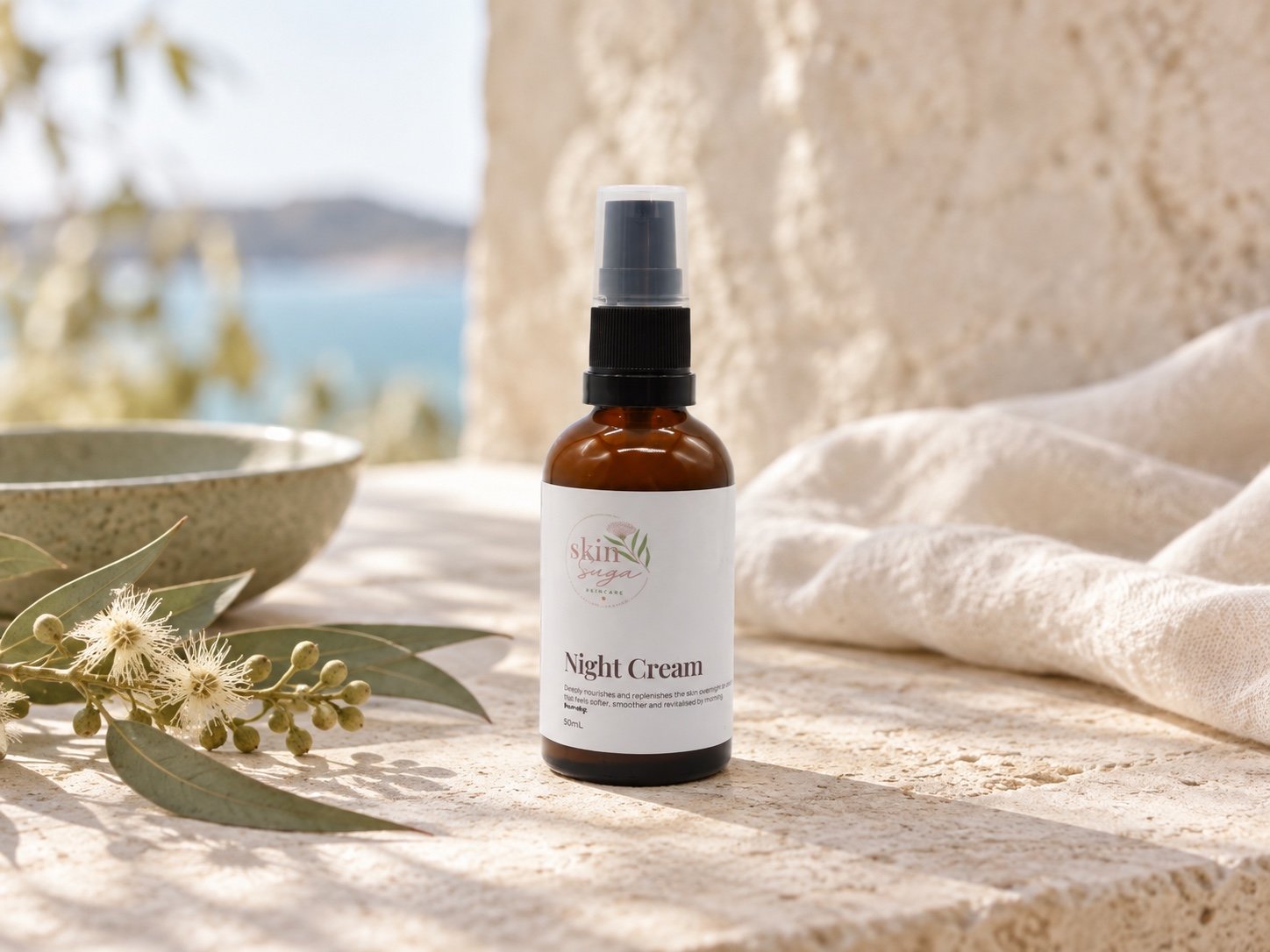
Night Cream
A richer evening layer with shea butter and botanical oils to support overnight surface comfort.
When a mark needs attention
A familiar crease that fades is different from a persistent indentation, one-sided swelling or a sudden skin change. See a GP or dermatologist if a mark does not resolve, appears with pain, itching, weakness, swelling or colour change, or if you are concerned about a new lesion.
Cosmetic skincare should not be used to diagnose a health issue. It is appropriate for dryness and appearance; it is not a substitute for assessment.
Common myths
- A pillow crease means your moisturiser failed overnight.
- Rubbing hard will make the line disappear faster.
- Silk pillowcases have been proven to prevent all sleep wrinkles.
- Back sleeping is safe and comfortable for everyone.
- Drinking water instantly restores deeper skin elasticity.
- A facial oil can permanently fill a wrinkle.
Frequently asked questions
How long should a pillow crease last?
There is no universal time. A temporary crease often softens through the morning. Seek advice if a mark is persistent, unusual or accompanied by other symptoms.
Can dehydration make it look worse?
Surface dryness can make fine lines more visible. A gentle hydrating routine may soften the appearance, but many factors influence morning skin.
Should I use facial oil before bed?
A small amount can add emollient comfort to dry skin, usually after serum and cream. It cannot prevent all compression marks.
Do sleep wrinkles become permanent?
Repeated folding may contribute to visible patterns, but ageing, sun exposure, genetics and expression also matter. Evidence does not support blaming one pillow or one night.
Support the skin overnight without chasing perfection
Use a gentle night ritual for hydration and comfort, then let normal morning movement and time do their part.
Sources and further reading
- American Academy of Dermatology: Skin care in your 60s and 70s
- Peer-reviewed review: Sleep and skin health
- DermNet: Skin ageing
Research specifically proving that pillowcase materials prevent permanent wrinkles is limited. This guide avoids making that claim.