
Enough product, complete coverage, no guesswork
How much sunscreen should you use on your face, neck and ears?
The short answer: Cancer Council Australia recommends about one teaspoon for the face, neck and ears combined. Apply broad-spectrum sunscreen generously and evenly to every exposed area, follow the label, put it on before going outdoors and reapply at least every two hours when outdoors, as well as after swimming, sweating or towel drying.
Sunscreen quantity is not a cosmetic preference: it is part of how the labelled protection is achieved. Cancer Council Australia recommends about one teaspoon for the face, neck and ears combined. That amount can look generous beside a serum or moisturiser dose, which is why dividing it across zones and applying it methodically is easier than relying on a tiny dot or a quick swipe.
Why the amount matters
The SPF on a sunscreen label is established under controlled testing. In everyday life, people often apply less than the tested amount, miss the ears or neck, or rub most of the product into the centre of the face. The result may feel elegant, but the coverage is unlikely to be as even as the label intends.
Using enough product does not mean creating a thick white mask in one movement. It means placing a generous, continuous layer over every exposed area and giving it time to settle. The exact directions on your sunscreen remain the authority because formulas, applicators and intended uses differ.
One teaspoon covers the face, neck and ears together. It is not one teaspoon for the face plus another for the neck. If part of the upper chest is exposed, that skin also needs sunscreen; Cancer Council gives separate whole-body guidance and recommends about seven teaspoons for an average adult wearing a swimsuit.
A practical way to measure without carrying a spoon
Measure the teaspoon once at home with your usual sunscreen. Notice how much product it makes and how many lines, pumps or fingertip lengths your packaging requires. Pumps vary, so a universal number of pumps is unreliable unless the manufacturer provides one.
After that calibration, divide the amount mentally: forehead and temples, each cheek, nose and mouth area, front and sides of the neck, back of the neck if exposed, and both ears. Dotting the product around these zones before spreading helps prevent the first cheek from receiving most of the sunscreen.
Some people prefer two passes. Apply roughly half evenly, let it begin to settle, then apply the remainder. This can make a generous amount easier to manage, especially on mature skin that has moisturiser underneath. Two passes do not replace the full quantity; they simply divide it.
The areas mature skin routines often miss
The hairline, temples and area in front of the ears are easy to skip. So are the tops and backs of ears, the jawline, sides of the neck and the V of the chest. If your hairstyle or clothing changes through the day, an area that was covered in the morning may become exposed later.
Take care around eyelids and lips. Use products designed and labelled for those areas, avoid getting sunscreen into the eyes and follow manufacturer directions. A broad-brimmed hat, sunglasses, clothing and shade remain important because sunscreen is one part of sun protection, not permission to stay in intense sun indefinitely.
Should moisturiser reduce the sunscreen amount?
No. If a full sunscreen amount feels heavy over moisturiser, adjust the moisturiser rather than reducing protection. Use a lighter layer, target cream to dry cheeks, wait for it to settle, or choose a sunscreen texture that suits your skin. Do not mix moisturiser and sunscreen together in your palm because this can interfere with an even sunscreen film.
Mature skin may feel more comfortable with a hydrating serum and thin moisturiser underneath. That comfort layer can help prevent tightness, but it does not contribute to the measured sunscreen amount unless the product itself is a regulated sunscreen.
Application timing and reapplication
Cancer Council advises applying sunscreen to clean, dry skin about 20 minutes before going outdoors. Reapply at least every two hours when outdoors and after swimming, sweating or towel drying. Reapplication does not mean the morning amount was unnecessary; it repairs coverage that can move, rub or wear away.
Makeup can complicate reapplication, but convenience should not turn into false precision. A sunscreen mist, stick or powder must still be used according to its label and in the amount required to provide its stated protection. When possible, a lotion or cream makes it easier to see that exposed skin has received a continuous layer.
How sunscreen fits with makeup
Let the sunscreen settle before foundation. Press makeup on gently rather than repeatedly buffing the sunscreen layer. If pilling appears, simplify the skincare beneath it, reduce rubbing and allow each layer to settle. The answer is rarely to use a trace of sunscreen.
SPF in foundation is useful only when the product is applied in the tested amount, which is often more makeup than people normally wear. A dedicated broad-spectrum sunscreen provides a clearer way to manage quantity and coverage.
A complete Australian morning sequence
- Cleanse gently or rinse according to how your skin feels.
- Apply a lightweight hydrating serum if wanted.
- Use a thin moisturiser layer on areas that need comfort.
- Let skincare settle so the surface is soft, not sliding.
- Apply about one teaspoon of sunscreen across face, neck and ears, following the label.
- Check hairline, ears, jaw, sides and back of neck.
- Allow the sunscreen film to settle before makeup.
- Use shade, clothing, a broad-brimmed hat and sunglasses, and reapply sunscreen as directed.
Where Skin Suga fits
The Daily Essentials Ritual is the most relevant foundation because it provides gentle cleansing, hydration and moisturising before your chosen broad-spectrum sunscreen. Skin Suga does not replace the sunscreen step: the ritual prepares a comfortable surface so you can use sunscreen in the full labelled amount.
Hyaluronic Acid Serum contains vegan hyaluronic acid and radish root ferment for a lightweight hydration step. Nourishing Moisturiser combines jojoba oil, shea butter, green tea, mangosteen, acai oil and avocado oil. Apply only the amount your skin needs so the sunscreen can sit evenly above it.
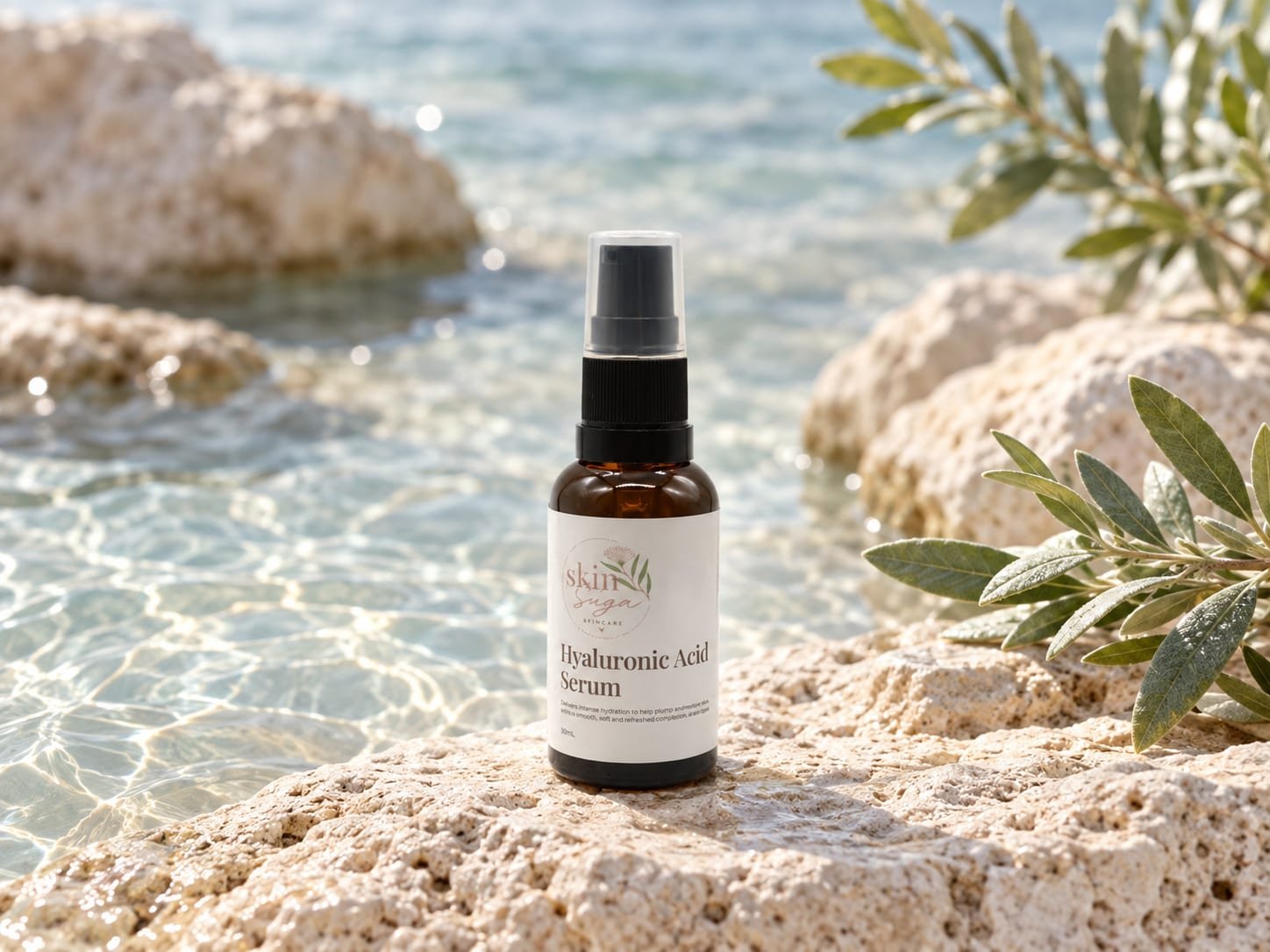
Hyaluronic Acid Serum
A light hydration layer for mature skin that feels tight or dehydrated before moisturiser and sunscreen.
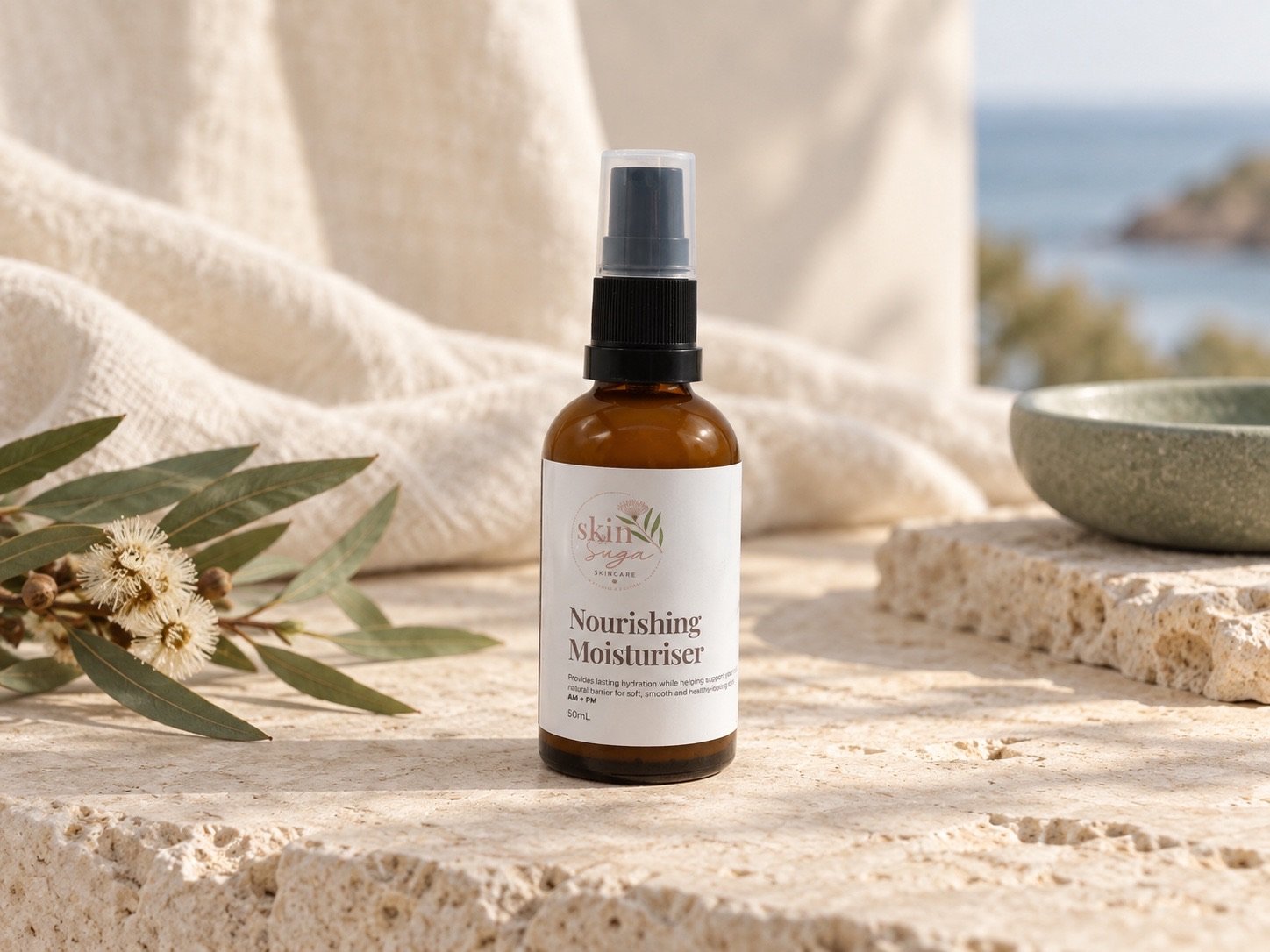
Nourishing Moisturiser
Use a thin layer where extra comfort is needed, then allow it to settle before the complete sunscreen amount.
Common quantity mistakes
- Counting an unknown number of pumps without first checking how much the pump dispenses.
- Using the same small amount for face, neck and ears that would normally cover only the face.
- Applying a generous first layer but forgetting reapplication outdoors.
- Missing ears, hairline, jaw and the sides or back of the neck.
- Reducing sunscreen because moisturiser underneath feels too rich.
- Relying on makeup SPF without using the tested makeup amount.
Frequently asked questions
Is two finger lengths always one teaspoon?
No. Finger size, nozzle width and product texture vary. Measure your own sunscreen once against a teaspoon and follow the label rather than treating a social-media measure as universal.
Does the one teaspoon include the ears?
Yes. Cancer Council’s guidance groups the face, neck and ears together. Include the tops and backs of ears when they are exposed.
Can I apply the amount in two layers?
Yes. Two even passes can make the quantity easier to spread, provided the total still reaches the full recommended or labelled amount.
What if my sunscreen pills at the correct amount?
Reduce rubbing, simplify serums, use less moisturiser where it is not needed and let layers settle. If the combination remains unreliable, choose a compatible sunscreen texture rather than using less.
Build a comfortable base, then protect it properly
Prepare mature skin with a simple hydration ritual, then finish with your chosen broad-spectrum sunscreen in the full labelled amount.
Explore Daily Essentials RitualExplore Ultimate Hydration Ritual
Sources and further reading
- Cancer Council Australia: How to apply sunscreen
- ARPANSA: Sun protection and sunscreen
- Healthdirect Australia: Sunscreen
Sunscreen labels and professional advice take priority. Sunscreen is one part of a complete sun-protection approach.