

Choose each serum for a clear job
Should mature skin use serum morning and night?
The short answer: Mature skin can use serum morning and night, but it does not need the same serum twice daily or several serums at once. Use a formula when its role fits the routine: antioxidant support in the morning, hydration morning or evening, and stronger night treatments only as directed and tolerated.
A serum is a format, not a compulsory step. Mature skin can use serum in both routines when each formula has a clear purpose, but twice-daily use is not automatically better. Morning is suited to lightweight hydration and antioxidant support; evening can focus on hydration, comfort or a directed treatment. One useful serum is better than several overlapping layers.
Why time of day matters
The morning routine needs to sit comfortably under sunscreen and possibly makeup. Layers should be light, compatible and easy to use consistently. The evening routine has more flexibility for richer moisturisers, facial oils and treatments that are directed for night use.
Some serum ingredients are suitable at either time. Hyaluronic acid is a humectant used for hydration and can be used morning, evening or both if the finished formula is comfortable. Vitamin C is commonly chosen in the morning because it provides antioxidant cosmetic support alongside, not instead of, sunscreen. Other active formulas may be directed for evening because of their irritation potential or sensitivity to light.
Do not judge a serum by whether it tingles. Tingling is not a measure of effectiveness. A well-formulated hydrating or antioxidant serum can feel quiet on the skin.
When a morning serum is useful
Use a morning serum when it solves a specific problem without making sunscreen unstable. A lightweight hyaluronic acid serum can help skin feel more hydrated before moisturiser. A vitamin C serum can support a brighter, more even-looking complexion and complement a sun-conscious routine.
Choose one main serum first. If you use vitamin C and the formula already feels hydrating, a second serum may be unnecessary. If dry mature skin still feels tight, add a thin hyaluronic layer and let it settle before moisturiser. Reduce quantities if the routine pills.
Sunscreen remains the essential final skincare layer. No antioxidant serum replaces broad-spectrum sun protection. Apply sunscreen according to its label and give the film time to form before makeup.
When an evening serum is useful
Evening serum can restore hydration after cleansing or carry a treatment ingredient. A hydrating serum suits nights when skin feels tight but does not need a strong active. Apply it before night cream so the cream can seal the water-based layer.
If the evening routine includes a vitamin A treatment oil, you may not need another active serum. Keep the routine simple enough to identify irritation. Cleanse, use the directed treatment, then moisturise. Add a separate hydrating serum only when the product directions and your skin’s tolerance allow it.
Alternating is often more practical than stacking. Use a vitamin A treatment on selected nights and a hydration-focused serum on the other nights. This gives mature skin recovery time and keeps each step purposeful.
Can the same serum be used twice daily?
Yes, if its directions allow twice-daily use and your skin remains comfortable. Hyaluronic acid is the clearest example. Applying it morning and evening can be useful in dry conditions, but using it twice does not guarantee twice the hydration. Moisturiser and the surrounding humidity still influence the finished result.
Vitamin C frequency depends on the formula. Many products are designed for daily morning use; some allow morning and evening. Start with once daily and assess comfort before increasing. The goal is consistent use, not the maximum possible number of applications.
More frequent use can also create practical problems. Extra serum under sunscreen may pill, while several evening serums can leave the skin sticky. If a twice-daily schedule makes the routine harder to maintain, use the serum at the time that best matches its role.
How many serums does mature skin need?
Usually one focused serum per routine is enough. A second may be reasonable when the roles are clearly different, such as vitamin C followed by hyaluronic acid, and the formulas layer comfortably. Avoid collecting multiple products that all promise hydration, glow and anti-ageing. Overlap adds cost and texture without necessarily adding benefit.
Introduce one serum at a time and wait long enough to assess tolerance. If burning, persistent redness or rash appears, stop the newest product. Mature skin can be more reactive during menopause or after over-exfoliation, so simplicity protects the ability to identify the cause.
A practical serum schedule
Morning
- Cleanse gently or rinse.
- Apply Vitamin C Serum for brightness support, or Hyaluronic Acid Serum for hydration.
- If using both, apply thin layers and stop if they pill.
- Follow with moisturiser where needed.
- Finish with broad-spectrum sunscreen as directed.
Evening
- Remove makeup and sunscreen with a gentle cleanse.
- Use Hyaluronic Acid Serum on hydration nights.
- On treatment nights, use Vitamin A Oil according to its directions instead of stacking several active serums.
- Finish with moisturiser or night cream.
How Skin Suga fits morning and evening
The Radiance & Glow Ritual is the natural morning choice when brightness is the goal. Skin Suga Vitamin C Serum combines three forms of vitamin C with Kakadu plum, rosehip, mountain pepper berry and aloe vera. Apply it as a focused serum step, then moisturiser and your chosen sunscreen.
The Daily Essentials Ritual includes Hyaluronic Acid Serum with vegan hyaluronic acid and radish root ferment. It can support hydration in the morning, evening or both when directed and comfortable. Follow with Nourishing Moisturiser to help hold that hydration at the surface.
For evening treatment, the Night Recovery Ritual uses Vitamin A Oil rather than asking you to pile on another active serum. Pair the treatment with Night Cream and use daytime sunscreen consistently.
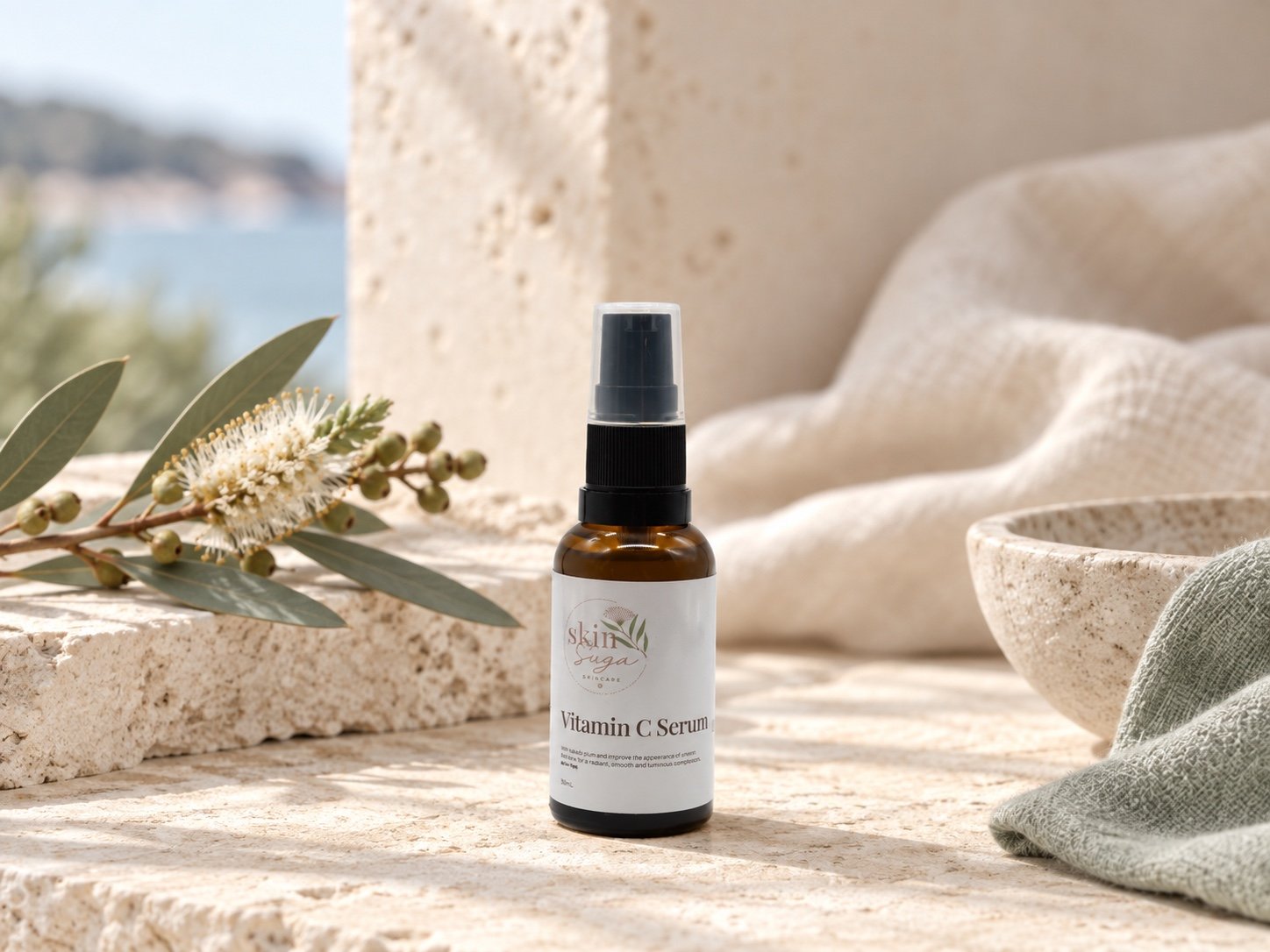
Vitamin C Serum
A morning-focused brightness step with triple vitamin C, Kakadu plum, rosehip, mountain pepper berry and aloe vera.
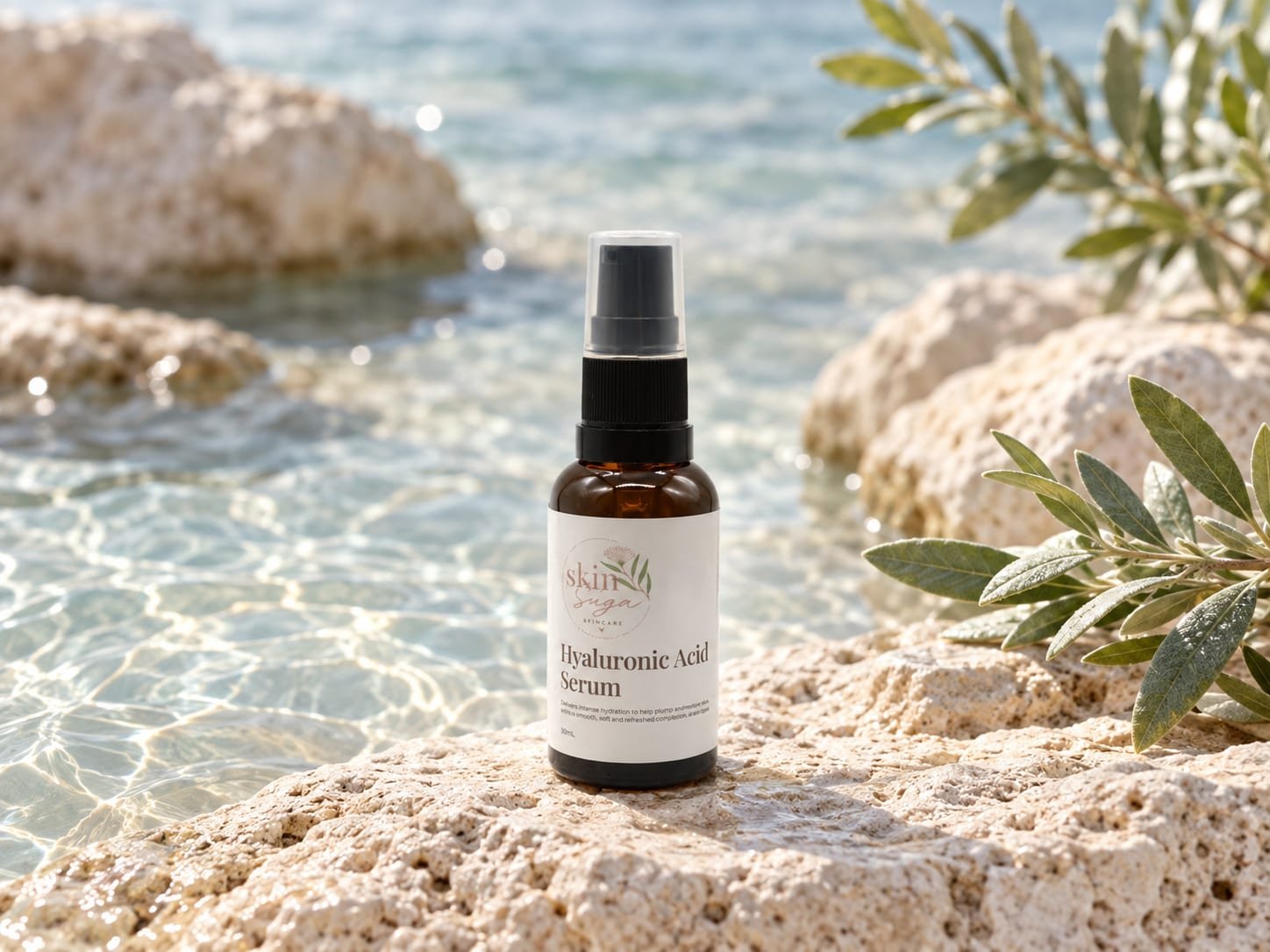
Hyaluronic Acid Serum
A flexible hydration serum that can fit morning or evening before moisturiser, according to comfort and directions.
Signs the serum routine is too complicated
- Sunscreen rolls or forms patchy areas over the morning layers.
- The face remains sticky long after application.
- You cannot tell which product is causing redness or stinging.
- Several serums repeat the same hydration role.
- The routine takes so long that you skip it on busy days.
- You increase frequency before assessing the product at once daily.
Remove the least purposeful serum and test the simpler routine for a week. If nothing is lost, the extra layer was not earning its place.
Frequently asked questions
Is vitamin C better in the morning or at night?
Morning is a practical choice because vitamin C provides antioxidant support alongside sunscreen. Follow the finished product’s directions.
Can I use hyaluronic acid twice a day?
Yes, when the formula directions allow it and skin remains comfortable. Follow with moisturiser, especially in dry conditions.
Do I need serum if I use moisturiser?
No. Serum is optional. Use it when it adds a specific benefit, such as lightweight hydration or brightness support, that your moisturiser does not provide.
Can I use vitamin C and vitamin A in the same day?
Many routines use vitamin C in the morning and vitamin A at night. Introduce them gradually and do not start both on the same day if you need to assess tolerance.
Give every serum a clear job
Choose Radiance & Glow for a morning brightness focus, or Daily Essentials for flexible hydration without unnecessary layers.
Explore Radiance & Glow RitualExplore Daily Essentials Ritual