Protection before perfection
How should I reapply sunscreen over makeup on mature skin?
The short answer: Prioritise an adequate, even sunscreen layer over preserving a perfect makeup finish. Blot sweat or oil first, then press a compatible lotion or fluid sunscreen over the face in small sections without vigorous rubbing. Allow it to settle and touch up makeup afterwards. Follow the sunscreen label, reapply every two hours outdoors and after swimming, sweating or towel-drying, and use hats, clothing, shade and sunglasses as well.
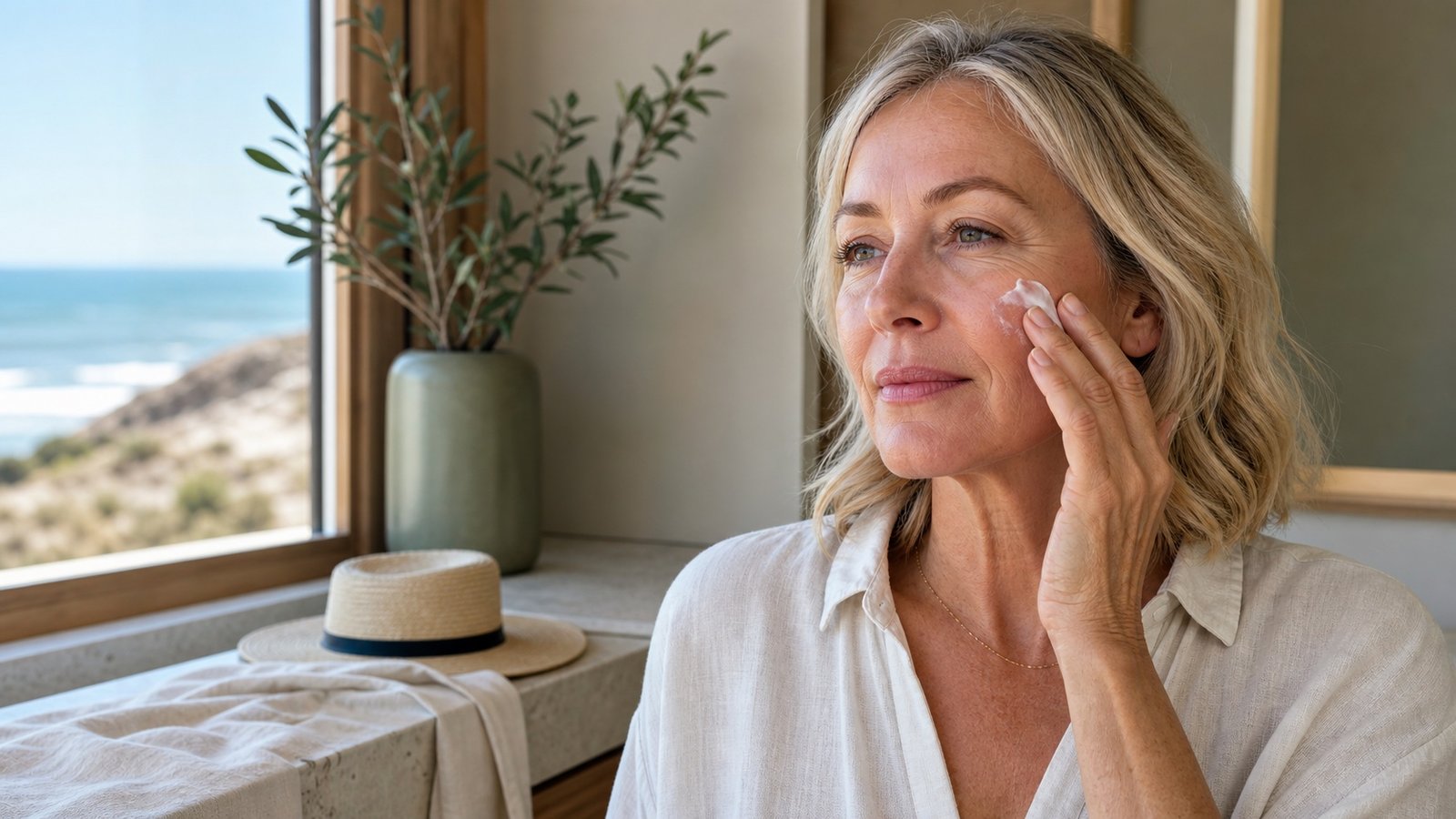
Sunscreen reapplication and a carefully finished face can feel like competing priorities. In Australia, protection has to win. Makeup can be repaired; an under-applied or patchy sunscreen layer cannot be assumed to provide the protection on its label.
Cancer Council Australia recommends broad-spectrum, water-resistant SPF50 or SPF50+, applied generously and reapplied every two hours outdoors and immediately after swimming, sweating or towel-drying. Makeup does not cancel that guidance. The practical goal is to make reapplication manageable enough that you actually do it.
Start with a morning routine that leaves room for sunscreen
The easiest afternoon reapplication begins before breakfast. If several serums, a rich moisturiser, sunscreen, primer and foundation are stacked together, the surface may pill or move when another sunscreen layer is added. Mature skin may still need hydration, but more layers are not automatically more helpful.
Use one purposeful hydrating step, a measured amount of moisturiser and then sunscreen on clean, dry skin according to its label. Let each layer settle without excessive rubbing. Apply makeup only after the sunscreen film has formed. A lighter base, spot concealer or cream colour may be easier to refresh than a full long-wear foundation, but makeup remains a personal choice.
A practical reapplication method
- Move into shade and wash or sanitise your hands.
- Blot perspiration or excess oil with a clean tissue; do not wipe the sunscreen layer away.
- Use the amount and method directed on your sunscreen label.
- Dot lotion or fluid sunscreen across the forehead, cheeks, nose, chin, ears and neck.
- Press and spread it in small sections with clean fingertips using minimal friction.
- Check the hairline, around the nose, jaw, ears and neck for missed areas.
- Allow the layer to settle, then touch up makeup only where needed.
- Continue using clothing, a broad-brimmed hat, shade and sunglasses.
Can you use a sponge?
A clean sponge can help press product over makeup, but it can also absorb sunscreen. That makes it difficult to know how much reaches the skin. If you use one, put the measured sunscreen onto the face rather than loading an unknown amount into the sponge, press gently and clean the tool after use. Fingertips remain the simplest way to control coverage.
Do not stretch a small amount simply because a sponge makes it look even. Sunscreen effectiveness depends on adequate and uniform application, not only how smooth the finish appears.
What about sunscreen powders and sprays?
A powder or mist may look convenient over makeup, but convenience does not guarantee that enough product reaches every part of the face. Cancer Council advises against aerosol sunscreen because wind can carry away a large proportion during application and achieving an adequate dose can be difficult. A powder should not be assumed to replace a correctly applied primary sunscreen unless its Australian label specifically supports that use and you can apply the directed amount.
A lotion, cream or fluid that can be measured and spread evenly is the more dependable choice. If it disturbs makeup, repair the makeup after the sunscreen settles rather than relying on an uncertain dusting or mist.
Which Skin Suga ritual fits beneath sunscreen?
The Daily Essentials Ritual is the ritual-first choice because its morning sequence can stay light: Cream Cleanser when needed, Anti-Ageing Toner and a measured amount of Nourishing Moisturiser. Skin Suga does not replace sunscreen; the ritual prepares a comfortable surface beneath your chosen TGA-compliant product.
Anti-Ageing Toner includes aloe vera, cucumber, lavender, rose geranium and botanical extracts. Use a small amount as the light hydration step. Nourishing Moisturiser contains jojoba oil, shea butter, green tea, mangosteen, acai and avocado oils. Concentrate it on dry areas rather than applying a thick uniform layer that crowds the sunscreen.
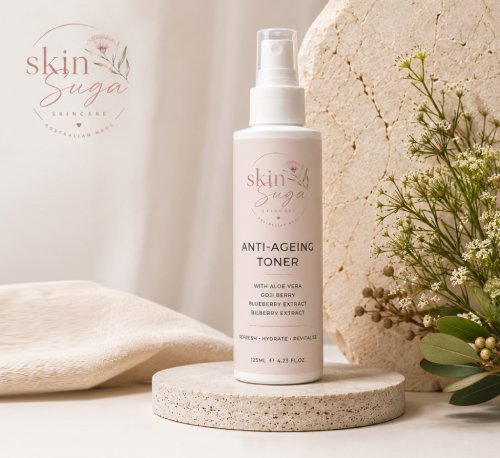
Anti-Ageing Toner
Use one light hydration step so the morning routine stays comfortable beneath sunscreen.
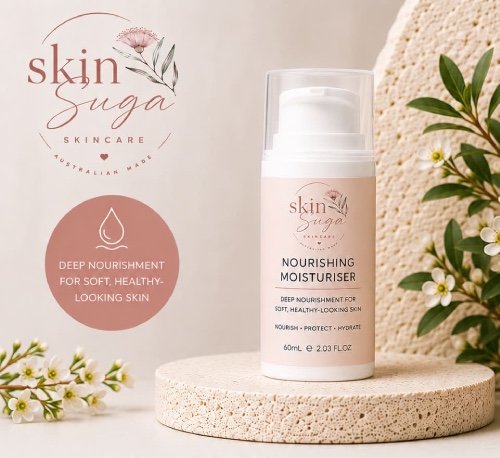
Nourishing Moisturiser
Apply a measured amount to dry areas and let it settle before sunscreen.
Simplify the layers beneath protection
Daily Essentials gives mature skin a clear cleanse, hydration and moisturiser sequence before sunscreen.
Explore Daily EssentialsView Anti-Ageing TonerReapply after sweating, swimming or towel-drying
Heavy perspiration changes the plan. Blot first and reapply as directed; do not keep pressing product into a wet film. After swimming or towel-drying, makeup may already be disrupted, so prioritise a fresh even sunscreen layer. Water resistance describes tested performance, not permission to skip reapplication.
If the day includes prolonged outdoor exposure, consider lighter makeup from the start. A hat and shade reduce direct exposure and also make the practical reapplication process easier.
Do not forget the places makeup does not cover
Reapply to the ears, neck and exposed upper chest, following the product label. Protect thinning hair or the scalp with a broad-brimmed hat and suitable sunscreen where appropriate. Use an SPF lip product for the lips. A flawless cheek application does not compensate for missed ears or neckline.
How to prevent pilling during reapplication
Pilling can come from too much skincare, incompatible films or rubbing. Reduce optional morning layers, allow each product to settle and press rather than roll the second sunscreen layer. Do not deliberately under-apply sunscreen to preserve makeup. If one sunscreen repeatedly pills, trial another compliant texture on a non-event day and patch test it first.
Keep tools clean. A sponge or brush carrying old foundation, oil and sunscreen may make the new layer patchy. Wash reusable applicators thoroughly and let them dry between uses.
When the skin feels dry by afternoon
Do not add a heavy facial oil immediately before sunscreen reapplication. Oil may disturb the existing film and makeup. Move into shade, assess whether the skin is actually dry or simply feels tight from product film, and apply the sunscreen according to its directions. At night, cleanse gently and use hydration and moisturiser to restore comfort.
If sunscreen regularly stings, stop that formula and seek advice from a pharmacist, GP or dermatologist. Cancer Council recommends patch testing new sunscreen and choosing a different formula when a reaction occurs.
Frequently asked questions
Does makeup with SPF count as my reapplication?
Do not assume it does. Use a separate sunscreen and follow its label unless the cosmetic itself is an approved sunscreen used in the directed amount.
Will reapplying ruin my foundation?
It may change the finish. Press sunscreen in sections, allow it to settle and repair makeup afterwards. Protection is the priority.
Do I need to reapply when I am indoors?
Follow the product label and consider your actual exposure, including time outdoors and near bright windows. Use the SunSmart app or UV forecast to plan protection.
Continue with skincare pilling under sunscreen, how much skincare to use and facial oil under sunscreen.
Sources and further reading
- Cancer Council Australia: applying, reapplying and choosing sunscreen
- Cancer Council NSW: makeup with SPF and reapplication
- American Academy of Dermatology: skincare, sunscreen and makeup order
- American Academy of Dermatology: applying sunscreen
General cosmetic education only; not medical advice.