

A cooler, calmer routine
How can I keep skincare comfortable during menopause hot flushes?
The short answer: Skincare cannot stop a hot flush, but a lighter, gentler routine can reduce avoidable discomfort. Keep cleansing brief, use cool-to-lukewarm water, blot rather than rub perspiration, choose measured hydration and moisturiser layers, and keep sunscreen consistent. Persistent flushing, rash, pain or eye symptoms should be assessed by a health professional.
A hot flush can arrive quickly, warming the face, neck and chest and leaving perspiration around the hairline or upper lip. A rich routine that felt comforting at night may suddenly feel heavy. The useful response is not to strip everything away, but to separate temperature comfort from long-term skin care.
DermNet lists hot flushes and night sweats among common menopause experiences and notes that dryness and itch can also occur. Those concerns can exist together: the skin may feel hot for several minutes yet still be dry overall. Cooling the surface and supporting moisture are different jobs.
First, know what skincare can and cannot do
A cleanser, toner or moisturiser does not treat the hormonal cause of a hot flush. Skincare can help remove perspiration gently, reduce friction and leave the skin surface more comfortable. Medical advice is appropriate when symptoms disrupt sleep or daily life, and new persistent facial redness may have another explanation, including rosacea or contact dermatitis.
Do not chase a cooling sensation with menthol, strong alcohol or fragranced sprays. A dramatic tingle can be irritating, particularly when skin is already warm. A clean cool cloth, moving to a cooler room and wearing breathable layers are simpler comfort measures.
What to do during a hot flush
- Move away from direct heat where possible.
- Use a clean soft cloth to blot perspiration; do not scrub.
- If needed, rinse with cool-to-lukewarm water.
- Pat dry and allow the face to settle before applying more product.
- Reapply sunscreen when the label requires it, especially after heavy sweating or wiping.
If you are wearing makeup, blotting is less disruptive than rubbing. Carry a clean reusable cloth or soft tissue and replace it regularly. Reusing a damp cloth all day can transfer residue back onto the face.
A comfortable menopause routine
Morning
- Rinse or cleanse briefly according to how the skin feels.
- Apply one light hydrating layer.
- Use a measured amount of moisturiser, concentrating on dry areas.
- Finish with broad-spectrum sunscreen and follow the label.
Evening
- Remove sunscreen, makeup and perspiration gently.
- Apply toner or serum only if it feels comfortable.
- Use moisturiser across face, neck and upper chest.
- Reserve richer oil for nights when the skin feels dry rather than hot and coated.
Why lighter layers often work better
Several heavy products can trap a warm, sticky feeling during a flush. A lighter routine does not mean abandoning moisture. It means using one water-based hydration step and one moisturiser in amounts the skin can hold comfortably. Optional oil can move to the evening or be pressed only onto dry cheeks.
Allow each layer to settle before sunscreen. If the routine pills when you perspire, reduce the amount of serum and moisturiser beneath sunscreen rather than reducing sunscreen itself.
Which Skin Suga ritual fits?
The Daily Essentials Ritual is the clearest ritual-first starting point because it can stay light: Cream Cleanser, Anti-Ageing Toner and Nourishing Moisturiser. Use small amounts and adjust the toner or moisturiser by comfort. When dryness is the stronger concern between flushes, the Ultimate Hydration Ritual adds Hyaluronic Acid Serum.
Anti-Ageing Toner includes aloe vera, cucumber, lavender, rose geranium and botanical extracts. Its role here is a light hydration step, not a promise to cool or treat hot flushes. Nourishing Moisturiser contains jojoba oil, shea butter and botanical oils; use enough to relieve tightness without leaving a heavy film.
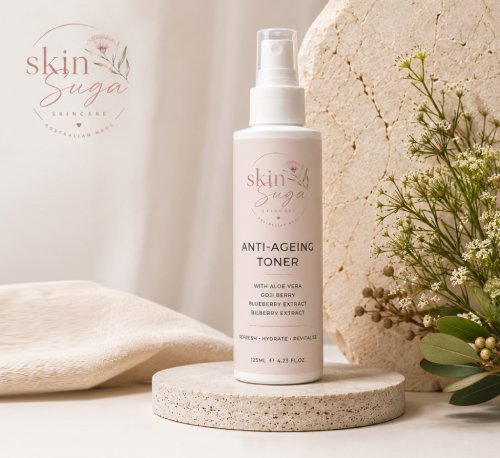
Anti-Ageing Toner
A light botanical hydration step when heavy layering feels uncomfortable.
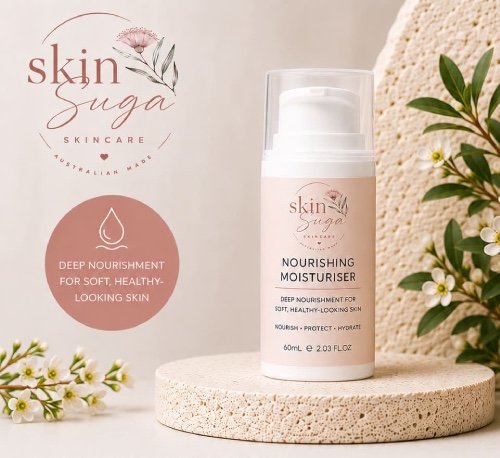
Nourishing Moisturiser
Apply a measured layer to the driest zones after skin has cooled and settled.
Keep the ritual simple and adaptable
Daily Essentials gives each step one clear job without crowding warm skin.
Explore Daily EssentialsView Anti-Ageing TonerNight sweats and the morning after
Night sweats can leave residue around the hairline, neck and chest. In the morning, rinse or cleanse gently and change damp pillowcases or sleepwear. Do not assume the skin needs a strong foam cleanser because you perspired. Sweat is water and salts; gentle removal is enough for most people.
If the face feels dry after a disrupted night, apply hydration and moisturiser, then sunscreen. Avoid compensating with several masks or acids. Consistency is more helpful than a recovery pile of products.
Sun protection still matters
Menopause does not reduce the importance of Australian sun protection. Use sunscreen with clothing, shade, a broad-brimmed hat and sunglasses when UV is 3 or above. Cancer Council recommends reapplication every two hours outdoors and after swimming, sweating or towel-drying. If frequent facial sweating makes a sunscreen uncomfortable, test another compliant texture rather than skipping the step.
Could the redness be rosacea?
Temporary flushing can happen during menopause, but persistent redness, visible vessels, burning, bumps or eye irritation can point to rosacea or another condition. Heat is a common rosacea trigger. A dermatologist can distinguish the cause and recommend treatment; cosmetic skincare should not be used to self-diagnose it.
Build a personal comfort record
For two weeks, note when flushing occurs, how long it lasts, whether skincare stings and which layer feels too heavy. Record changes in climate, medication or new products. The goal is not to prove a single cause but to identify repeatable adjustments, such as moving facial oil to alternate nights or applying less moisturiser under sunscreen.
Makeup and hot-flush days
Makeup is a personal choice, but thin layers are easier to blot and refresh. Let skincare settle, apply sunscreen as directed, then use makeup without vigorous rubbing. During a flush, press a clean tissue lightly over perspiration rather than wiping across the face. Reapply sunscreen when its label requires it, particularly after heavy sweating or repeated blotting.
Around the hairline and upper lip, avoid piling powder over damp skin. Allow the area to cool and dry first. At night, remove makeup and sunscreen with a gentle cleanser. If a long-wear product needs a second cleanse, keep both passes brief and follow with moisturiser.
Change amounts before changing the whole routine
On a cool day, the full moisturiser amount may feel comfortable. On a hot-flush day, use a thinner layer across the centre of the face and a little more on dry cheeks. This is not inconsistency; it is responsive skincare. Keep product choices stable while adjusting amount so you can identify what improves comfort.
Frequently asked questions
Should I keep toner in the fridge?
Only if the product directions allow it. Cool storage outside the recommended range can affect a formula. A cool clean cloth is a safer first comfort measure.
Can skincare prevent hot flushes?
No. Skincare can support surface comfort but does not treat the hormonal cause. Discuss troublesome symptoms with a health professional.
Should I wash my face after every flush?
No. Blot gently and rinse only when needed. Repeated cleansing may increase dryness and irritation.
Continue with menopause-related dryness, a sensitive mature-skin routine and hot and humid weather skincare.
Sources and further reading
- DermNet: menopause and the skin
- DermNet: flushing
- American Academy of Dermatology: rosacea-friendly skincare
- Cancer Council Australia: sunscreen basics
General cosmetic education only; not medical advice.