

Test before the full-face routine
How should I patch test new skincare on mature skin?
The short answer: Apply a small amount to a discreet, repeatable area exactly as directed for several days before using it across the face. Watch for persistent redness, itching, swelling, burning or rash, and stop if these appear. Patch testing lowers uncertainty but cannot guarantee that a product will never cause irritation when used more widely.
A patch test is a small discipline that can save a week of discomfort. It is particularly helpful when mature skin has become drier, more reactive, or when you are introducing vitamin A, exfoliating products, fragrance or several botanicals.
Home patch testing is not the same as professional allergy testing. It is a cautious indication of how your skin responds to one product under limited conditions. It cannot diagnose allergy and does not replace medical advice after a significant reaction.
Choose the right test area
The inner forearm or a small area near the jaw can be practical, depending on the product directions. The forearm is easy to observe and keeps a reaction away from the face. A face-adjacent test may better reflect facial use but is more visible. Do not test on broken, sunburnt, freshly shaved or already irritated skin.
Use the same small location each time and keep other products away from it. Photograph the area in consistent light before starting if you are concerned about subtle change.
A careful home patch-test method
- Read the label, warnings and intended frequency.
- Clean and dry a small discreet area.
- Apply the normal-use amount to that small area, not a thick blob.
- Leave it in place according to the product directions.
- Repeat on the same area for several days when guidance permits.
- Stop if persistent redness, itching, swelling, burning, blistering or rash appears.
- If no reaction develops, introduce the product to the face slowly and keep the rest of the routine stable.
Patch test one product at a time
Testing three products together defeats the purpose because the cause of a reaction remains unclear. Begin with the product most essential to the new routine. Keep cleanser, moisturiser and sunscreen unchanged while testing it.
After a successful patch test, use the product on a small facial area or at a lower frequency before full routine use. Delayed irritation can still occur after repeated application.
Irritation and allergy are not the same
Irritant reactions can result from strength, frequency or barrier condition. Allergic contact dermatitis is an immune response to a specific ingredient. At home, they can look similar. Persistent itching, swelling, blistering or spreading rash should be assessed rather than self-diagnosed.
A brief mild sensation does not automatically mean danger, but neither should burning be normalised. Follow the product directions and stop if discomfort continues.
Products that deserve extra patience
Vitamin A products
Introduce slowly and use only as directed. Patch testing does not eliminate the possibility of dryness from repeated use.
Exfoliating acids
Do not patch test immediately after another exfoliant. Avoid combining new acids with scrubs or vitamin A.
Botanical-rich formulas
Botanical does not mean non-reactive. People can react to plant extracts, essential oils or fragrance, so test these with the same care as laboratory-made ingredients.
Eye-area products
Keep home testing away from the eye itself and follow label directions. Stop for swelling or significant irritation.
How to introduce a Skin Suga ritual safely
For a first routine, the Daily Essentials Ritual is the simplest framework: Cream Cleanser, Anti-Ageing Toner, Hyaluronic Acid Serum and Nourishing Moisturiser. Do not start all four on the same day if your skin is highly reactive. Introduce cleanser first, then toner, serum and moisturiser one at a time.
Skin Suga formulas contain botanical ingredients as well as familiar moisturising components. Cream Cleanser includes apricot kernel oil, oat, milk thistle, elderflower and cucumber extracts. Nourishing Moisturiser contains jojoba oil, shea butter, green tea, mangosteen, acai and avocado oils. Each formula deserves its own test rather than assuming the ritual behaves as one ingredient.
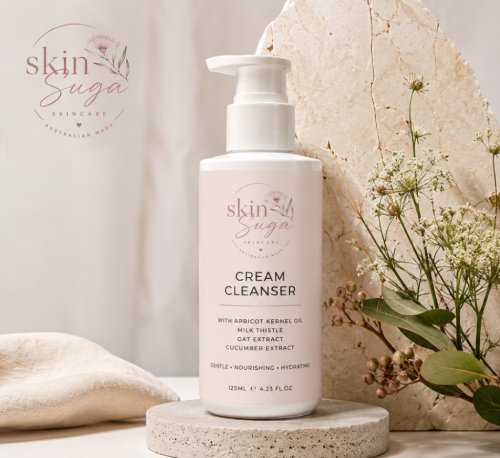
Begin with the cleanser
Test the product that establishes the base of the routine before adding leave-on layers.
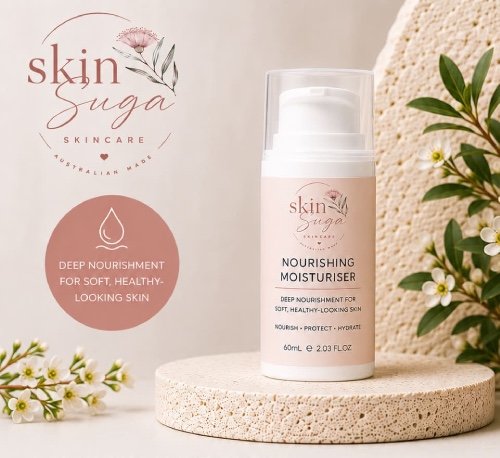
Add moisturiser separately
Observe a leave-on product over several uses before introducing another treatment.
Build the ritual one step at a time
Daily Essentials gives every product a clear job, making a staged introduction easier to understand.
Explore Daily EssentialsView Cream CleanserWhat to do if a reaction occurs
Stop the product and gently rinse the area. Avoid adding several “soothing” products that could complicate the reaction. Use only familiar, well-tolerated basics. Seek urgent care for breathing difficulty, facial or throat swelling, widespread hives or other severe symptoms.
For a persistent local rash, contact a GP or dermatologist and keep the product packaging and ingredient list. Professional patch testing may identify an allergen when reactions recur.
Keep a simple product record
Write down the product name, date started, test location and any response. This is especially useful when several products share fragrance, preservatives or botanical extracts. It also prevents accidental re-testing after a forgotten reaction.
Separate patch testing from routine testing
A patch test asks, “Does this small area react?” A routine test asks, “Does the product work comfortably across my face with the products I already use?” Pass the first question before moving to the second. When facial use begins, choose every second or third day if the directions allow, then increase only when the skin remains settled.
Keep sunscreen stable during this period. If several daytime products change, pilling or irritation may be blamed on the wrong formula. At night, avoid introducing a new mask or exfoliant alongside the test product.
Read the ingredient list without trying to diagnose yourself
Ingredient lists are helpful records, but they do not reveal the exact cause of every reaction. The same ingredient can behave differently depending on concentration and formula. Save the list and batch details if a reaction occurs, then show them to a qualified professional.
Fragrance-free and sensitive-skin labels may reduce some risks but are not guarantees. Plant extracts can also cause reactions. Choose products by tolerance and evidence from your own careful introduction, not by assuming one marketing category is universally safe.
Special situations need professional guidance
Ask a clinician before testing skincare over eczema, active dermatitis, broken skin or soon after a procedure. Prescription treatments can change tolerance and should be managed with the prescriber. A history of severe allergy is another reason to seek individual advice rather than relying on a home test.
Pregnancy and breastfeeding may affect which active ingredients are appropriate. Follow medical guidance and product warnings. Patch testing answers only the local tolerance question; it does not determine whether an ingredient is suitable for every health circumstance.
Create a 30-day introduction calendar
Week one can be the patch test. Week two introduces the product to a limited facial area. Week three expands use at low frequency. Week four assesses comfort before any increase. This deliberate pace may feel slow, but it protects the ability to identify what changed and prevents a whole ritual from being blamed for one unsuitable step.
Common questions
Is 24 hours long enough?
Not always. Some reactions are delayed. Dermatology guidance often recommends repeating a small test over several days, following the product’s directions.
Can I patch test behind my ear?
It is sometimes used, but the inner arm is easier to observe and keep separate. Choose a discreet intact area and follow professional advice if you have known allergies.
Does a passed patch test guarantee safety?
No. Wider use, repeated use and combinations can still trigger irritation. Introduce the product gradually.
Continue with a sensitive mature-skin routine, how to simplify skincare and bakuchiol versus retinol.
Sources and further reading
- American Academy of Dermatology: testing skincare products
- DermNet: professional patch testing
- American Academy of Dermatology: contact dermatitis
General cosmetic education only; not medical advice.