Australian mature-skin guide
Which antioxidants are best for mature skin in Australia?
The short answer: vitamin C has one of the stronger evidence bases for topical antioxidant care, while vitamin E, niacinamide, green tea and botanical extracts can complement a balanced formula. Antioxidants support the appearance of sun-exposed skin, but they do not replace broad-spectrum sunscreen, shade, clothing or a hat.
In Australia, antioxidant skincare is often marketed as invisible armour against the sun. That description goes too far. Antioxidants can help a formula address oxidative stress and support brighter, more even-looking skin, but sunscreen and physical protection remain the foundations.
Ultraviolet exposure generates reactive molecules in skin and contributes to visible photoageing. The body has its own antioxidant systems, while topical products aim to add support at the surface. Whether an antioxidant product performs well depends on the ingredient form, concentration, stability, packaging and complete formula. A long ingredient list does not automatically mean stronger protection.
Vitamin C: the best-known topical antioxidant
Vitamin C participates in antioxidant activity and collagen-related processes and has been studied for photoageing and uneven pigmentation. Pure L-ascorbic acid can be effective, but it is also unstable and may sting sensitive skin. Derivatives can offer different stability and tolerance profiles, although products cannot be compared by percentage alone.
Check colour, smell and storage instructions. A vitamin C product that darkens dramatically or changes odour may have oxidised. Keep the lid closed and store it away from heat and direct light. Apply it after cleansing and toning, then use moisturiser and sunscreen.
Vitamin E, niacinamide and green tea
Vitamin E is oil-soluble and is often paired with plant oils or vitamin C. Niacinamide, a form of vitamin B3, can support barrier comfort and improve the appearance of uneven tone and texture. Green tea contains polyphenols and is widely used as an antioxidant and calming botanical. These ingredients can be valuable, but none should be described as a standalone sunscreen.
Botanical sources such as Kakadu plum, rosehip, mountain pepper berry, goji, blueberry and bilberry can contribute antioxidant compounds and a distinctive Australian botanical story. Their usefulness still rests on formulation quality. “Natural” is not a guarantee against irritation, and an ingredient’s reputation does not reveal how much active material is present in the final product.
Sunscreen remains non-negotiable
The Therapeutic Goods Administration advises choosing sunscreen with SPF 30 or higher. Cancer Council Australia recommends the broader Slip, Slop, Slap, Seek and Slide approach. Antioxidant serum goes underneath sunscreen; it does not reduce the amount of sunscreen needed or extend reapplication time.
Apply sunscreen generously to exposed areas and follow its label. Reapply as directed, especially after swimming, sweating or towelling. Include the ears, neck, décolletage and backs of hands. If a skincare serum makes sunscreen pill, reduce product amounts, allow each layer to settle and avoid rubbing repeatedly.
An antioxidant morning routine
- Cleanse gently or rinse. Choose according to how your skin feels and what was used overnight.
- Apply hydrating toner. This can add comfort without turning the morning into a long routine.
- Use antioxidant serum. Apply an even layer and let it settle.
- Moisturise if needed. Use enough to prevent tightness, but not so much that sunscreen slides.
- Finish with sunscreen. Use a broad-spectrum SPF 30 or higher and combine it with clothing, shade, a broad-brimmed hat and sunglasses.
How to judge an antioxidant formula
Start with the problem you want the formula to address. For dull or uneven-looking skin, vitamin C may be the logical lead ingredient. For a routine that also needs barrier support, niacinamide can be useful. For dry mature skin, vitamin E and antioxidant-rich plant oils may fit more comfortably in a moisturiser or facial oil than in another watery serum.
Packaging matters because light, air and heat can affect unstable ingredients. An opaque or tinted container and a closure that limits repeated air exposure can be helpful. Follow storage directions and do not keep an opened serum indefinitely. A formula that has changed markedly in colour, odour or texture should be checked against the manufacturer’s guidance.
Comfort matters as much as the ingredient list. Tingling is not proof of antioxidant activity. If a serum stings persistently, leaves the face red or makes sunscreen difficult to apply, reduce frequency or stop. A slightly lower-strength formula that sits well under daily sunscreen may contribute more to a real routine than a powerful product that is rarely used.
Why antioxidants cannot provide an SPF number
SPF is established through regulated sunscreen testing; the presence of vitamin C, green tea or botanical extracts does not give an ordinary serum a sunscreen rating. Laboratory findings about oxidative pathways should not be translated into instructions to use less sunscreen. Think of antioxidants as supporting the skincare routine under tested sun protection, not replacing or boosting it by a predictable amount.
This distinction is especially important in Australia, where UV can be high even when the weather feels cool. Check the daily UV forecast, and use the full suite of sun-protective behaviours rather than relying on a cosmetic serum.
How Skin Suga approaches antioxidants
The Australian Botanicals Ritual combines Cream Cleanser, Anti-Ageing Toner, Vitamin C Serum, Nourishing Moisturiser and Glow Face Oil. It is the strongest ritual match for someone who wants an Australian botanical and radiance focus without building a routine from unrelated products.
The Vitamin C Serum uses a triple vitamin C complex alongside Kakadu plum, rosehip extract, mountain pepper berry and aloe vera. The Anti-Ageing Toner brings aloe vera, goji, blueberry and bilberry extracts. The Nourishing Moisturiser adds green tea, mangosteen, acai and avocado oil. These ingredients support a bright, nourished appearance; sunscreen remains a separate final daytime step.
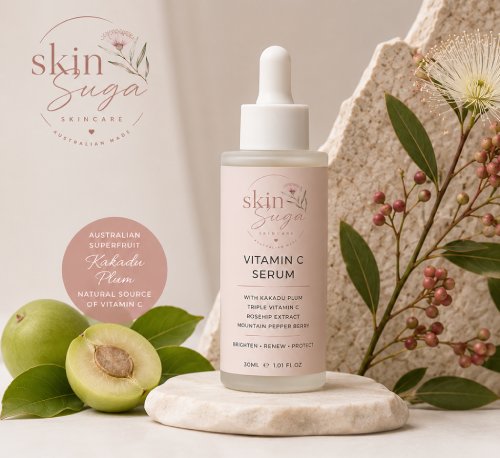
Vitamin C Serum
Triple vitamin C with Kakadu plum, rosehip, mountain pepper berry and aloe vera for a brighter-looking routine.
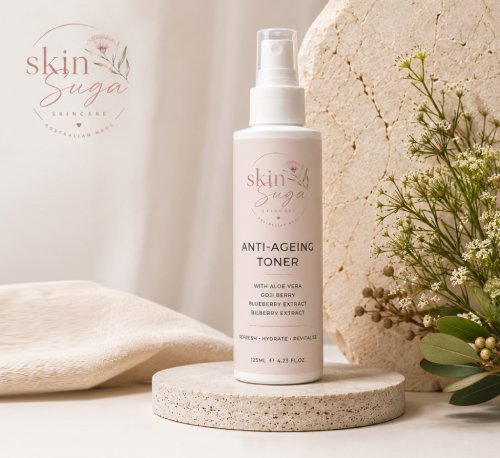
Anti-Ageing Toner
An antioxidant-rich hydration step with aloe vera, goji, blueberry and bilberry.
Choose antioxidants as a ritual, not a substitute for SPF
The Australian Botanicals Ritual coordinates antioxidant and moisturising steps. Add your own approved broad-spectrum sunscreen every morning.
Explore Australian BotanicalsView the Vitamin C SerumCommon questions
Can I use vitamin C and niacinamide together?
Modern formulas are often compatible. Start with a small number of products, follow their directions and separate use if layering causes stinging or pilling.
Do antioxidants reverse sun damage?
They may improve aspects of visible tone and support the skin’s appearance, but they do not erase all photoageing or treat suspicious lesions. Have changing spots assessed by a qualified health professional.
Should I use antioxidants at night?
Many can be used morning or evening depending on the formula. Morning use is popular beneath sunscreen; night use may suit sensitive routines. Follow the product directions.
Is Kakadu plum the same as pure vitamin C?
No. Kakadu plum is a botanical source associated with vitamin C and other compounds. Its presence does not reveal the final concentration or stability of vitamin C in a product.
Read next: vitamin C morning or night, sunspots and mature skin in Australia and how to prevent pilling under sunscreen.
Sources and further reading
- Journal of Clinical and Aesthetic Dermatology: topical vitamin C review
- Sunscreens and photoageing: review of current literature
- Therapeutic Goods Administration: choosing sunscreen
- Cancer Council Australia: UV and healthy skin
General cosmetic education only; not medical advice.