Help makeup sit on skin, not fight it
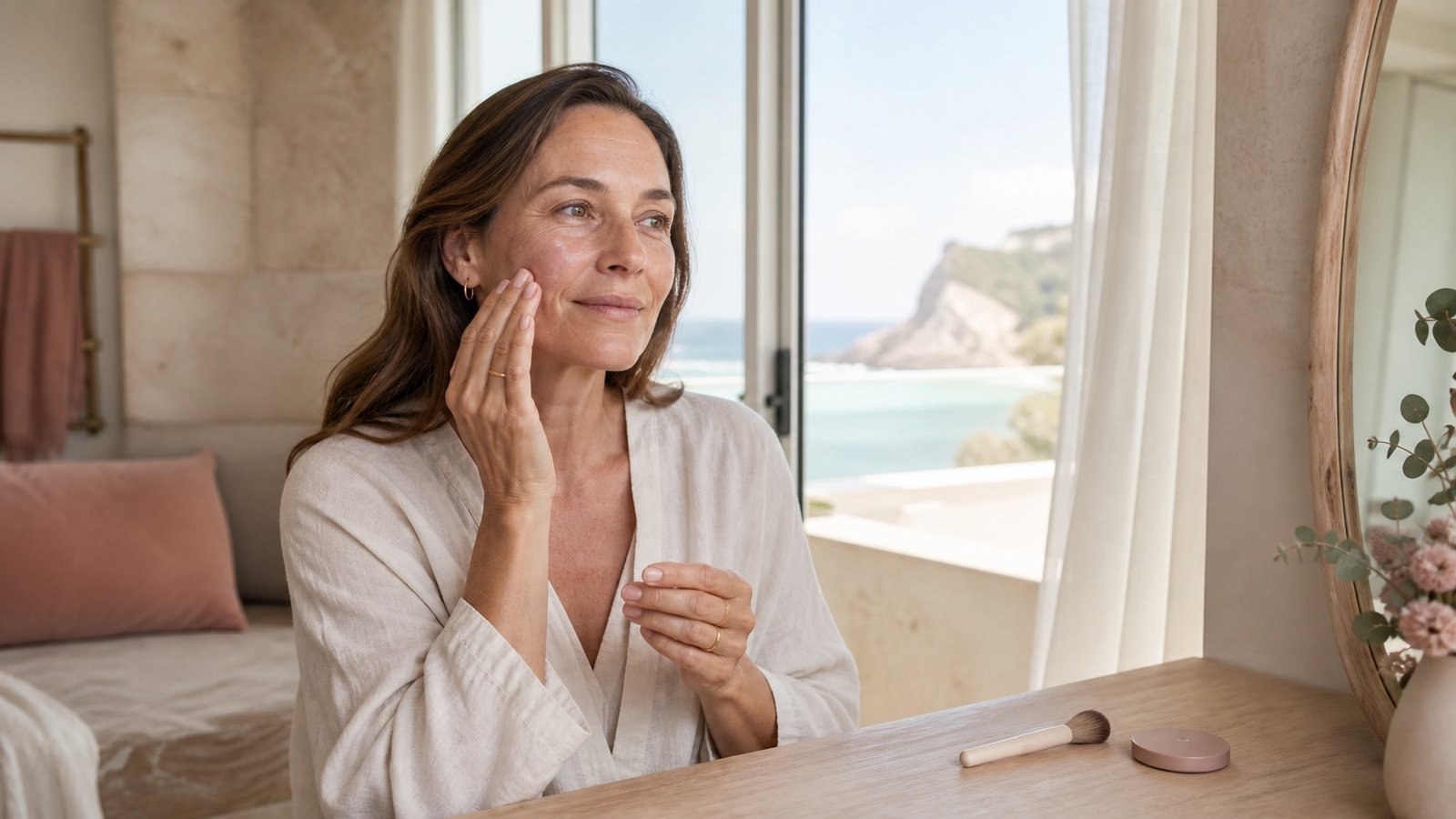
How should mature skin be prepared before makeup?
Prepare mature skin with a gentle cleanse or rinse, one light hydration layer, moisturiser placed mainly on dry areas and correctly applied sunscreen. Allow the skincare and sunscreen to settle before thin makeup layers. Patchiness often comes from dryness, excess product or incompatible layers, not from needing more foundation.
Why makeup can begin to look patchy after 40
Foundation can catch on dry areas, settle into expression lines or separate through the T-zone when the surface underneath is unevenly hydrated. Mature skin may retain less water and oil than it once did, while years of sun exposure can make texture and tone more visible. The makeup has not necessarily become unsuitable; the preparation may need to become lighter, calmer and more targeted.
Too much skincare can cause as many problems as too little. Several serums, a thick cream, facial oil, primer and sunscreen create multiple films that may not cooperate. Rubbing foundation over layers that have not settled can roll them into small flakes. This is pilling, and it is a formulation and quantity issue rather than dead skin that must be scrubbed away.
Current mature-beauty search results repeatedly focus on hydration and allowing skincare to settle. The useful gap is to make that advice specific to Australian sunscreen use: sunscreen quantity and even coverage cannot be sacrificed to make foundation look smoother.
A simple pre-makeup routine
- Cleanse only as needed. Use lukewarm water and a small amount of Cream Cleanser, or rinse if skin feels clean and comfortable.
- Apply one serum. Use Hyaluronic Acid Serum on lightly damp skin for hydration, or Vitamin C Serum when antioxidant care and radiance are the priority.
- Place moisturiser strategically. Press Nourishing Moisturiser over dry cheeks and around the mouth, using less through the T-zone.
- Apply sunscreen correctly. Follow the label and Cancer Council Australia guidance. Do not reduce the amount to prevent shine.
- Let the surface settle. Begin makeup when sunscreen has formed an even, dry-to-touch film according to its directions.
- Use thin makeup layers. Press or lightly buff rather than repeatedly dragging product across the skin.
This routine does not require a special primer. Add primer only if it solves a specific issue and has been tested with your sunscreen and foundation.
Choose the serum by the finish you need
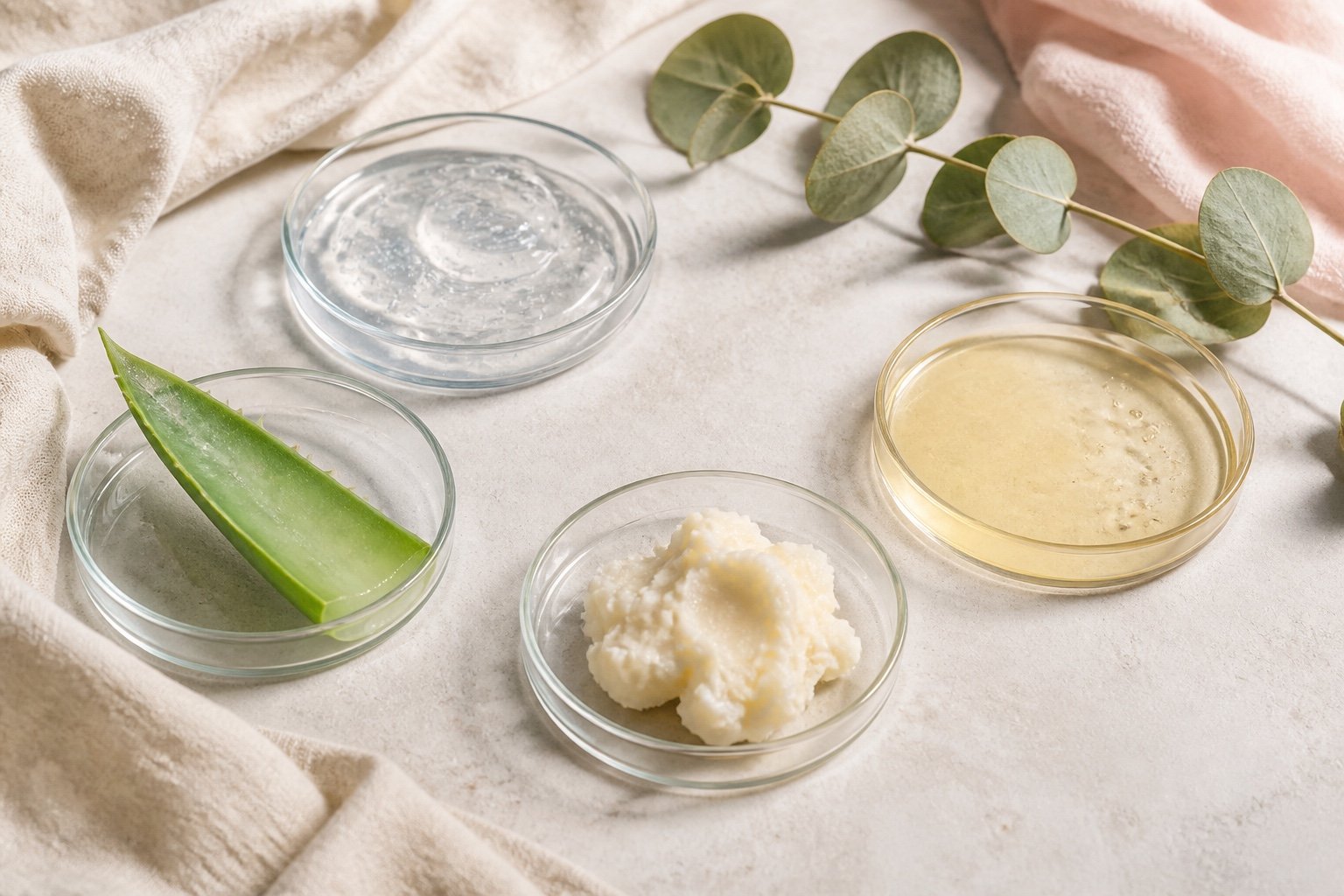
Hyaluronic Acid Serum is the clearest choice when makeup catches on dehydration lines or cheeks feel tight. Apply a small amount to lightly damp skin and follow promptly with moisturiser. Too much gel can become tacky and contribute to pilling.
Vitamin C Serum suits a routine focused on antioxidant support and a brighter-looking finish. Use it before moisturiser and sunscreen. It does not replace either. If both serums are familiar and compatible, use Vitamin C first and hyaluronic acid second, but one serum is often easier beneath makeup.
Stinging is not a sign that a serum is working. If the face is reactive, skip optional actives and prepare with familiar moisturiser and sunscreen.
Use moisturiser by facial zone
Apply moisturiser where foundation tends to catch: often the outer cheeks, around the mouth and beside the nose. Use a thinner residue through the forehead and central nose when those areas become shiny. This creates comfort without placing a heavy uniform layer beneath sunscreen.
Give cream a moment to settle. If it remains visibly wet or leaves a thick film, blotting it away wastes product and may disturb the serum. Use less next time. A second tiny application on one stubborn dry patch is more controlled than doubling the amount across the whole face.
Facial oil is usually easier at night. If one drop under makeup is already proven to work, keep it only on a dry area and allow it to settle before sunscreen. Never apply enough oil to make the sunscreen slide.
Sunscreen is not an optional makeup layer
Cancer Council Australia recommends broad-spectrum, water-resistant SPF 50 or SPF 50+ sunscreen, applied generously to clean, dry skin before exposure and reapplied as directed. Clothing, shade, a broad-brimmed hat and sunglasses remain important. Foundation with incidental SPF should not be assumed to replace a regulated sunscreen used at its labelled amount.
If sunscreen and makeup pill together, test the sunscreen over moisturiser without foundation. If that works, add foundation the next day. If pilling begins before makeup, reduce the serum or moisturiser amount. If it begins only with foundation, use less foundation and press it on rather than rubbing.
Do not mix sunscreen with moisturiser or foundation unless the sunscreen label explicitly instructs it. Mixing can interfere with even application.
What not to do on an important makeup day
Avoid first-time peels, scrubs, masks, waxing and strong active products immediately before an event. Freshly irritated skin is harder to cover comfortably, and adding more makeup can increase rubbing. Keep the routine familiar for several days beforehand.
Do not exfoliate aggressively because foundation caught on one patch. The American Academy of Dermatology advises caution with exfoliation, especially when skin is dry, sensitive or already using retinoids. A soft damp cloth and gentle routine may be more appropriate than a strong scrub.
Avoid stacking products simply because they are marketed as glowy. Too many emollient layers can make makeup separate. Build glow through well-placed hydration, a modest cream layer and thin makeup.
A five-minute rescue for patchy makeup
If foundation has already caught on a dry area, stop adding powder. Warm a tiny amount of moisturiser between clean fingertips and press it lightly over the patch without rubbing. Use a damp sponge to soften the edge, then add the smallest amount of complexion product needed.
When the T-zone is separating, blot only that zone. Do not powder the dry cheeks to match. Mature combination skin benefits from different corrections in different areas.
At the end of the day, cleanse gently rather than scrubbing off long-wear makeup. If one cleanse does not remove it, use a compatible first removal step and a brief Cream Cleanser wash, then restore serum and moisturiser.
Skin Suga ingredients for makeup preparation
Vegan hyaluronic acid
A light water-attracting step that can help dry-feeling skin look more cushioned beneath cream.
Vitamin C
An antioxidant serum option for a brighter-looking morning routine. Use before moisturiser and sunscreen.
Shea butter
An emollient in Nourishing Moisturiser. Use a controlled amount mainly on dry zones.
Aloe vera
A fresh-feeling ingredient in Anti-Ageing Toner for customers who enjoy a light toner stage before serum.
Common makeup-prep questions
How long should I wait before foundation?
Wait until the skincare and sunscreen have settled into an even film. Follow the sunscreen directions; the exact time depends on the formulas and conditions.
Should mature skin use primer?
Primer is optional. Test it with your specific sunscreen and foundation. Remove it if it adds another layer without solving a clear problem.
Should I exfoliate the night before?
Only use a familiar gentle exfoliant on its normal schedule. Do not increase intensity before an event.
Can facial oil make makeup glowier?
It can add emollient slip, but too much may cause sunscreen or foundation to move. Evening use is often simpler.
Ritual recommendation
Radiance & Glow Ritual
The Radiance & Glow Ritual combines Cream Cleanser, Vitamin C Serum, Glow Face Oil and Nourishing Moisturiser. For makeup days, use the cleanser, Vitamin C and a controlled moisturiser layer in the morning, keep Glow Face Oil for evening, and finish the morning with your regulated sunscreen.
$209.95 · value $249.80 · save $39.85
View the Radiance & Glow RitualSources and further reading
- American Academy of Dermatology: Skincare product order
- American Academy of Dermatology: Tips for relieving dry skin
- Cancer Council Australia: Sunscreen advice
- Adore Beauty: Over-50s skin preparation for makeup
This guide provides general cosmetic skincare education and is not medical or professional makeup advice.