Travel skincare after 40
How should mature skin be cared for on a long-haul flight?
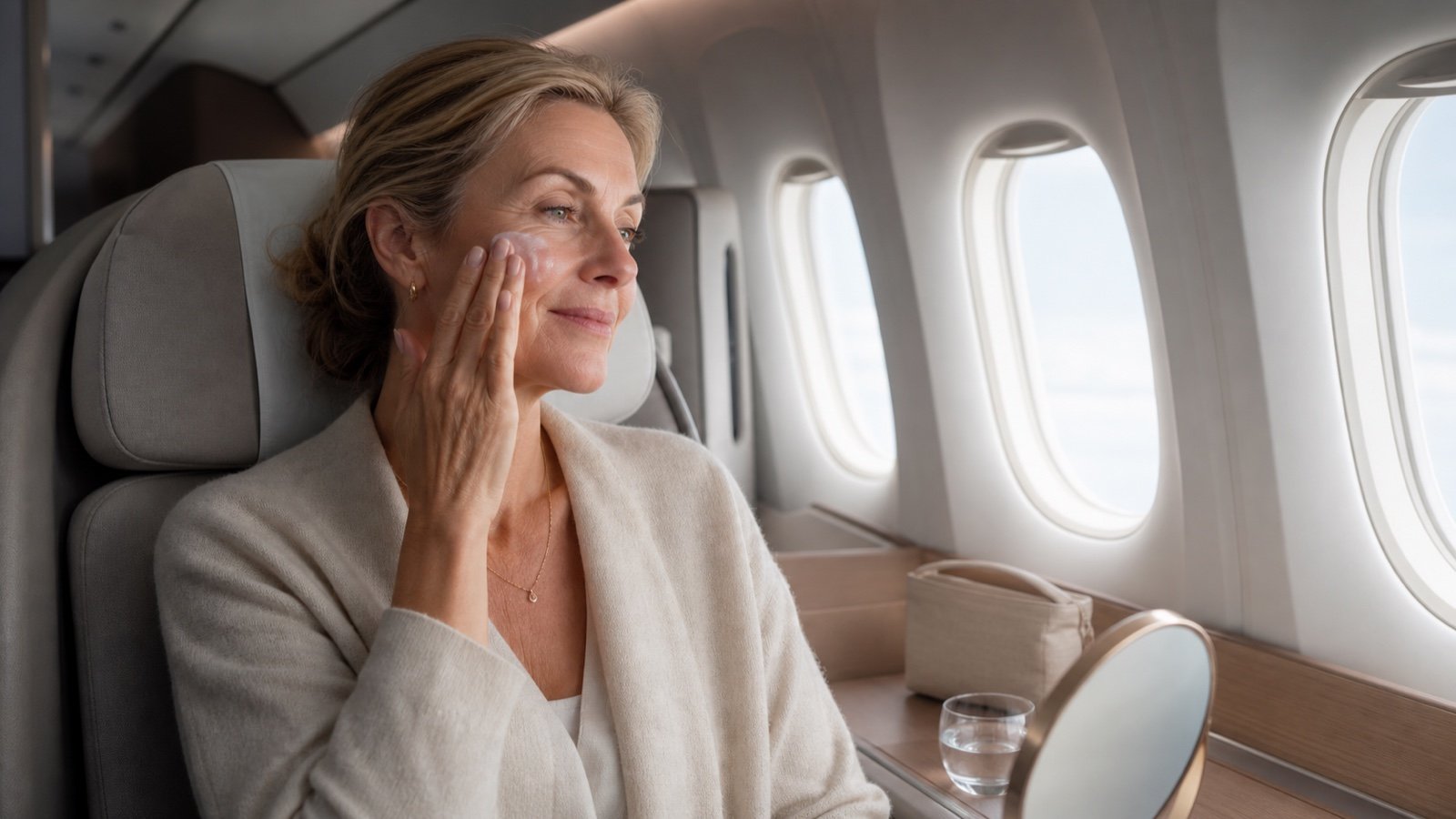
Keep in-flight skincare simple: begin with clean skin, apply hydrating serum and moisturiser before boarding, avoid experimenting with new products in the cabin, and reapply moisturiser when skin feels dry. On arrival, cleanse gently, restore hydration, and use sunscreen according to local UV conditions.
Why cabin air can feel uncomfortable
Aircraft cabins are typically low-humidity environments. The CDC notes that cabin humidity is commonly around 10% to 20%, while research reviews describe even lower averages on some long flights. Low humidity can contribute to dry-feeling skin, eyes, and mucous membranes.
This does not mean a flight dramatically dehydrates the entire body or that the face needs constant spraying. A review of the aircraft cabin environment found no evidence that low humidity alone causes systemic dehydration in healthy people, while acknowledging local dryness and recommending moisturising creams for comfort.
Mature skin may notice the surface effect more quickly, especially if it already feels dry, is using retinoids or exfoliants, or has been cleansed aggressively before travel. Preparation is usually more effective than performing a complicated facial in a shared cabin.
Before boarding: prepare, do not overload
- Cleanse gently. Remove makeup if you prefer to travel bare-faced, but avoid scrubbing or exfoliating immediately before the flight.
- Apply toner if familiar. Use it as a light damp layer, not as a second makeup-removing step.
- Press on hyaluronic acid serum. Use a modest amount on lightly damp skin.
- Follow with moisturiser. Choose enough to leave skin comfortable, not coated.
- Add sunscreen when needed. If you will be outside before boarding, near strong daylight, or landing during daytime, use sun protection according to the label and destination conditions.
Decanting into clean, secure travel containers can reduce bulk, but preserve product names and directions so you know what you are using. Cabin-bag liquid restrictions and airline rules vary, so check before travel.
During the flight: less handling is better
Hands touch seatbelts, screens, trays, and luggage. Wash or sanitise them before touching the face. If skin feels dry, press a small amount of familiar moisturiser onto the cheeks and around the mouth. There is no need to repeat every serum.
Skip sheet masks, peels, fragranced mists, and brand-new samples. They can be messy, increase face touching, and create a reaction when professional help is hours away. The AAD recommends keeping a travel routine similar to the routine used at home to reduce the risk of reacting to unknown ingredients.
Drink fluids according to normal health needs and cabin service. Water supports general comfort, but it does not replace topical moisturiser. Avoid using alcohol wipes or hand sanitiser on the face.
Should you wear makeup on a long flight?
You can, but a lighter base is often easier to refresh. Long-wear foundation, repeated moisturiser, and dry cabin air can combine into an uneven finish. If you prefer makeup, use thin skincare layers, allow them to settle, and apply a modest amount of makeup.
Do not remove makeup mid-flight with repeated dry wipes unless necessary. If you plan to remove it, use a familiar gentle method and clean hands, then apply moisturiser. Eye makeup removal can be especially awkward in a cabin and may increase rubbing.
On an overnight flight, comfort and cleanliness matter more than recreating a full bathroom routine. One well-prepared moisturising layer can be more useful than five small products used repeatedly.
What not to introduce in the cabin
Do not make the flight the first test of an exfoliating pad, peel, retinoid, heavily fragranced mist, or unfamiliar eye treatment. Cabin dryness, limited washing facilities, and repeated face touching make it a poor setting for troubleshooting irritation.
Avoid thickly layering every sample received at the airport. Even individually gentle products can pill or sting when combined unexpectedly. Use the same cleanser, hydrating serum, and moisturiser that already work at home. Patch test new travel-size products before departure if they must be included.
Do not apply a facial oil immediately before sunscreen if the combination has never been tested. At a daytime destination, sunscreen needs an even, stable surface. Keep the oil for an overnight flight or the evening after arrival.
Finally, do not share jars or touch droppers to the skin. Travel is a good time for hygienic pumps, clean hands, and products that can be closed securely.
After landing
Once you have access to a sink, cleanse gently to remove the flight’s skincare, makeup, and travel residue. Use lukewarm water, then reapply hydration and moisturiser. If the destination is humid, use lighter amounts; if it is cold or dry, keep a richer evening layer.
Check the local UV Index rather than relying on the weather. Australian travellers can use the SunSmart Global UV app or local forecasts. Sunscreen, clothing, shade, a hat, and sunglasses remain important at the destination.
Allow the skin a quiet day before restarting strong exfoliation or a retinoid if it feels tight. Jet lag does not need to be treated with a peel. Sleep, routine, and a comfortable surface are the priorities.
A small carry-on skincare kit
Vegan hyaluronic acid
Use Skin Suga Hyaluronic Acid Serum before boarding on lightly damp skin. One application may be enough when followed by moisturiser.
Nourishing Moisturiser
Shea butter, sea buckthorn, hyaluronic acid, and Vitamin E provide the practical comfort layer to reapply during a long flight.
Facial oil
For very dry-feeling skin, press one or two drops over moisturiser before an overnight flight. Keep oil away from the eye area and use only a familiar formula.
Cream Cleanser
Pack a travel-appropriate amount for arrival. Gentle cleansing is preferable to trying to remove the entire journey with rough wipes.
Common flight-skincare questions
Should I mist my face every hour?
No. Mist can feel refreshing, but repeated water without moisturiser may not provide lasting comfort. Reapply a small amount of moisturiser when the skin actually feels dry.
Can I use a sheet mask?
You can use a familiar mask if airline rules allow, but it is not necessary. A simple moisturiser is cleaner, easier, and less likely to involve repeated touching.
Should I stop Vitamin A before flying?
If your normal routine is well tolerated, the flight itself does not create a universal rule. If skin is already dry or irritated, pause optional actives and prioritise comfort. Follow medical advice for prescription products.
Ritual recommendation
Ultimate Hydration Ritual
The Ultimate Hydration Ritual offers a complete before-and-after travel sequence for mature skin: gentle cleansing, water-based hydration, moisturising comfort, and a nourishing finishing option. For the cabin, carry only the familiar essentials you will genuinely use.
$249.95 · value $294.75 · save $44.80
View the Ultimate Hydration RitualSources and further reading
- American Academy of Dermatology: Travel skin care tips
- The Aircraft Cabin Environment: peer-reviewed overview
- CDC Yellow Book: Air travel and cabin humidity
- American Academy of Dermatology: Relieving dry skin
This guide provides general cosmetic skincare education and is not medical or travel-health advice.