Hydration guide for mature skin
Squalane vs hyaluronic acid for dry mature skin
The short answer: hyaluronic acid attracts and holds water at the skin’s surface, while squalane adds lightweight emollient softness and helps reduce a dry, rough feel. Dry mature skin often benefits from both, layered under a moisturiser rather than treated as rivals.
Squalane and hyaluronic acid are both described as hydrating, but that single word hides an important difference. One primarily helps manage water; the other primarily improves the lipid-like softness of the surface.
Understanding that difference makes it easier to choose a product and to diagnose why a routine still feels dry. If skin is dehydrated, it lacks water. If it is dry, it lacks enough oil or lipids. Mature skin can be both at the same time. A humectant alone may feel tight when the weather is dry, while an oil alone may make the surface supple without correcting the underlying thirsty feeling.
What hyaluronic acid does
Hyaluronic acid is a glycosaminoglycan naturally present in the body and widely used as a humectant in topical skincare. Humectants bind water and help increase hydration in the outer skin layers. In a serum, hyaluronic acid can make the surface look temporarily plumper and feel more flexible, which may soften the way dehydration lines appear.
Different molecular weights of hyaluronic acid can influence texture and where the ingredient sits within the outer skin. Marketing sometimes suggests that topical hyaluronic acid replaces the skin’s deep natural stores. That is too simplistic. A cosmetic serum is best understood as a surface-hydration tool within a complete routine.
Hyaluronic acid can feel sticky or tight if too much is used, if it dries without a moisturiser over it, or if the full formula contains film-formers that do not suit the user. Applying a modest amount to slightly damp skin and following with moisturiser is a practical way to improve the experience.
What squalane does
Squalane is a stable, saturated emollient related to squalene, a lipid naturally found in human sebum. Cosmetic squalane is commonly sourced from plants such as sugarcane or olives. It spreads easily, helps smooth rough areas and can reduce the drag or papery finish associated with lipid-poor skin.
Because squalane is an emollient, it fills spaces between surface skin cells and improves softness. It is not a humectant in the same way as hyaluronic acid. It also is not as sealing as heavy petrolatum. This lightweight character makes it attractive for mature skin that wants nourishment without a very rich or waxy finish.
Which one should you choose?
Choose hyaluronic acid first when
- Your skin feels tight, flat or less cushioned after cleansing.
- Fine dehydration lines become more visible during air conditioning, travel or winter.
- You already have a moisturiser you like but want an extra water-binding layer.
- You prefer a light serum texture beneath sunscreen or makeup.
Choose squalane first when
- Your skin feels rough, flaky or uncomfortable despite using a watery serum.
- You want a silkier finish without moving straight to a heavy balm.
- Your night routine needs more softness around cheeks, jawline, neck or décolletage.
- Your moisturiser needs a small emollient boost during dry weather.
If both descriptions sound familiar, you do not have to choose one forever. Use hyaluronic acid as the water-focused step, then squalane within a serum, moisturiser or facial oil layer to support softness. The moisturiser between or around those steps supplies a broader mixture of humectants, emollients and occlusives.
What does the evidence show?
Clinical studies of topical hyaluronic acid formulas have reported improvements in hydration and visible measures such as smoothness or fine lines, including research in older adults with xerosis. Results reflect the entire tested product, not pure hyaluronic acid acting alone. Glycerin and other humectants often contribute substantially to the final performance.
Squalane’s value is supported by its emollient properties and compatibility with the skin surface, but direct head-to-head clinical trials against hyaluronic acid are not what make this comparison useful. They solve different cosmetic problems. Asking which is “better” is like asking whether water or a light oil is better for a dry sponge: the best answer depends on what is missing and how the layers are held together.
How to layer both without pilling
- Cleanse gently. Pat the skin so it remains slightly damp, not dripping.
- Apply a small amount of hyaluronic acid serum. More product can create tackiness without improving hydration.
- Follow with moisturiser before the serum fully dries. This traps the comfortable hydrated feel.
- Add a facial oil only where needed. Press one or two drops over drier areas in the evening rather than flooding the whole face.
- Use sunscreen in the morning. Let moisturiser settle first so the sunscreen can form an even film.
Common reasons hydration still fails
Using a hyaluronic acid serum after an aggressive foaming cleanser is like filling a bucket with a leak. The first correction may be the cleanser, not a stronger serum. Similarly, applying facial oil to very dehydrated skin can leave the face shiny but still tight because oil does not supply water. A moisturiser is often the missing bridge between the two.
Environment matters too. Perth summers, cold winds, indoor heating and long hours in air conditioning can all change how a product feels. Adjust the amount and richness seasonally. You may use hyaluronic acid daily while reserving facial oil for winter evenings or drier facial zones.
Where Skin Suga’s ingredients fit
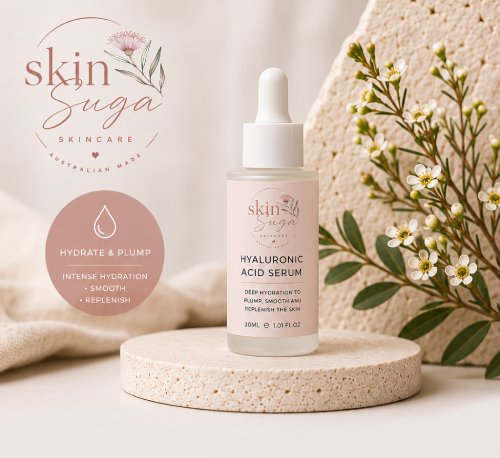
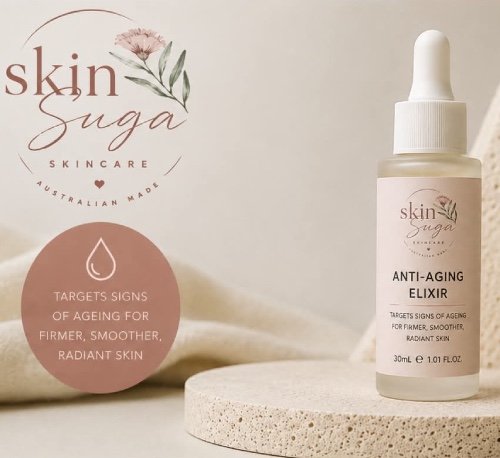
Skin Suga’s Hyaluronic Acid Serum provides the dedicated humectant step. The Anti-Ageing Elixir contains both hyaluronic acid and squalane alongside peptides, niacinamide, bakuchiol, vitamin C and green tea extract, making it a broader age-support serum. These are different jobs: choose the dedicated serum when dehydration is the main concern, and the elixir when you want a multi-ingredient treatment.
For a complete dry-skin approach, the Ultimate Hydration Ritual is the clearest starting point. It coordinates gentle cleansing, hydrating layers, moisturising and facial oil so the routine addresses water and lipids together. Once the ritual is settled, individual products can be adjusted according to season and comfort.
Support water and softness together
Choose the Ultimate Hydration Ritual when dryness and dehydration affect the whole routine. Choose the Hyaluronic Acid Serum when your cleanser and moisturiser already work and you need one extra hydration layer.
Explore the Ultimate Hydration Ritual View the Hyaluronic Acid SerumCommon questions
Can squalane replace moisturiser?
For most dry mature skin, squalane is better used with moisturiser rather than instead of it. A moisturiser usually combines water, humectants, emollients and ingredients that slow water loss; squalane mainly contributes emollient softness.
Should hyaluronic acid go on wet or dry skin?
Slightly damp skin often gives a more comfortable result. Follow promptly with moisturiser so the hydration step does not dry down to a tight film.
Can oily mature skin use squalane?
It may suit some oily or combination skins because it is lightweight, but individual tolerance varies. Begin with one drop on the drier zones rather than applying a heavy layer everywhere.
Which goes first, squalane or hyaluronic acid?
Apply the water-based hyaluronic acid serum first. Follow with moisturiser, then use a squalane-containing oil as the later emollient step if needed.
Read next: hyaluronic acid on damp or dry skin, why skin can still feel dry after moisturising and whether facial oil can replace moisturiser.
Sources and further reading
- Randomised study of topical hyaluronic acid for xerosis in older adults
- Clinical study of a hyaluronic acid serum and cream regimen
- Randomised hydration study involving hyaluronic acid, glycerin and Centella asiatica
This guide provides general cosmetic education and is not medical advice.