Two oils, two different jobs
Rosehip oil vs Vitamin A Oil: what is the difference for mature skin?
The short answer: rosehip oil is a botanical emollient oil rich in fatty acids and plant compounds. Skin Suga Vitamin A Oil is a finished cosmetic formula containing the Vitamin A derivative retinyl palmitate alongside botanical oils. Rosehip should not be described as the same thing as retinol. Choose by formula, purpose and tolerance, not by the myth that one natural oil replaces every Vitamin A product.
Why the two are confused
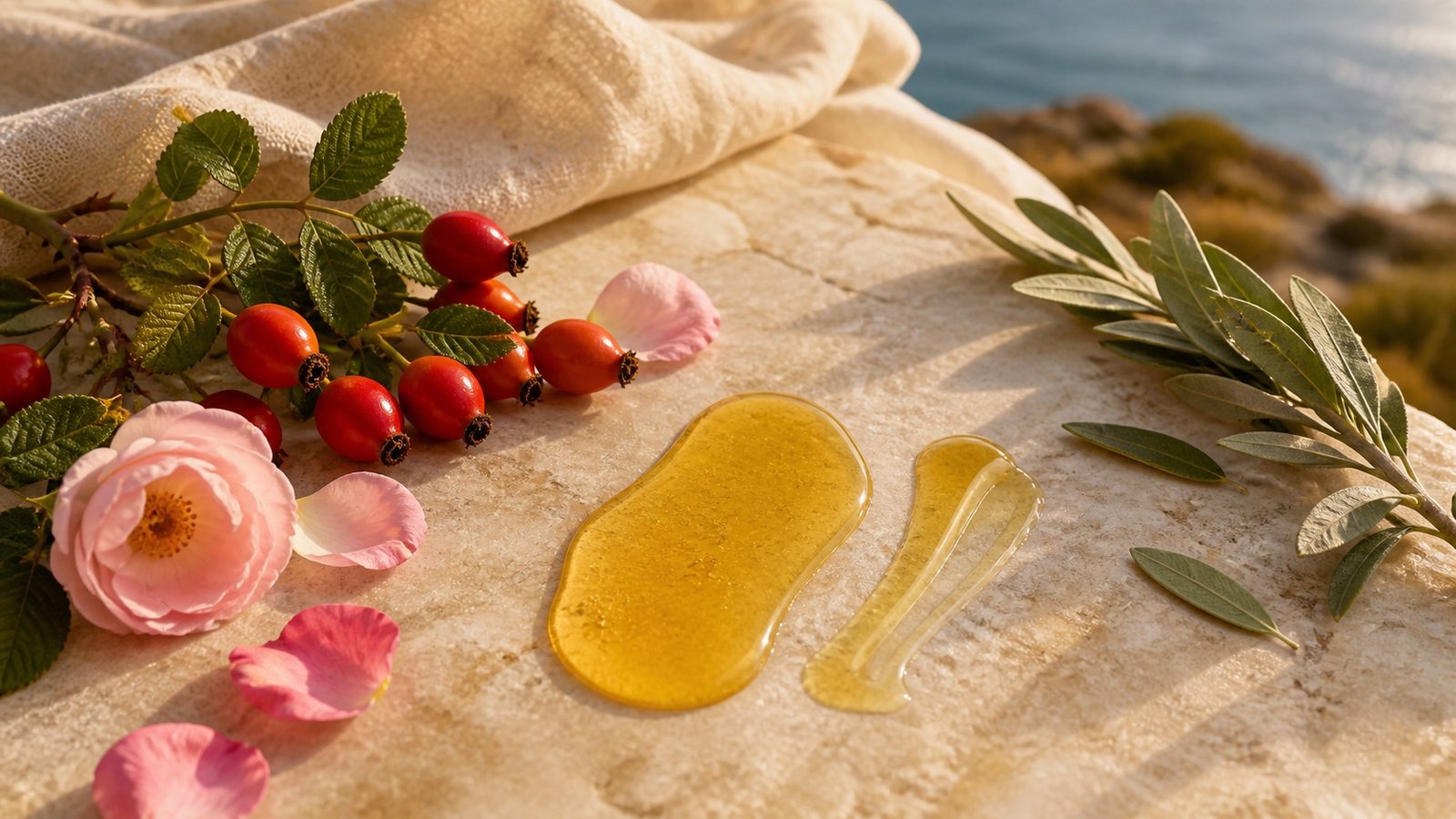
Rosehip is often marketed as “natural retinol”. That phrase collapses different materials into one claim. Rosehip seed oil is pressed or extracted from rosehip seeds and contains fatty acids, carotenoids and other plant compounds. Its exact profile varies by species, extraction and storage.
Retinoids are a family of Vitamin A-related ingredients. Skin Suga Vitamin A Oil lists retinyl palmitate at 1% in an oil formula. Retinyl palmitate is a cosmetic Vitamin A derivative, but it is not prescription tretinoin and should not be presented as equivalent to it.
A rosehip-containing oil may support softness and a smoother-looking surface. A formulated Vitamin A product has a distinct active-led purpose and requires a gradual introduction. Both can sit within mature skincare, but the names do not make them interchangeable.
What rosehip oil contributes
Rosehip oil is valued mainly as a plant oil. Its fatty acids contribute emollience, helping rough-feeling skin feel softer and reducing the dry drag that can become more noticeable after 40. Reviews discuss antioxidant and barrier-related potential, while also noting the need for more formulation-specific research.
That nuance matters. Evidence about a standardised study formula does not prove that every rosehip product produces the same outcome. Packaging, oxidation, concentration and the rest of the formula change performance. Look for fresh product, sensible storage directions and a formula that suits your skin.
Skin Suga uses rosehip alongside jojoba, avocado and sea buckthorn in nourishing oil steps. In that context it contributes to a blended botanical finish rather than acting as a stand-alone retinoid treatment.
What Vitamin A Oil contributes
Skin Suga Vitamin A Oil combines retinyl palmitate with an oil base. Its place is a selected evening step for women who want to support smoother-looking texture and a considered age-defying routine. Use it according to directions and start less often than the maximum.
Retinoid-family products can cause dryness and irritation. More drops or nightly use from the first week does not guarantee a better result. Patch test, begin on one evening, keep exfoliation out of that night and use sunscreen every morning.
Vitamin A products are generally avoided during pregnancy and breastfeeding. Ask your healthcare professional for personal guidance.
How to choose between them
Choose a nourishing rosehip-containing facial oil when the main concern is softness, dry-feeling cheeks and a richer final layer. Choose Vitamin A Oil when you specifically want a Vitamin A step and are prepared to introduce it gradually. If skin is currently irritated, choose neither as the first response; simplify cleanser and moisturiser first.
Dry mature skin may eventually use both on different evenings, but a seven-bottle routine is not required. Combination skin can apply oil only to the cheeks. Sensitive skin should patch test and may prefer the gentler, familiar product rather than experimenting with two formulas at once.
Price and ingredient headlines should not decide alone. The useful product is the one that has a clear place, remains comfortable and can be used consistently.
A simple evening schedule
Monday: cleanse, use Vitamin A Oil as directed, then moisturiser if required by the formula and your comfort.
Tuesday to Thursday: cleanse, apply Hyaluronic Acid Serum to lightly damp skin, follow with Nourishing Moisturiser, then use two or three drops of Nourishing Facial Oil on dry areas if needed.
Friday: repeat Vitamin A only after several weeks of comfortable once-weekly use. Otherwise keep it a recovery night.
Weekend: let the skin guide the finish. Moisturiser alone may be enough. Oil is an adjustable layer, not a compulsory badge of mature skincare.
Common myths to leave behind
“Rosehip is retinol without irritation.” It is a different botanical material, and botanical does not mean reaction-free.
“Vitamin A Oil must peel to work.” Irritation is not a performance score. A routine that remains comfortable is easier to sustain.
“Oil replaces moisturiser.” Oil provides emollient lipids, while moisturisers can also deliver water-binding and cream-phase ingredients.
“Natural oils do not need patch testing.” Any cosmetic can be unsuitable for an individual.
Texture, storage and application matter
Plant oils can oxidise when repeatedly exposed to heat, light and air. Keep the cap closed, follow the storage directions and do not leave facial oils on a sunny bathroom windowsill. A strong change in smell, colour or texture is a reason to stop and check the product rather than adding essential oil to disguise it.
Warm two or three drops between clean fingertips and press them over moisturiser. Pouring oil directly from a dropper onto the face can bring the applicator into contact with skin and makes the amount harder to control. Combination skin may need oil only on the cheeks and neck.
Vitamin A Oil should be treated as an active-led formula even though it feels nourishing. Keep its selected night identifiable. Rosehip-containing nourishing oil can occupy recovery evenings, but it should not be used to dilute Vitamin A in the palm because that makes the dose and tolerance harder to understand.
Ingredient roles in the Skin Suga oils
Rosehip
A botanical oil valued for fatty acids and a nourishing skin feel.
Retinyl palmitate
The Vitamin A derivative in Skin Suga Vitamin A Oil, introduced gradually on selected evenings.
Sea buckthorn
A richly coloured botanical oil used within nourishing facial-oil blends.
Vitamin E
An antioxidant ingredient commonly used to support the oil phase of cosmetic formulas.
Ritual first
Age Defy Ritual
The Age Defy Ritual is the clearest route when Vitamin A is the intentional step. It places Vitamin A Oil beside cleanser, hydration and moisturiser so the active is not treated as an isolated shortcut.
$239.95 – value $284.75 – save $44.80
Common questions
Can I use rosehip and Vitamin A Oil together?
It may be possible, but separate evenings are easier to assess and less likely to feel heavy. Follow each formula’s directions.
Is retinyl palmitate the same as prescription tretinoin?
No. They are related to Vitamin A but differ in form, strength, evidence and regulation.
Which is better for very dry skin?
A nourishing oil may feel more immediately comfortable, but moisturiser and gentle cleansing remain the foundation.
Does rosehip oil contain Vitamin C?
Fresh rosehips contain Vitamin C, but an oil extracted from seeds should not be assumed to perform like a formulated water-based Vitamin C serum.
Continue learning
How to start Vitamin A Oil · How often to use facial oil · Retinol sandwich method
Sources and further reading
- Review: Rosehip-based dermatological products
- Review: Topical natural ingredients and the skin barrier
- DermNet: Topical retinoids
- Review: Cosmetic retinoids in photoaged skin
This guide provides general cosmetic skincare education and is not medical advice. Vitamin A products are generally avoided during pregnancy and breastfeeding.