

Useful for some routines, optional for others
Does mature skin need toner after 40?
The short answer: Toner is optional, not a compulsory step. A gentle hydrating toner can add freshness and light hydration after cleansing, but it should not sting, strip the skin or be used to correct an unsuitable cleanser. If your routine already feels comfortable and hydrated, skipping toner is reasonable.
The old idea that toner must remove the last traces of cleanser comes from routines built around harsher soaps and astringents. Modern toners can have a different purpose: adding a light layer of water-based hydration and botanical ingredients before serum and moisturiser. That can feel pleasant for mature skin, but it is not a universal requirement.
What this means for skin after 40
Skin changes are individual, but many women notice less surface oil, slower recovery from over-cleansing and a stronger preference for cushioning formulas as the years pass. Hormonal change, Australian sun exposure, climate, medication and existing skin conditions can all influence comfort. That is why a useful routine starts with observation rather than a long list of supposedly mandatory steps.
Toner is optional, not a compulsory step. A gentle hydrating toner can add freshness and light hydration after cleansing, but it should not sting, strip the skin or be used to correct an unsuitable cleanser. If your routine already feels comfortable and hydrated, skipping toner is reasonable.
Understand the ingredient or step
A toner should complement cleansing, not rescue skin from an aggressive cleanser.
Hydrating toners are different from high-alcohol astringents and exfoliating acid toners. Read the full label.
Hands can apply toner effectively. A cotton pad is optional and may create unnecessary friction for dry or reactive skin.
Judge the finished product rather than a headline ingredient alone. Concentration, pH, supporting ingredients, preservation, packaging and the amount applied all affect how a formula behaves. A product that is excellent for one person can still be unsuitable for another, and “natural” does not mean irritation-proof.
How to decide whether this belongs in your routine
Start by naming the result you actually want. For “does mature skin need toner after 40”, the useful goal is not to own another fashionable product; it is to make the routine more comfortable, consistent or supportive of the appearance you care about. If your current ritual already feels balanced, there is no urgency to add a step. If it does not, change only one variable so the result is readable.
Check the ingredient list and directions before purchase. Look for overlap with products already on your shelf, especially exfoliating acids, vitamin A products, fragranced treatments and multiple serums promising the same outcome. Duplication can increase cost, pilling and irritation without improving the routine. The Anti-Ageing Toner is recommended here because it provides a focused option within a coherent Skin Suga ritual, not because every woman needs every product.
Patch test on a small area and use the same modest amount for several applications. Record comfort immediately after use, again later that day, and the following morning. A routine that looks glossy for ten minutes but leaves skin tight by lunch is not delivering the right balance. Equally, a product does not need to create an instant sensation to be worthwhile.
Reassess after two to four weeks unless irritation appears sooner. Consider softness, visible dryness, ease of sunscreen application and whether you are happy to repeat the steps. Consistency is a meaningful outcome: the best routine is one that supports the skin without turning every morning and evening into a complicated experiment.
Common mistakes that make a routine harder
The first is adding several new products at once. If redness, pilling or congestion follows, it becomes almost impossible to identify the cause. The second is assuming tingling proves activity. Persistent sting is feedback, not a target. The third is using too much. Thin, even layers usually sit better under moisturiser and sunscreen than generous coats.
Another mistake is expecting one ingredient to compensate for inconsistent sunscreen, harsh cleansing or inadequate moisturising. Mature-skin care works best as a system: cleanse without stripping, add hydration or treatment where useful, moisturise for comfort, and protect from ultraviolet exposure every day.
A practical Skin Suga routine
- Cleanse with a gentle cream cleanser and rinse thoroughly.
- Press a small amount of toner over face and neck; avoid rubbing.
- Apply serum while skin feels comfortable, not dripping wet.
- Seal with moisturiser and use sunscreen each morning.
Introduce one change at a time and keep the rest of the routine steady for at least several days. If skin feels hot, persistently itchy or increasingly dry, pause the newest addition and return to a simple cleanser, moisturiser and sunscreen routine.
How to adjust for Australian conditions
Humidity, air conditioning, winter wind and high ultraviolet levels can change how the same routine feels. Use a little less product in warm humid weather and add richness when indoor heating or dry wind increases tightness. Store formulas away from direct sun and hot cars. Sunscreen remains the final morning skincare step; reapply according to the label and your exposure.
During a heatwave or hot flush, allow each layer to settle before sunscreen. If products roll into small flakes, reduce the number and amount of layers rather than scrubbing the skin clean again. A calm, repeatable routine is more valuable than a technically impressive one that is uncomfortable to use.
Skin Suga’s ritual-first recommendation
Begin with the Age-Defying Ritual so cleansing, hydration and moisturising work together. The ritual provides a coherent base; then the Anti-Ageing Toner can be the focused product for this question. This keeps the routine purposeful and avoids buying several overlapping serums.
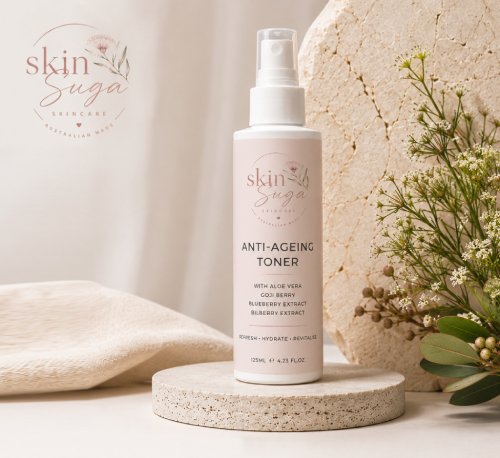
Anti-Ageing Toner
Chosen because its complete formula fits this guide’s concern. Use the amount and frequency on the label, patch test first and adjust according to comfort.
Age-Defying Ritual
A complete Skin Suga routine is the simplest starting point for women who prefer compatible steps and a clear order of use.
How to assess progress realistically
In the first week, assess comfort, spread, pilling and whether the routine is easy to repeat. Hydrating and emollient products may make skin feel softer quickly, while visible changes in tone or fine lines are gradual. Compare skin in similar lighting rather than relying on filtered photographs, and remember that normal skin texture remains normal at every age.
Cosmetics can support appearance and comfort but do not diagnose or treat dermatitis, rosacea, acne, pigmentation disorders or other medical conditions. Seek professional advice for persistent burning, swelling, hives, cracking, bleeding or a changing lesion.
Frequently asked questions
Can toner replace cleanser?
No. Toner is not designed to remove a full day of makeup, sunscreen and soil.
Can toner replace moisturiser?
Usually not. A toner adds light water-based hydration but does not provide the same emollient and occlusive support.
Should toner tingle?
Tingling is not proof of effectiveness. Persistent sting, redness or tightness is a reason to stop and reassess.
Build a calmer ritual
Choose a complete foundation first, then add only the step that answers your skin’s current need.
Explore Age-Defying RitualView Anti-Ageing Toner