
Gentler does not mean reaction-proof
Can bakuchiol irritate sensitive mature skin?
The short answer: Yes. Bakuchiol is often better tolerated than retinol, but any active ingredient or finished formula can cause irritation or allergy in sensitive mature skin. Patch test first, begin two or three nights a week, keep the rest of the routine simple and increase only when skin remains comfortable. Stop if burning, swelling, rash or persistent redness develops. Bakuchiol is not retinol and should not be expected to produce identical results.
Bakuchiol is frequently introduced as the plant-based answer for women who cannot tolerate retinoids. That shorthand is useful but incomplete. In a small randomised trial, bakuchiol and retinol both improved measures of photoageing, while retinol users reported more scaling and stinging. The study does not prove that every bakuchiol formula is gentle for every person.
Bakuchiol is one ingredient inside a complete product. Fragrance, essential oils, preservatives, solvents or other actives may be responsible when the face reacts. Concentration, frequency and the condition of the skin barrier also matter. A calm introduction tells you more than the marketing category.
What irritation can look like
Irritation may appear as immediate burning, dryness, tightness, roughness or redness that worsens with each application. It can be local around the mouth and nose or spread across areas where the product was used. Mature skin may show increased flaking even when there is little visible redness.
Allergic contact dermatitis can involve intense itch, swelling or a delayed rash. Stop the product and seek medical advice if symptoms are significant or persistent. Facial swelling, hives or breathing difficulty requires urgent care. Do not try to “push through” a reaction because a product is described as natural.
Is purging expected with bakuchiol?
“Purging” is often used too freely. Bakuchiol is not a retinoid, and a sudden crop of bumps, itch or rash should not automatically be treated as proof that the product is working. Breakouts may come from the formula base, routine changes, occlusion or irritation.
If new spots appear only where the product is applied and continue to increase, stop and reassess. Introduce one product at a time so the cause is not hidden among several new serums. A dermatologist can help when acne, rosacea or dermatitis is difficult to distinguish.
A cautious four-week introduction
- Patch test: Use a small area for several days according to the product directions.
- Week one: Apply once at night after cleansing and hydration.
- Week two: Use two nights if the skin remains comfortable.
- Weeks three and four: Increase to alternate nights only when there is no irritation.
- Hold the frequency: More often is optional, not the goal.
How to make the routine gentler
Cleanse with lukewarm water and avoid scrubs on bakuchiol nights. Apply a hydrating serum or moisturiser first if the product directions allow. This “buffer” can reduce the intensity of contact for some formulas. Follow with moisturiser and skip other optional actives until tolerance is clear.
Do not start bakuchiol during an active flare of eczema, rosacea or unexplained sensitivity. First restore comfort and seek advice where needed. Starting an active on already inflamed skin makes it difficult to tell whether the ingredient or the condition is responsible.
Can bakuchiol be combined with vitamin C or peptides?
It can be used in the same broader routine as many antioxidants, peptides and humectants, but compatibility on paper does not guarantee comfort in practice. Sensitive skin may prefer Vitamin C in the morning and bakuchiol on selected evenings. Peptides and hyaluronic acid can sit in either routine according to their formulas.
Avoid introducing two active products together. If irritation occurs, you need a clear sequence to identify the cause. Once bakuchiol is established, add another product gradually rather than stacking every ingredient recommended online.
Bakuchiol versus retinol
Bakuchiol is not a vitamin A derivative and does not convert into retinoic acid. Research suggests it may influence some similar pathways and improve the appearance of photoaged skin, but the evidence base is smaller than it is for retinoids. It should be described on its own merits rather than as a perfect natural copy.
Women who tolerate a retinoid and are satisfied do not necessarily need to switch. Those who cannot tolerate one may find bakuchiol a gentler option. Prescription retinoids, pregnancy considerations and skin disease should be discussed with an appropriate clinician.
A simple bakuchiol evening
- Cleanse: Remove sunscreen and makeup without scrubbing.
- Hydrate: Apply one familiar serum if needed.
- Treat: Use the bakuchiol product in the labelled amount.
- Moisturise: Follow with a comfortable cream.
- Protect tomorrow: Use broad-spectrum SPF50 or SPF50+ sunscreen every morning.
How long before you judge it?
Clinical studies assess results over weeks, not days. Give a well-tolerated formula at least eight to twelve weeks before judging visible changes in texture or tone, unless the label says otherwise. Photograph the face in similar natural light rather than inspecting it daily in a magnifying mirror.
Comfort is an outcome too. A modest routine used consistently is more valuable than an ambitious one that causes repeated flares. If the skin remains irritated at a low frequency, bakuchiol may not suit you or the particular formula may be the problem.
What a patch test can and cannot tell you
A home patch test can reveal obvious irritation before a product is spread across the whole face. Apply the directed amount to a small area near the jaw or behind the ear for several days, keeping the rest of the routine unchanged. Watch for delayed itch, swelling, redness or a cluster of bumps as well as immediate burning.
Passing a small test does not guarantee that daily full-face use will be comfortable. Dose, frequency and the larger treatment area can change the response, and a patch test cannot diagnose allergy. If reactions recur across several products, a dermatologist can arrange formal testing and consider rosacea, eczema or contact dermatitis.
Ritual first: Age Defy Ritual
The Age Defy Ritual places the Anti-Ageing Elixir inside a complete mature-skin routine rather than treating bakuchiol as a stand-alone cure. Cleanse, hydrate, treat and moisturise, using the elixir at a frequency your skin can comfortably sustain.

Anti-Ageing Elixir
A treatment serum combining bakuchiol and peptides with hydrating and antioxidant ingredients. Introduce it gradually.
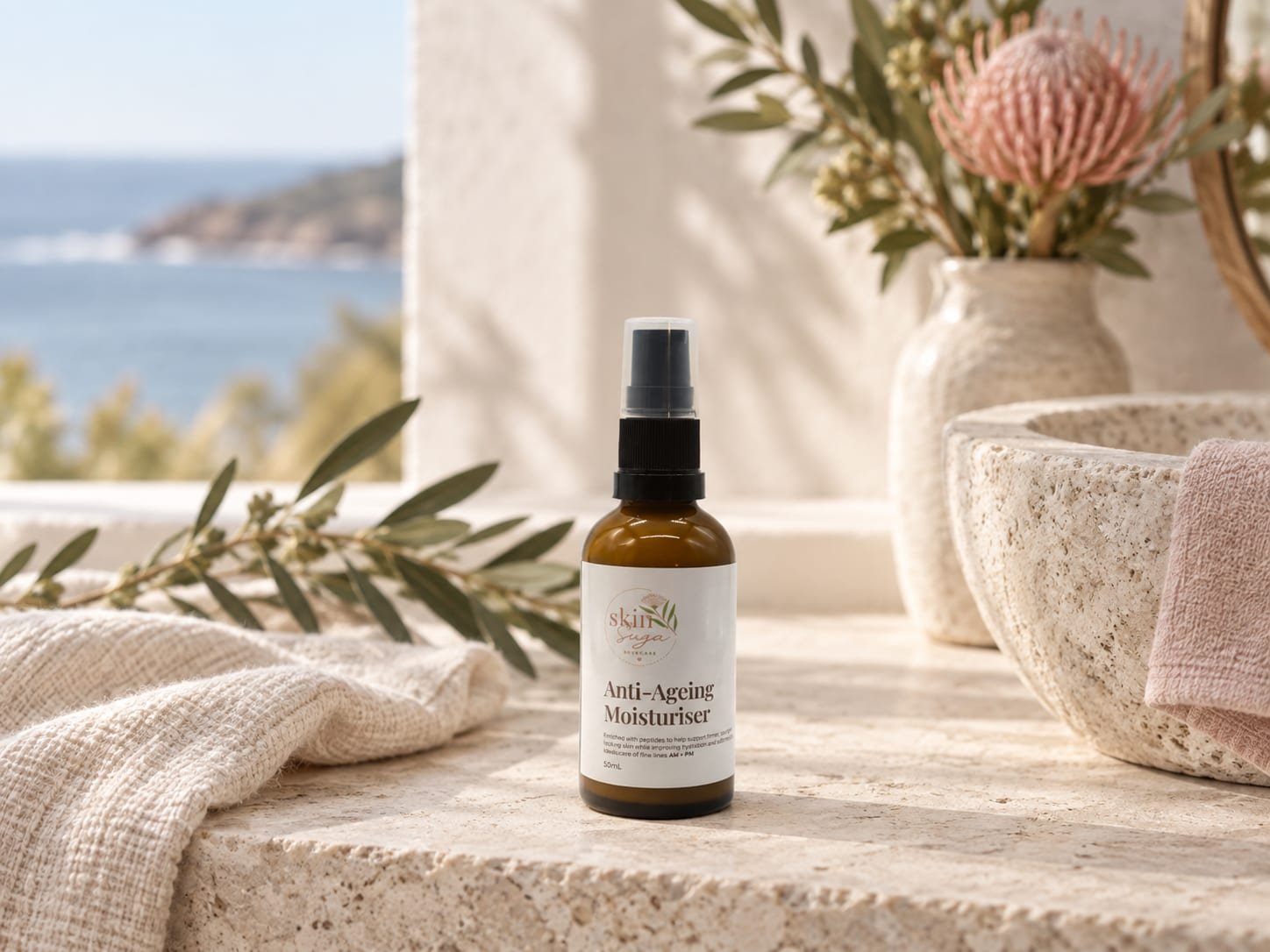
Anti-Ageing Moisturiser
Rice protein peptides, hyaluronic acid, Co-Enzyme Q10, Native Snowflower, jojoba and shea butter support the moisturising step.
Introduce active care without rushing
Start with a stable ritual, use bakuchiol slowly and let comfort decide the frequency.
Common questions
Can bakuchiol be used every night?
Many products allow daily use, but sensitive skin should build slowly. A lower comfortable frequency can still be worthwhile.
Can bakuchiol cause dryness?
Yes, either from the ingredient, the formula or the rest of the routine. Reduce frequency and strengthen moisturising support.
Should I use bakuchiol in the morning?
Follow the product directions. Evening is often simpler, while sunscreen remains essential every morning.
Is bakuchiol safe during pregnancy?
Ask your doctor or pharmacist about your specific product and circumstances rather than relying on a general cosmetic claim.
Sources
- PubMed: Bakuchiol versus retinol randomised trial
- Cleveland Clinic: Bakuchiol
- Harvard Health: Bakuchiol and visible ageing
Cosmetic information only. Individual tolerance varies, and persistent reactions need professional assessment.