
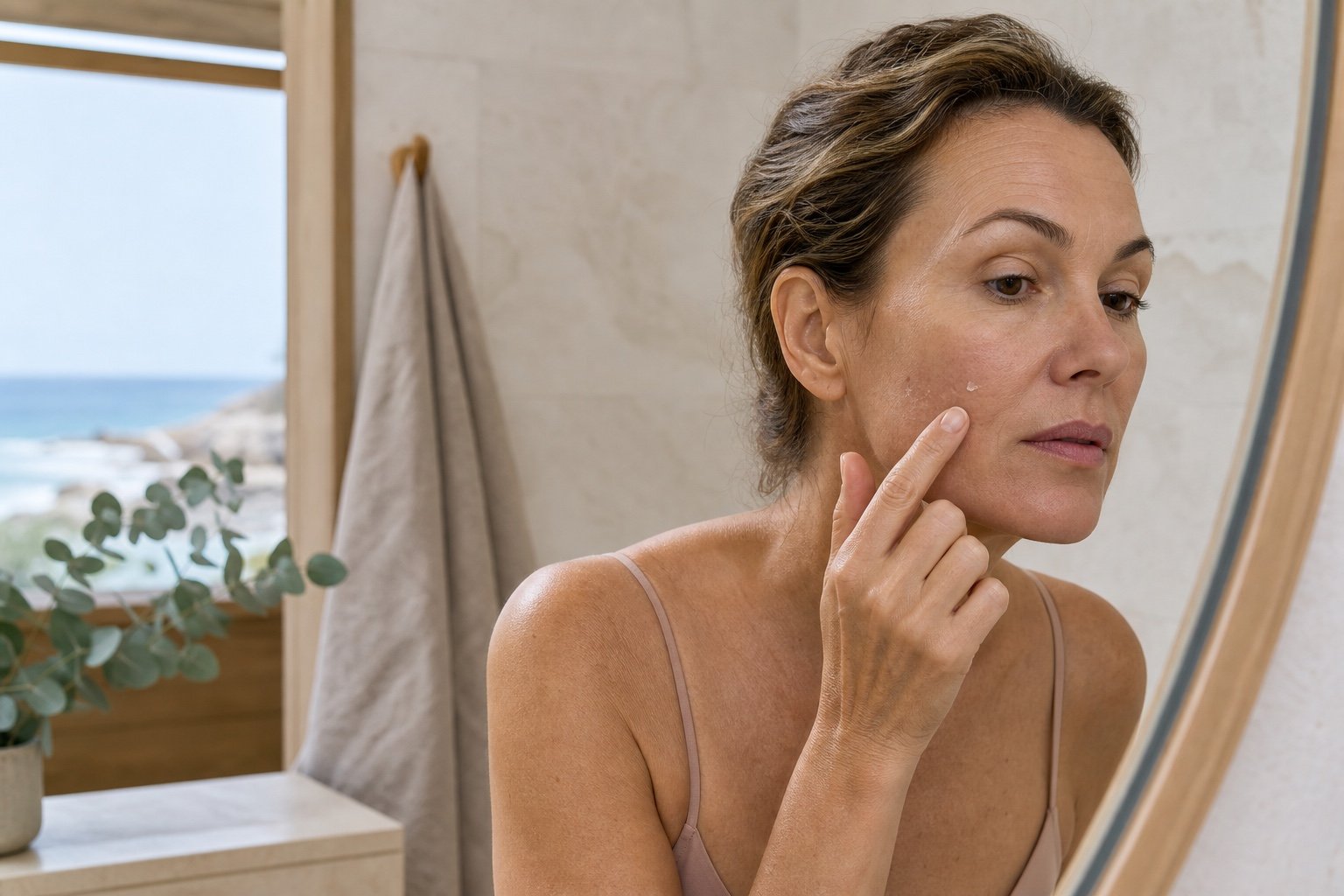
Better preparation, fewer competing layers
Why does makeup separate on mature skin after skincare?
The short answer: Makeup often separates when the skin underneath is unevenly hydrated, when skincare layers are still moving, or when too much serum, moisturiser, sunscreen and primer have been stacked together. Mature skin texture is normal; the goal is not to erase it, but to create a thin, comfortable and even base that lets makeup sit without catching, sliding or breaking apart.
When foundation breaks apart around the nose, gathers in fine lines or slides from the cheeks, the cause is often the condition and movement of the layers underneath. Mature skin does not need to be perfectly smooth for makeup to look polished. It needs balanced preparation: gentle cleansing, enough hydration for comfort, a thin moisturising layer, correctly applied sunscreen and time for those layers to settle before makeup is pressed on.
Separation, pilling and dry patches are different
Separation looks like foundation splitting into uneven islands or disappearing from some areas. It often relates to oil, perspiration, incompatible textures or too much movement underneath.
Pilling creates small rolls of product. It is usually caused by excess product, repeated rubbing or formulas whose film-formers do not layer well.
Dry catching occurs when pigment grabs flaky or rough areas. Adding more foundation usually makes those edges more obvious. The better response is to support the skin over time and use a lighter application on the day.
These can occur together, which is why simply buying a richer foundation does not always solve the problem. First identify whether the base is too dry, too slippery or being physically disturbed.
Why mature skin can make the problem more visible
With age and menopause, skin may hold less water and feel drier. Natural fine lines and texture also change how light reflects from foundation. This is normal skin, not a flaw. The practical aim is to prevent cosmetic product from collecting unevenly on that texture.
Over-cleansing can create tightness and flaking. Under-moisturising can leave patches that absorb the water phase of makeup quickly. Over-moisturising can leave an emollient film that allows makeup to slide. The best preparation sits between those extremes.
Australian conditions add variation. High humidity and sweat can loosen layers, while winter wind and air conditioning can emphasise dryness. A routine that works in July may need lighter quantities in February.
Start by simplifying the skincare base
Use a gentle cleanse or morning rinse. Apply one hydration serum if needed, then one moisturiser. If you use several serums, oils and primers, temporarily reduce the routine to identify which layer is causing movement. This is more informative than waiting longer with the same overloaded base.
Apply products in thin layers. Most people need less serum than they think. Place moisturiser mainly where the face feels dry rather than applying a heavy amount over the entire T-zone. Let the surface settle until it feels comfortable but not wet or greasy.
Sunscreen remains the final morning skincare step and should be used in the labelled amount. Do not reduce it to improve makeup. Apply it evenly, allow the film to form, then press makeup over it with minimal rubbing. If a sunscreen and foundation repeatedly conflict, the texture pairing may be the issue.
A makeup-friendly Skin Suga routine
The Daily Essentials Ritual is the most useful starting point because it keeps the preparation predictable. Cream Cleanser removes residue without a harsh finish. Hyaluronic Acid Serum adds a focused hydration step, while Nourishing Moisturiser seals comfort.
On makeup days, use lighter quantities than an evening comfort ritual. Press a small amount of moisturiser onto dry cheeks and jaw, then use any remainder over the centre of the face. Save facial oil for evening if it makes foundation slide or interferes with sunscreen.
Skin Suga Nourishing Moisturiser includes jojoba oil, shea butter, green tea, mangosteen, acai oil and avocado oil. Those ingredients support softness and emollience, but more product is not automatically better beneath makeup. A thin, even layer is the goal.
Ten steps for a steadier base
- Cleanse gently or rinse with lukewarm water.
- Pat rather than rub dry.
- Apply one thin hydrating serum only where it is needed.
- Use a small amount of moisturiser, concentrating on dry areas.
- Let skincare settle until the surface no longer slides.
- Apply sunscreen in the correct labelled amount.
- Wait for the sunscreen film to form before touching it again.
- Use thin makeup layers and build only where coverage is wanted.
- Press or lightly stipple instead of repeatedly buffing.
- Blot excess shine rather than adding powder and product indefinitely.
Adjust the technique to the pattern
If makeup separates around the nose
Use less moisturiser on the nose and allow sunscreen to settle. Apply a small amount of foundation and press it into place. Heavy rubbing around the folds of the nose often lifts the layers underneath.
If foundation catches on the cheeks
Support hydration consistently for several days rather than attempting to erase flakes immediately before makeup. Avoid harsh scrubs. Apply moisturiser to slightly damp, comfortable skin and choose a thinner makeup layer.
If the whole face pills
Remove one cosmetic layer at a time. Test sunscreen over moisturiser alone. If that works, reintroduce the serum on another day. Product compatibility is more likely than age to be the issue.
If makeup slides by midday
Reduce morning oils and rich creams on the centre of the face. Sweat, humidity and natural sebum can combine with an overly emollient base. Keep richer nourishment for the evening.
What not to do
- Do not scrub mature skin smooth immediately before makeup.
- Do not mix foundation into sunscreen.
- Do not cut the sunscreen amount to improve cosmetic finish.
- Do not add multiple primers before testing a simpler base.
- Do not treat every visible line as a hydration failure.
- Do not expect makeup to reproduce filtered or retouched skin.
Normal skin texture remains visible at conversational distance. A successful base looks even, comfortable and recognisably like skin. It does not need to be poreless.
Test changes in natural light
When you adjust the preparation, assess it beside a window after the makeup has settled for 20 to 30 minutes. Bathroom lighting can hide separation or exaggerate texture depending on its direction. Compare one change at a time: less serum, less moisturiser on the T-zone, a longer sunscreen-settling period or a pressing application technique. Photographing the result in similar unfiltered light can help you identify a pattern without turning normal lines and pores into a problem to solve.
Also check the result again at midday. Immediate separation points to application and texture compatibility; later movement may relate more to humidity, heat, perspiration or natural oils. That distinction helps you change the right part of the routine instead of continually adding new products.
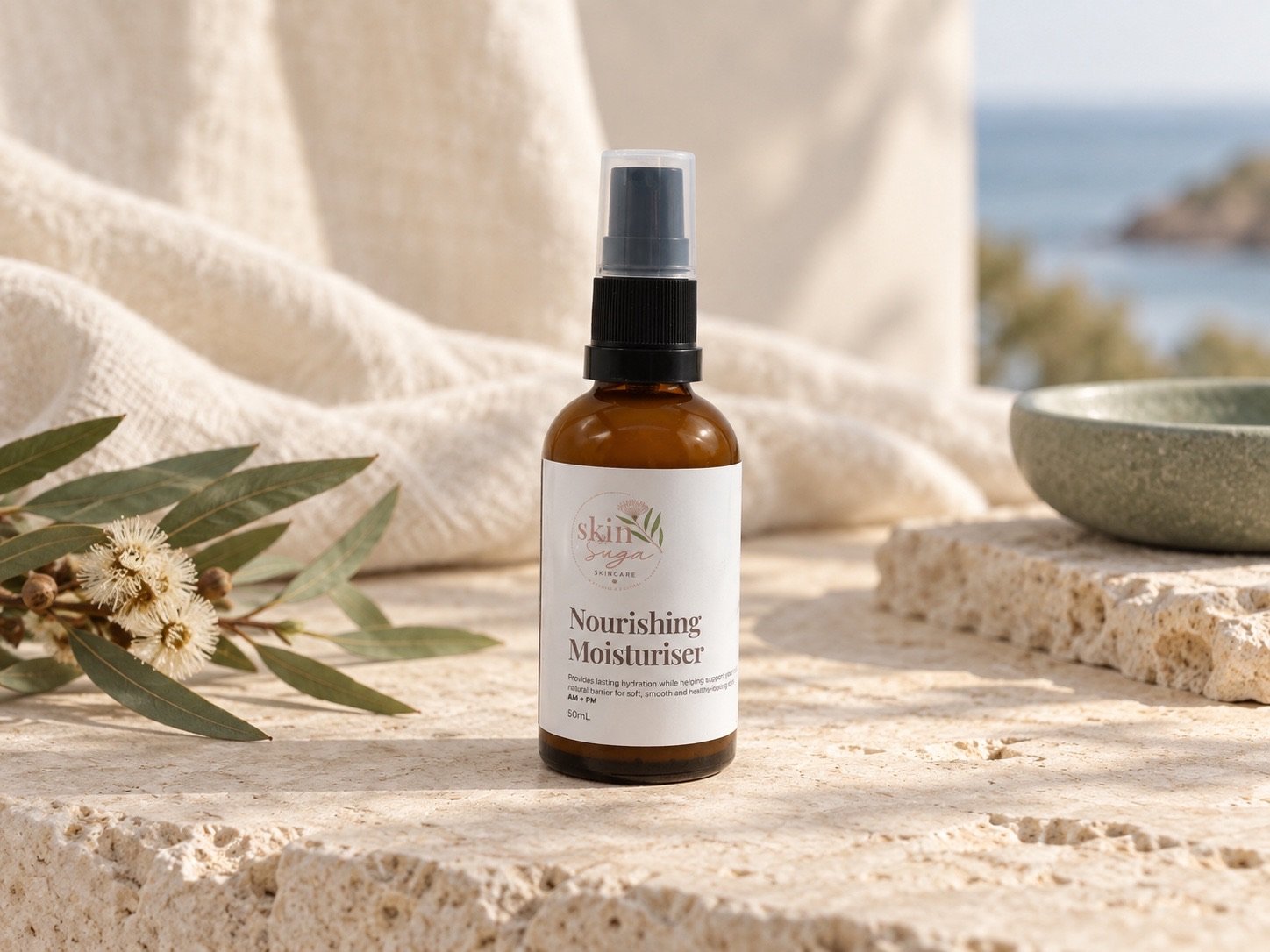
Nourishing Moisturiser
Use a thin, zoned layer to support dry areas without making the whole face overly slippery.
Daily Essentials Ritual
A simple preparation sequence that makes it easier to identify quantity and texture conflicts before makeup.
Frequently asked questions
Should I skip moisturiser under makeup?
Not if the skin needs it. Use a smaller amount or apply it only to dry areas. Skipping moisturiser can make pigment catch on dehydrated patches.
How long should I wait before foundation?
Wait until sunscreen has formed an even film and the surface no longer moves under light touch. Follow the sunscreen label; there is no single makeup wait time for every formula.
Does silicone cause all pilling?
No. Pilling can happen with many combinations of film-formers, gums, quantities and rubbing techniques. Judge the complete formulas rather than one ingredient alone.
Should I exfoliate flakes before makeup?
Avoid aggressive last-minute exfoliation. Support the skin with gentle cleansing and moisturising. Persistent flaking or irritation may need professional assessment.
Prepare the skin, then let makeup stay light
Build a steady skincare base with fewer, better-placed layers before changing foundation again.
Sources and further reading
- American Academy of Dermatology: Applying skincare in order
- American Academy of Dermatology: Choosing a moisturiser
- Cancer Council Australia: Sunscreen application advice
Sources support general skin preparation and sun-protection guidance. Makeup compatibility varies by finished formula.