Richness is about the whole formula
Is shea butter too heavy for mature facial skin?
The short answer: Not necessarily. Shea butter can give dry mature skin a soft, protective feel, but whether it feels too heavy depends on the concentration, the rest of the formula, the amount applied, climate and your own tendency to congestion. A balanced moisturiser containing shea butter can feel very different from applying pure butter. Start with a small amount and adjust by season and facial zone.
Shea butter has a reputation for being intensely rich. That can sound ideal for dry mature skin and alarming for anyone who still experiences shine or congestion. Both reactions are understandable, but neither tells you how a finished moisturiser will behave. Concentration, emulsifiers, humectants, other oils and the amount you apply determine whether shea feels comforting or excessive.
Why mature skin may appreciate richer emollients
Mature skin commonly becomes drier as natural oil production decreases. Menopause, low humidity, heating, wind and harsh cleansing can make this more noticeable. When the surface loses flexibility, it may feel tight, rough or papery. Emollients such as vegetable butters and oils soften the spaces between surface cells and improve the tactile feel of the skin.
A moisturiser also needs more than richness. Humectants attract water, emollients improve softness and occlusive components help slow water loss. A balanced cream can combine all three. This is why a moisturiser containing shea butter may feel elegant, while pure shea butter can feel dense or sit on top of the face.
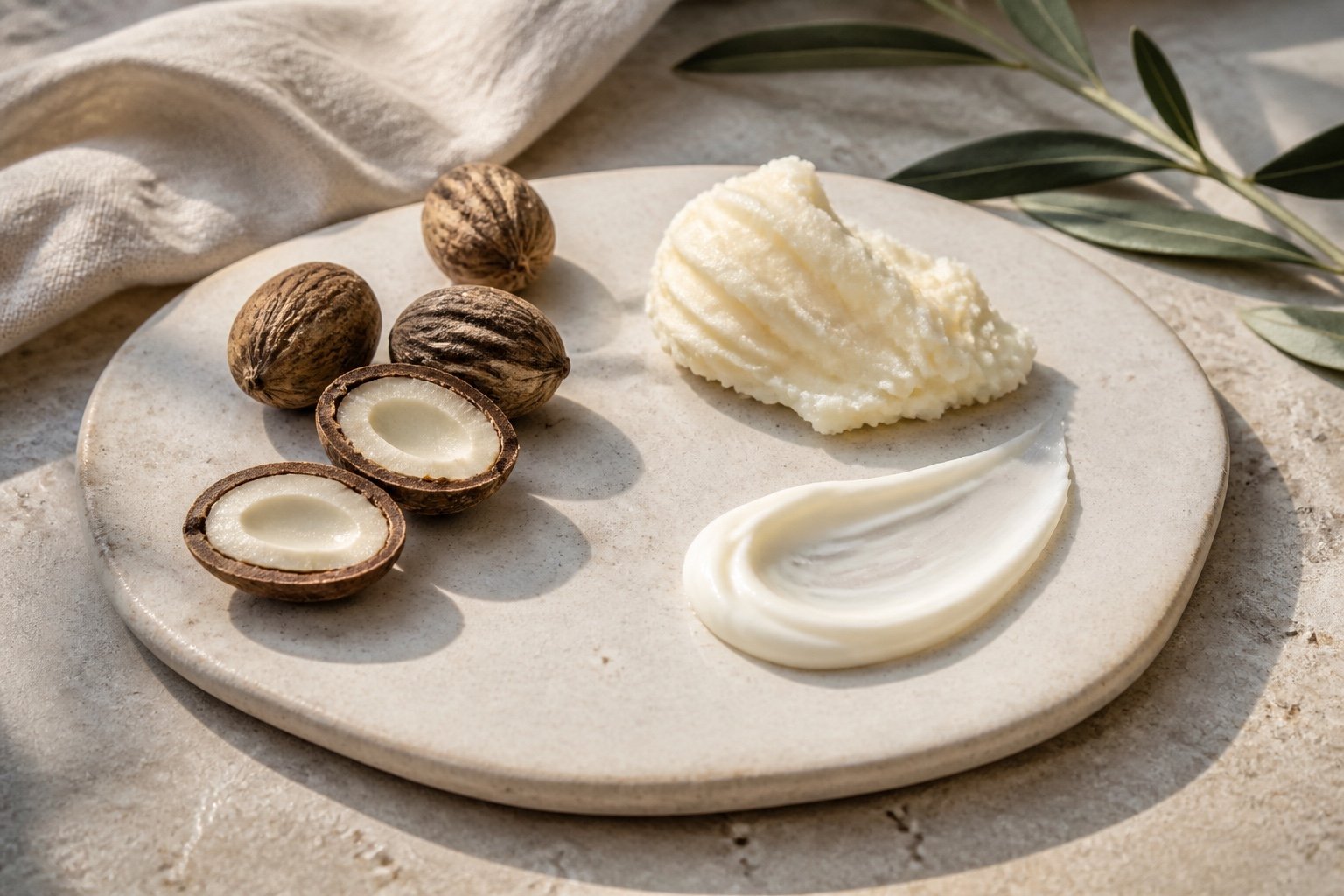
What shea butter contributes
Shea butter is obtained from the kernels of the shea tree. It contains a mixture of fatty acids and unsaponifiable components and is widely used as an emollient in topical products. Clinical and formulation reviews discuss vegetable butters for moisturising and barrier support, but the evidence should not be turned into claims that shea treats eczema, repairs disease or is suitable for every sensitive person.
In facial skincare, its most realistic role is comfort. It can help a moisturiser leave skin feeling softer and less exposed to dry air. It is particularly relevant at night, during winter or on dry cheek and neck areas.
When it may feel too heavy
A shea-containing formula may be too rich if your face looks greasy for hours, sunscreen slides, makeup separates or small congested bumps appear after consistent use. Warm, humid weather can also change what feels comfortable. A cream that is ideal in a Perth winter may be more than you want during a humid holiday in northern Australia.
Application can create the problem even when the formula is suitable. A pea-sized amount spread over the face and neck may be enough. Applying a thick mask every night, layering facial oil over it and then repeating in the morning can create unnecessary residue.
Texture is not the same as effectiveness
A rich sensory feel does not prove that a moisturiser is more effective, and a light texture does not mean it is weak. Modern emulsions can combine humectants, emollients and film-forming ingredients in very different textures. Choose the finish that lets you apply sunscreen properly in the morning and wake without tightness at night. If a cream only works when applied heavily, examine the cleanser and serum steps too; over-cleansing may be creating a problem that moisturiser alone cannot solve.
Skin type still matters after 40
Mature skin is not a skin type by itself. You can be mature and dry, mature and combination, mature and acne-prone or mature and sensitive. If your cheeks are dry but the centre of your face remains oily, use a richer cream only where needed. If you are prone to congestion, patch test along the jaw rather than assuming a “non-comedogenic” label guarantees success.
People with a known nut allergy sometimes worry about shea. Refined topical shea butter has a different protein profile from food, but individual allergy questions deserve medical advice. Stop immediately if swelling, hives or breathing symptoms occur and seek urgent care when appropriate.
How to use a richer moisturiser without heaviness
- Apply to slightly damp, not wet, skin. Use serum first when hydration is needed.
- Begin with half a pea-sized amount. Warm it between fingertips and press it over dry areas.
- Use zones. Give cheeks and neck more; use less across the nose and chin.
- Separate day and night needs. A richer night cream can coexist with a lighter daytime lotion.
- Review by season. Reduce the amount during hot or humid weather.
Shea butter versus facial oil
They are not identical. In an emulsified moisturiser, shea butter sits alongside water, humectants and other emollients. A facial oil is an anhydrous oil phase and mainly adds softness and slip. If your moisturiser already leaves skin comfortable, facial oil may be unnecessary. If dry patches remain, press one or two drops over those areas at night.
Do not mix facial oil into sunscreen. Sunscreen needs to form an even protective film. Apply skincare, allow it to settle, then use sunscreen according to its label.
Skin Suga options for different levels of richness
The Ultimate Hydration Ritual is the ritual-first option for persistent dryness because it layers cleanser, toner, hyaluronic acid serum, moisturiser and facial oil. Both Skin Suga moisturisers below contain shea butter, yet their supporting ingredients and overall positioning differ. The right choice is the one that leaves your skin comfortable beneath the rest of your routine.
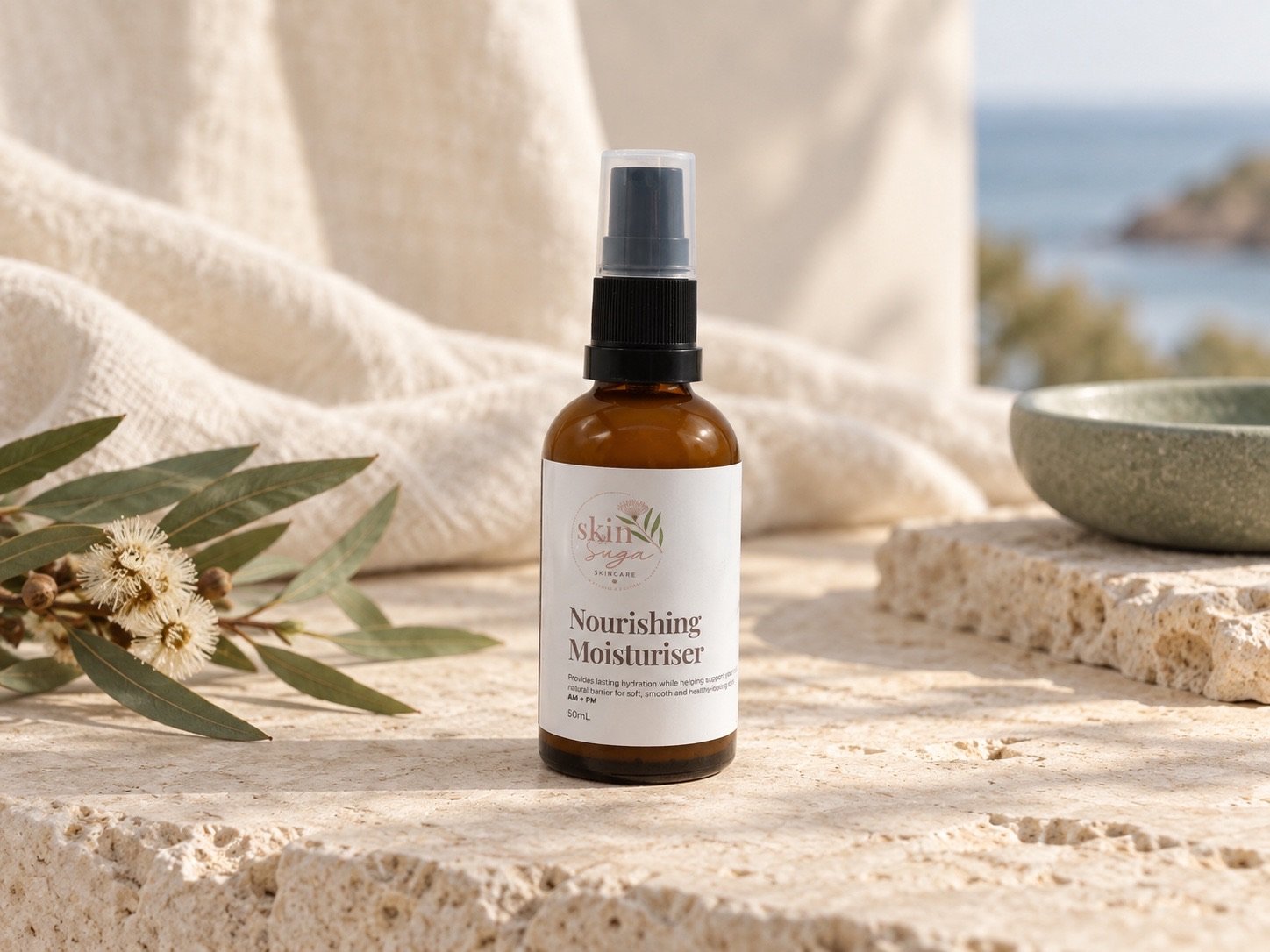
Nourishing Moisturiser
A richer botanical moisturiser with shea butter, jojoba oil, green tea, mangosteen, acai oil and avocado oil. Use when dry mature skin wants a softer, more nourished finish.
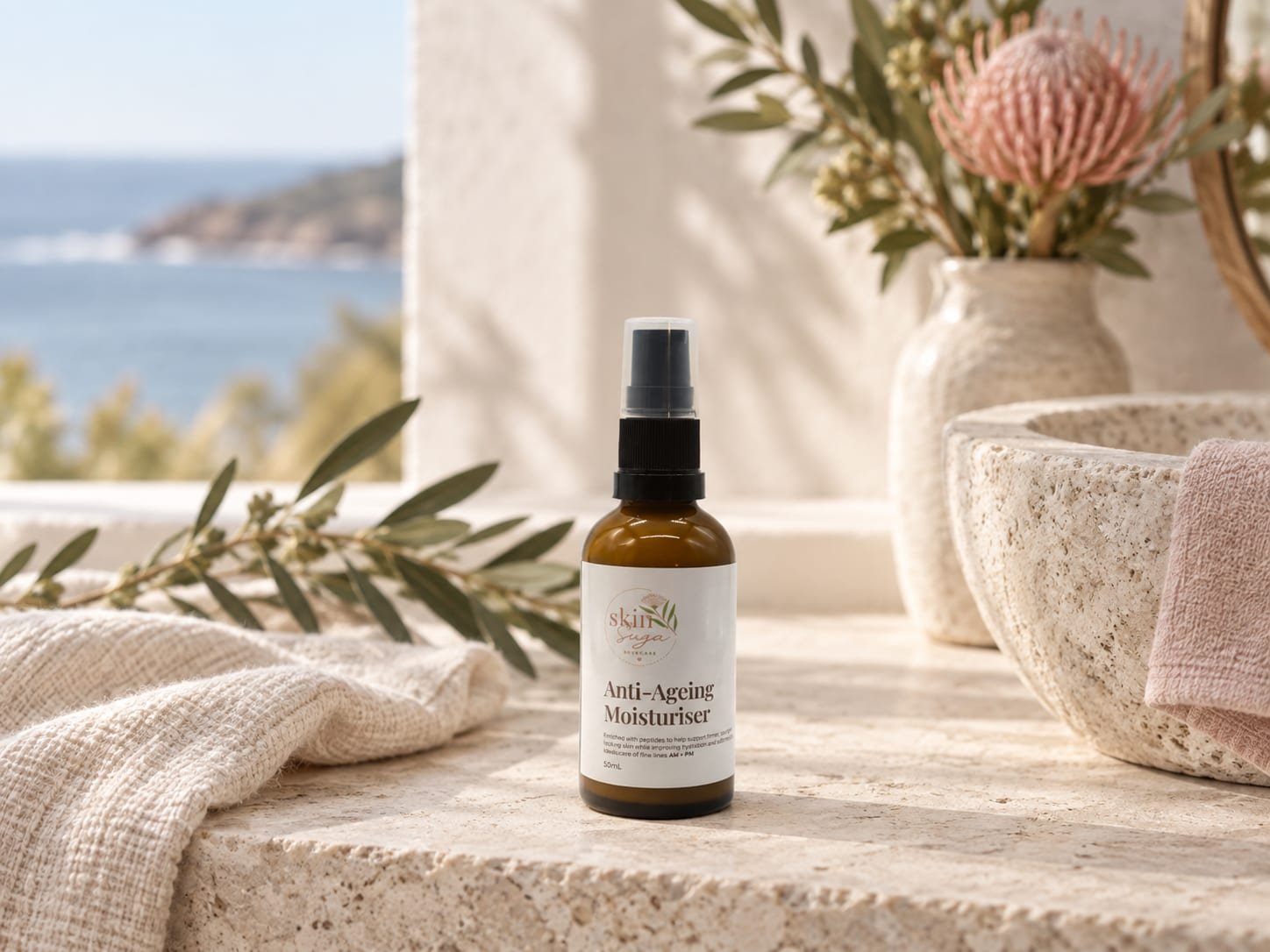
Anti-Ageing Moisturiser
A mature-skin cream combining shea butter and jojoba oil with hyaluronic acid, CoQ10, Native Snowflower and rice protein peptides.
How to judge the result
Within minutes, skin should feel comfortable rather than coated. By morning, it should feel soft without persistent greasiness or new irritation. Over several weeks, look for improved consistency of comfort and less visible flaking. A moisturiser cannot restore lost facial volume or remove deep wrinkles, but it can make the surface look smoother by improving hydration and flexibility.
If every moisturiser stings, simplify your routine and seek advice rather than repeatedly changing creams. Persistent itching, cracking or rash may indicate a condition needing professional assessment.
Frequently asked questions
Is shea butter comedogenic?
Comedogenicity ratings are imperfect and cannot predict every person’s response. Finished formula, dose and individual tendency to congestion matter. Patch test and monitor your skin.
Can oily mature skin use shea butter?
Possibly, in a light formula or only on dry zones. Use a small amount and avoid automatically adding facial oil on top.
Should I use it morning and night?
Only if that feels comfortable. Many women prefer a lighter morning moisturiser beneath sunscreen and a shea-containing cream at night.
Can shea butter replace a serum?
It can provide emollience but does not replace every serum function. If dehydration is present, use a humectant serum before moisturiser.
Let your skin decide the level of richness
Begin with a complete hydration ritual, then adjust cream and oil amounts by zone, season and finish.
Explore the Ultimate Hydration RitualCompare light and rich moisturisers