
A measured active routine after 40
Can I use bakuchiol and niacinamide together after 40?
The short answer: Yes, bakuchiol and niacinamide can generally be used in the same cosmetic routine when the finished products suit your skin. They are not known as an inherently incompatible pair. The sensible approach is to introduce the routine gradually, patch test and watch the complete formula rather than judging only two headline ingredients. Consistency, moisturiser and daily sunscreen matter more than aggressive layering.
Bakuchiol and niacinamide are often recommended to women who want a measured approach to visible ageing, uneven tone and skin comfort. They can generally sit in the same routine, and a finished formula may contain both. The important caution is that ingredient compatibility on paper does not guarantee that every product will suit every face. Concentration, supporting ingredients, frequency and your current skin condition all matter.
What bakuchiol is
Bakuchiol is a plant-derived ingredient associated with Psoralea corylifolia, commonly called babchi. It is frequently described as a retinol alternative, but that phrase needs context. Bakuchiol is not vitamin A and does not follow the same biochemical pathway. Research reviews report promising cosmetic effects for photoaged skin and pigmentation, yet the body of evidence remains smaller than the evidence for established retinoids.
For women over 40, bakuchiol may be appealing when the goal is gradual support for smoother-looking, more even-looking skin without immediately building a complex vitamin A routine. “Natural” does not mean irritation-proof. Patch testing and measured introduction remain sensible.
What niacinamide is
Niacinamide is a form of vitamin B3 used widely in skincare. Depending on formula and concentration, it can support skin-barrier function, help the skin feel more resilient and improve the appearance of uneven tone, fine lines and pores. It is not an exfoliating acid and it does not bleach the skin.
Niacinamide has become so common that it may appear in a serum, moisturiser and sunscreen at the same time. That can be useful, but it also means you should read the whole routine before adding a dedicated high-strength product. More is not automatically better. A moderate amount in a well-balanced formula may be easier to tolerate than several overlapping layers.
Why they can work in the same routine
There is no established rule requiring bakuchiol and niacinamide to be separated by time of day. Their cosmetic roles can complement one another: bakuchiol is often selected for the appearance of photoageing, while niacinamide is used for barrier support and even-looking tone. A combined product also removes the need to decide which goes first.
However, evidence for each ingredient should not be stretched into proof that the exact combination will transform skin. Results depend on the finished formulation and consistent use. A routine should also include moisturiser and daily broad-spectrum sunscreen, because active serums cannot undo ongoing ultraviolet exposure.
Morning or evening?
Either can be reasonable when the product directions permit it. Evening use is often simpler for a new treatment because it keeps the morning routine focused on moisturiser and sunscreen. If you use the combination in the morning, allow it to settle and make sure it does not cause sunscreen to pill. Do not mix the serum into sunscreen. If your skin becomes dry, reduce frequency before adding another corrective product; a rest night is a legitimate part of an active routine.
How to introduce them after 40
If both ingredients are in one serum, patch test the serum and begin at the frequency advised on its label. If they are in separate products, introduce one first for a week or two before adding the other. This gives you a better chance of identifying the cause if stinging, redness or congestion develops.
Begin with a thin layer. Apply the lighter water-based serum first, then moisturiser. If your skin is dry or reactive, you can use the treatment every second evening at first rather than morning and night. There is no prize for the most complicated routine.
A practical routine
Morning
- Use a gentle cleanse or rinse.
- Apply a hydrating serum if needed.
- Follow with moisturiser.
- Apply broad-spectrum sunscreen generously and as directed.
Evening treatment nights
- Cleanse away makeup and sunscreen.
- Apply a bakuchiol and niacinamide serum in a thin layer.
- Follow with a comfortable moisturiser.
- Use facial oil only when extra richness is needed.
On rest nights, skip the treatment and focus on hydration and moisturiser. This is particularly useful if you also use exfoliating acids, vitamin A or prescription treatments.
When to be more cautious
Reactive skin, a damaged-feeling barrier or a recent flare is not the best moment to introduce several actives. First simplify the routine and restore comfort. If you already use a prescription retinoid, hydroquinone, exfoliating peel or another strong treatment, ask your dermatologist or prescribing clinician how to combine products.
Pregnancy and breastfeeding advice should come from a qualified health professional who can review the complete ingredient list. Bakuchiol is often marketed as a pregnancy-friendly retinol alternative, but broad marketing claims are not a substitute for individual medical advice.
Skin Suga’s ritual-first approach
The Age-Defying Ritual provides the foundation: gentle cleansing, toning, a treatment oil, moisturiser and eye care. When you prefer a combined treatment step, the Anti-Ageing Elixir includes bakuchiol and niacinamide alongside peptides, hyaluronic acid, vitamin C, squalane and green tea. Its multi-ingredient design means it should replace overlapping serums rather than sit beneath every active product you own.

Anti-Ageing Elixir
A combined treatment serum featuring both bakuchiol and niacinamide, with hydration and emollient support. Introduce gradually and follow with moisturiser.
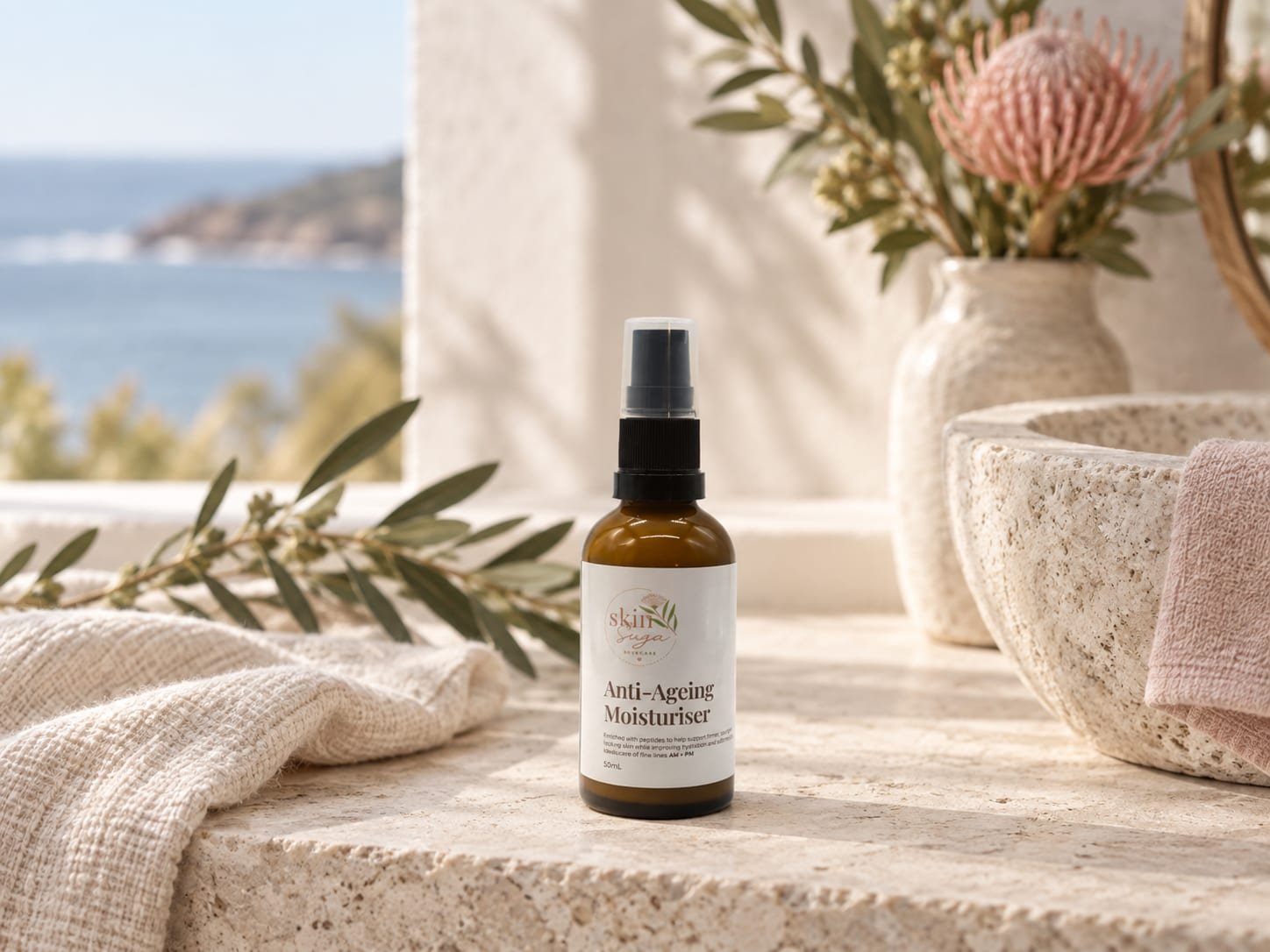
Anti-Ageing Moisturiser
A moisturising follow-up with hyaluronic acid, CoQ10, Native Snowflower, rice protein peptides, jojoba oil and shea butter for comfortable mature-skin layering.
What realistic progress looks like
In the first days, judge comfort and finish rather than expecting a visible age reversal. Hydrating ingredients may make the surface look more cushioned quickly. Changes in the appearance of tone or fine lines require consistent use and should be assessed over weeks, ideally under similar lighting rather than through filtered photographs.
Stop if you experience persistent burning, swelling, hives or a worsening rash. Seek professional advice for continuing symptoms. Cosmetic products can support appearance and comfort but are not treatments for melasma, rosacea, dermatitis or other medical conditions.
Frequently asked questions
Which goes first, bakuchiol or niacinamide?
If they are separate, apply the thinner formula first. If they are in one serum, no ordering decision is needed. Follow product directions and finish with moisturiser.
Can I use the combination every day?
Some people can, but daily use is not compulsory. Start every second evening or as directed, then increase only if your skin remains comfortable.
Can I use vitamin C as well?
Potentially, but the total formula load matters. A combined serum may already contain vitamin C. Avoid duplicating products unnecessarily, particularly when your skin is reactive.
Do bakuchiol and niacinamide replace sunscreen?
No. They do not protect skin from ultraviolet radiation. Use broad-spectrum sunscreen and other sun-protective measures according to Australian guidance.
Keep active care calm and consistent
Use a complete ritual as the base, then add one well-chosen treatment rather than a crowded stack.